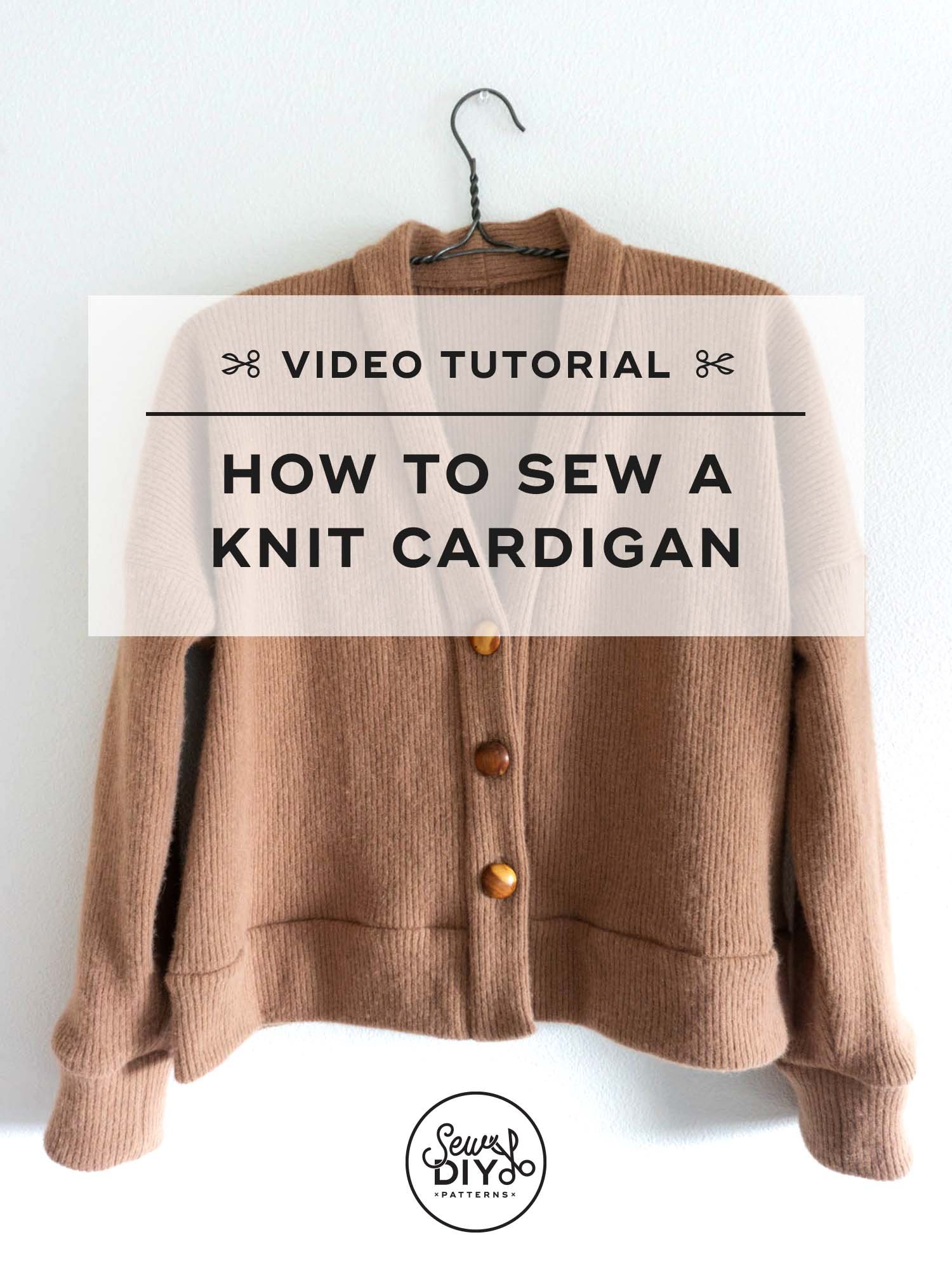
Today I have a new video tutorial to share with you. I recently drafted a cardigan sewing pattern and while sewing it, I filmed the whole process. This is a super cozy cardigan made from a thick rib knit fabric. In the video, I show the step-by-step process of sewing this cardigan as well as some tips for handling a thick knit fabric.
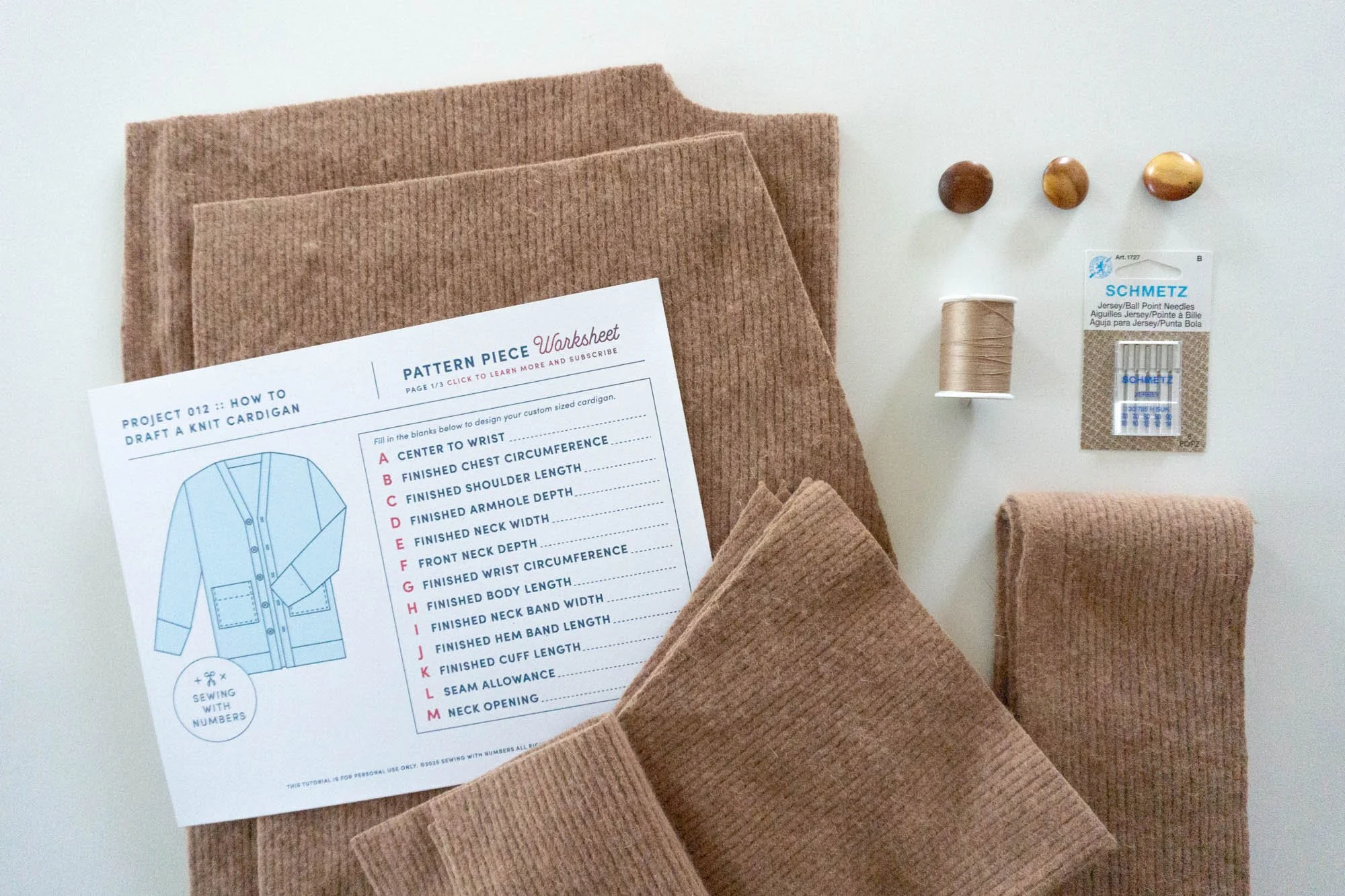
DRAFTING
I drafted this cardigan for a project on my Substack Sewing With Numbers. If you’re not familiar with it, Sewing With Numbers is a newsletter about sewing, math, design and how to draft your own sewing patterns. Through simple pattern drafting exercises, I’ll show you how fun, useful and empowering math can be. Drafting and sewing my own cardigan is the final installment for Project 12—Knit Cardigans.
I’ve already shared a tutorial for how to draft a cardigan using your own custom measurements. Click here to see all posts in the Cardigan series. Posts are free to read for the first three months after publication and then they go behind the paywall. I also have versions as a pdf here in my shop (see below)
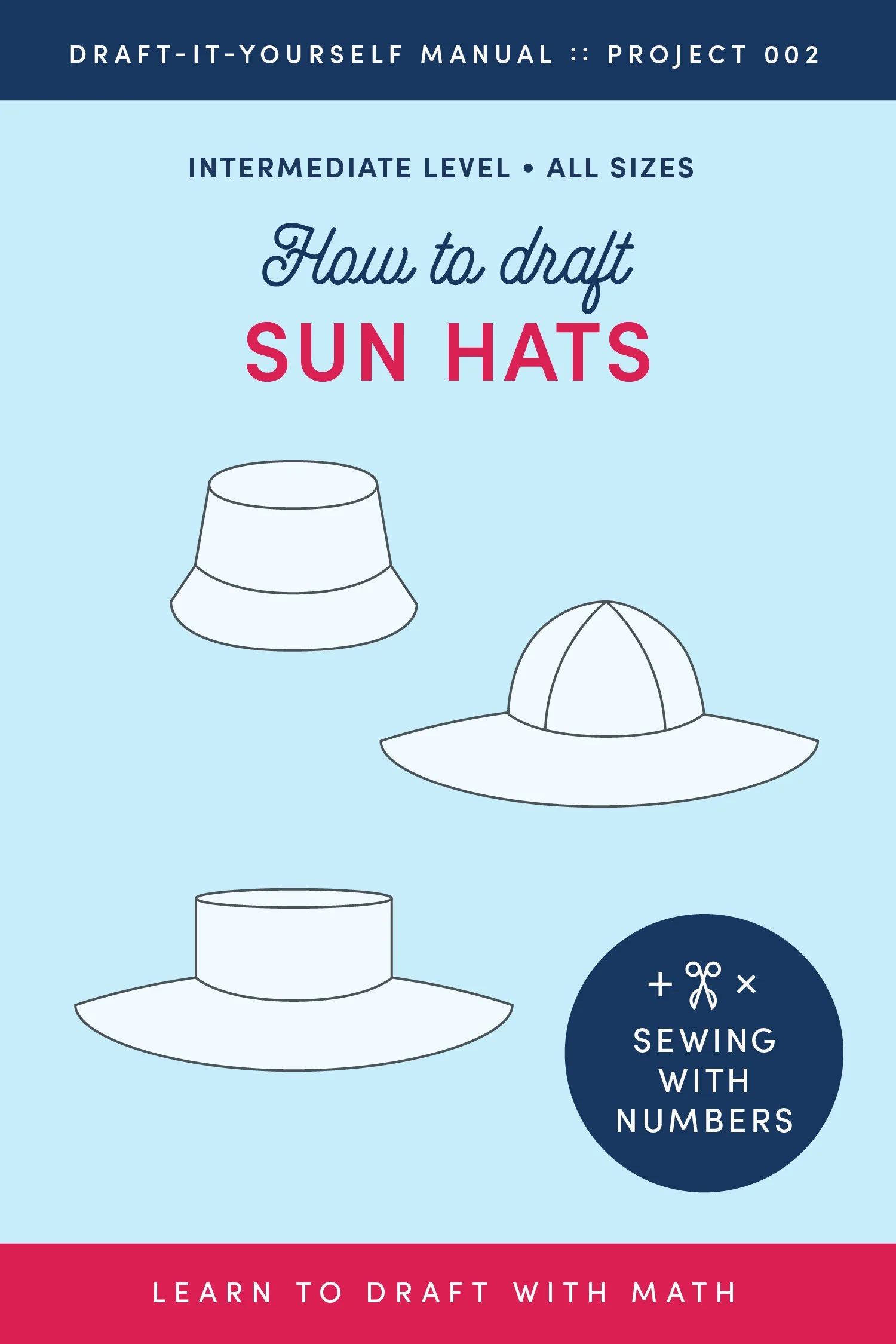
How to Draft Sun Hats — Sewing With Numbers Project 002 Draft-It-Yourself Manual
This manual is an adaptation of a newsletter series that I created for my Substack Sewing With Numbers. When you purchase this interactive pdf, you will receive all of the tutorials and information needed to draft three different custom fit sun hats combined into one resource. (NOTE: This pdf does NOT include instructions for sewing the hats.)
This pdf manual will teach you how to draft three sun hat designs: a basic flat brim hat with a circular crown, a bucket hat with an oval crown and a rounded crown hat with wide brim. The pdf includes tutorials for how to draft circles and curves using both paper and digitally, and a deep dive into how to precisely draft a brim for a consistent angle across sizes. Additionally, there are instructions for drafting three brim variations: a longer front brim, shorter side brims and a scalloped brim.
LESSONS INCLUDED:
Drafting With Circles And Curves
How To Draft Flat Crown Sunhat
How To Draft A Bucket Hat
How To Draft A Rounded Crown Sunhat
Deep Dive: Slash & Spread Vs Rotation
Design Variations
SKILL LEVEL: I recommend this manual for people with an intermediate sewing skill level and beginner or intermediate pattern drafting. If you don't feel confident doing the sewing construction on your own, then this booklet is not for you.
IMPORTANT PLEASE READ: PATTERN PIECES ARE NOT INCLUDED. THIS IS NOT A PHYSICAL PRODUCT. This is an instruction booklet for how to draft a tiered skirt to your custom measurements. This booklet DOES NOT include instructions on how to sew and construct the garment. (See the project journal for some basic notes on construction.) Due to the nature of digital products, there are no refunds. Please read the description carefully. THIS IS NOT A PATTERN NOR IS IT A FINISHED GARMENT.
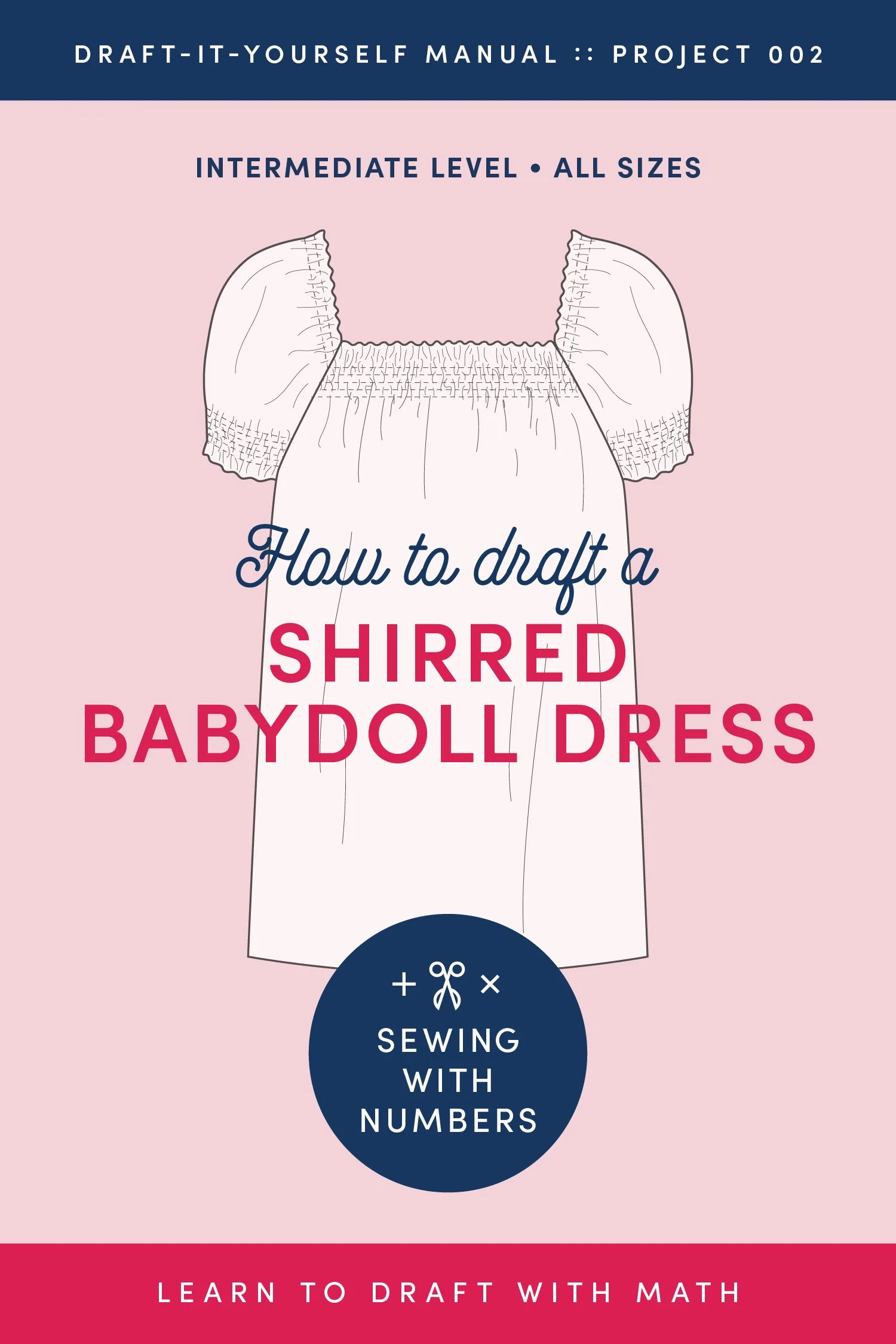
How to Draft a Shirred Babydoll Dress — Sewing With Numbers Project 003 Draft-It-Yourself Manual
This manual is an adaptation of a newsletter series that I created for my Substack Sewing With Numbers. When you purchase this interactive pdf, you will receive all of the tutorials and information needed to draft a shirred babydoll dress to your custom size and preferences. (NOTE: This pdf does NOT include instructions for sewing the dress.)
This pdf manual will teach you how to draft a shirred babydoll dress. This design is a loose-fitting, peasant style dress fitted with elastic gathers at the neckline and sleeves. The elastic gathers can be created with shirring (using elastic thread), or with a casing and narrow elastic. There is a grown-on facing at the neckline that when topstitched also functions as the elastic casing. The length shown is short, but you can adjust for your preferences. The pdf includes tutorials for how to draft how to draft gathers, three ways to add bust shaping, calculating finished measurements, and estimating fabric requirements. Additionally, there are instructions for drafting three dress variations: an Elastic Strap Dress, a Keyhole Shirred Top, and a Fitted Shirred Dress.
LESSONS INCLUDED:
Exercise: How To Draft Gathers
Tutorial: How To Draft A Shirred Babydoll Dress
How To Estimate Fabric Requirements
How To Make A Full Bust Adjustment
Design Variations
SKILL LEVEL: I recommend this manual for people with an intermediate sewing skill level and beginner or intermediate pattern drafting. If you don't feel confident doing the sewing construction on your own, then this booklet is not for you.
IMPORTANT PLEASE READ: PATTERN PIECES ARE NOT INCLUDED. THIS IS NOT A PHYSICAL PRODUCT. This is an instruction booklet for how to draft a tiered skirt to your custom measurements. This booklet DOES NOT include instructions on how to sew and construct the garment. (See the project journal for some basic notes on construction.) Due to the nature of digital products, there are no refunds. Please read the description carefully. THIS IS NOT A PATTERN NOR IS IT A FINISHED GARMENT.
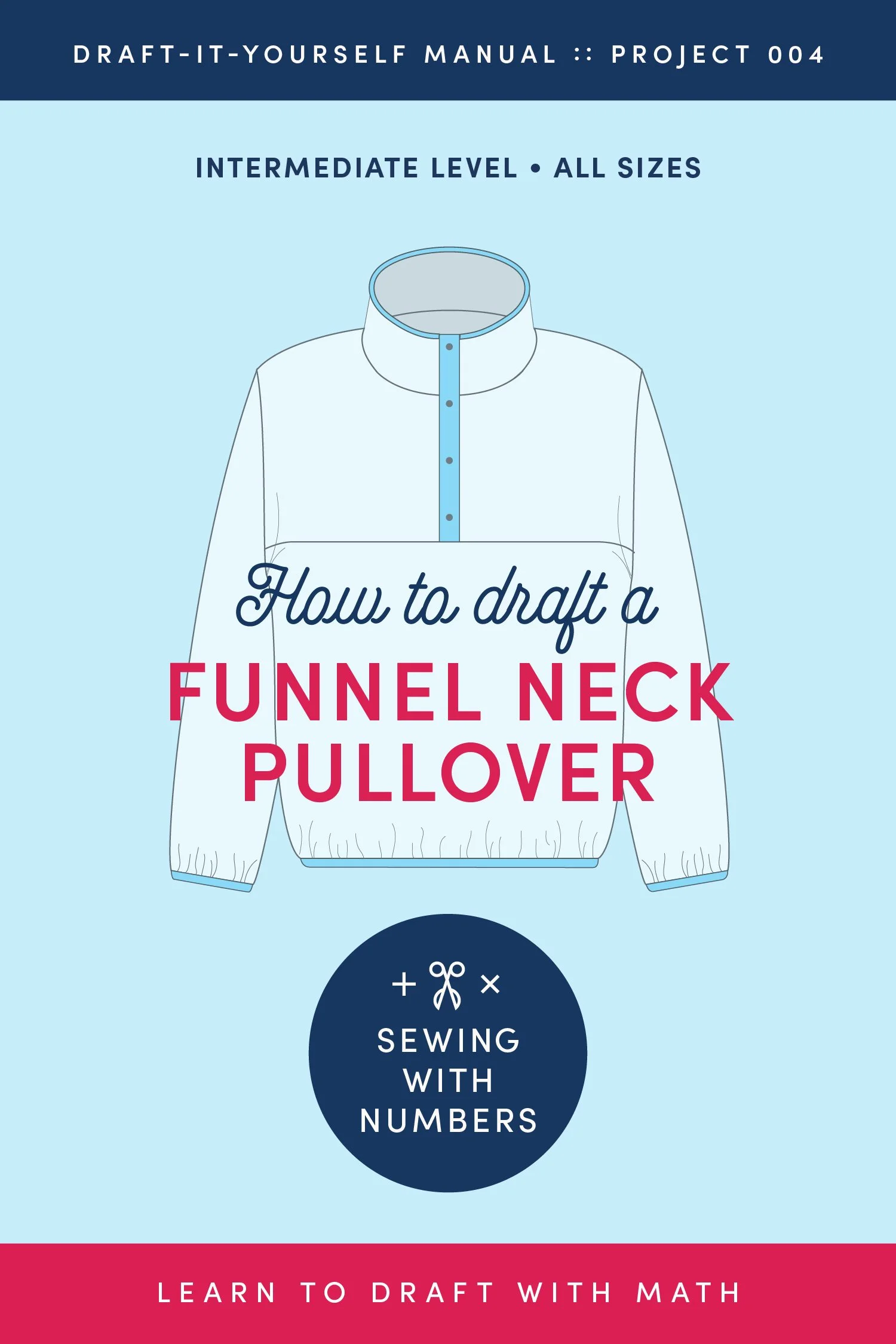
How to Draft a Funnel Neck Pullover — Sewing With Numbers Project 004 Draft-It-Yourself Manual
Learn how to draft your own funnel collar pullover — inspired by cozy, athletic-style fleece sweatshirts from the 1990s. This digital drafting manual walks you step-by-step through creating a custom-fit tunic block and turning it into a pullover with a relaxed, boxy fit, drop shoulders, yoke and a funnel neck.
Inside the 21-page PDF, you’ll learn to draft:
A tunic block + drop shoulder sleeves
A snap placket
A funnel-style collar
Four design variations:
Zippered Jacket with Cuffs
Sleeveless Vest
Angled Color-Blocked Yoke
Color-Blocked Front
Plus: how to true corners + optional fit adjustments
Perfect for intermediate sewists or beginner-to-intermediate pattern drafters, this guide helps you expand your skills beyond sewing and construction into designing your own garments.
Please note: This is a drafting manual, not a sewing pattern. Pattern pieces and construction instructions are not included. A free overview of basic construction can be found in the Sewing With Numbers Project Journal.
PDF Includes:
Instruction Booklet (21 pages)
Digital download only — no refunds.
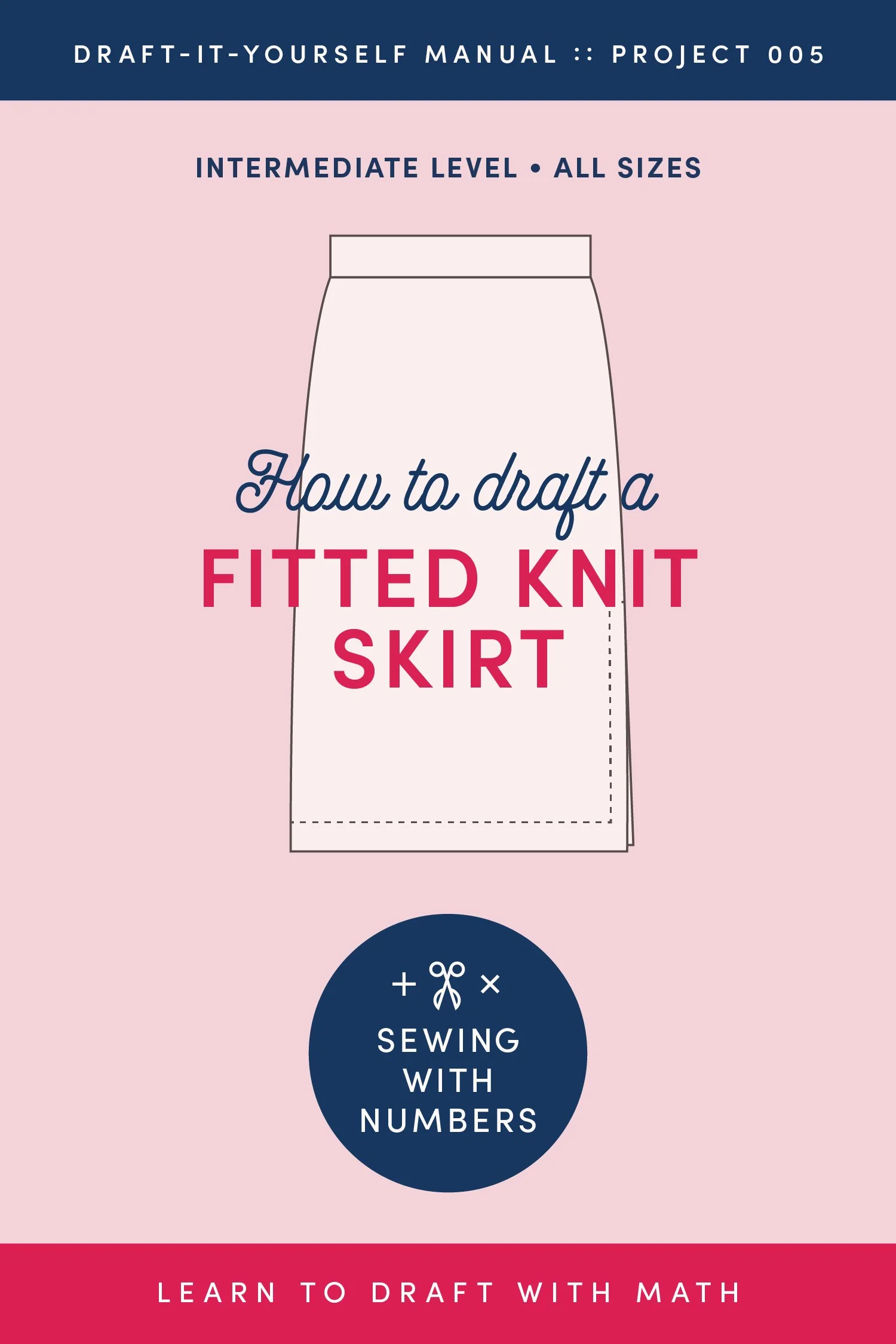
How to Draft a Fitted Knit Skirt — Sewing With Numbers Project 005 Draft-It-Yourself Manual
This manual is an adaptation of a newsletter series that I created for my Substack Sewing With Numbers. When you purchase this interactive pdf, you will receive all of the tutorials and information needed to draft a Fitted Knit Skirt to your custom size and preferences. (NOTE: This pdf does NOT include instructions for sewing the skirt.)
This pdf manual will teach you how to draft a Fitted Knit Skirt that is designed for stretch fabric. The pdf includes tutorials for how to draft the basic skirt, how to customize the skirt draft and how to draft a mitered corner hem.
LESSONS INCLUDED:
Understanding Negative Ease
Understanding Fabric Stretch Percentage
How To Draft A Fitted Knit Skirt
How To Draft A Mitered Corner Hem Slit
Bonus Exercise: How To Draft an Elastic Waistband
SKILL LEVEL: I recommend this manual for people with an advanced beginner sewing skill level and beginner or intermediate pattern drafting. If you don't feel confident doing the sewing construction on your own, then this booklet is not for you.
IMPORTANT PLEASE READ: PATTERN PIECES ARE NOT INCLUDED. THIS IS NOT A PHYSICAL PRODUCT. This is an instruction booklet for how to draft a tiered skirt to your custom measurements. This booklet DOES NOT include instructions on how to sew and construct the garment. (See the project journal for some basic notes on construction.) Due to the nature of digital products, there are no refunds. Please read the description carefully. THIS IS NOT A PATTERN NOR IS IT A FINISHED GARMENT.
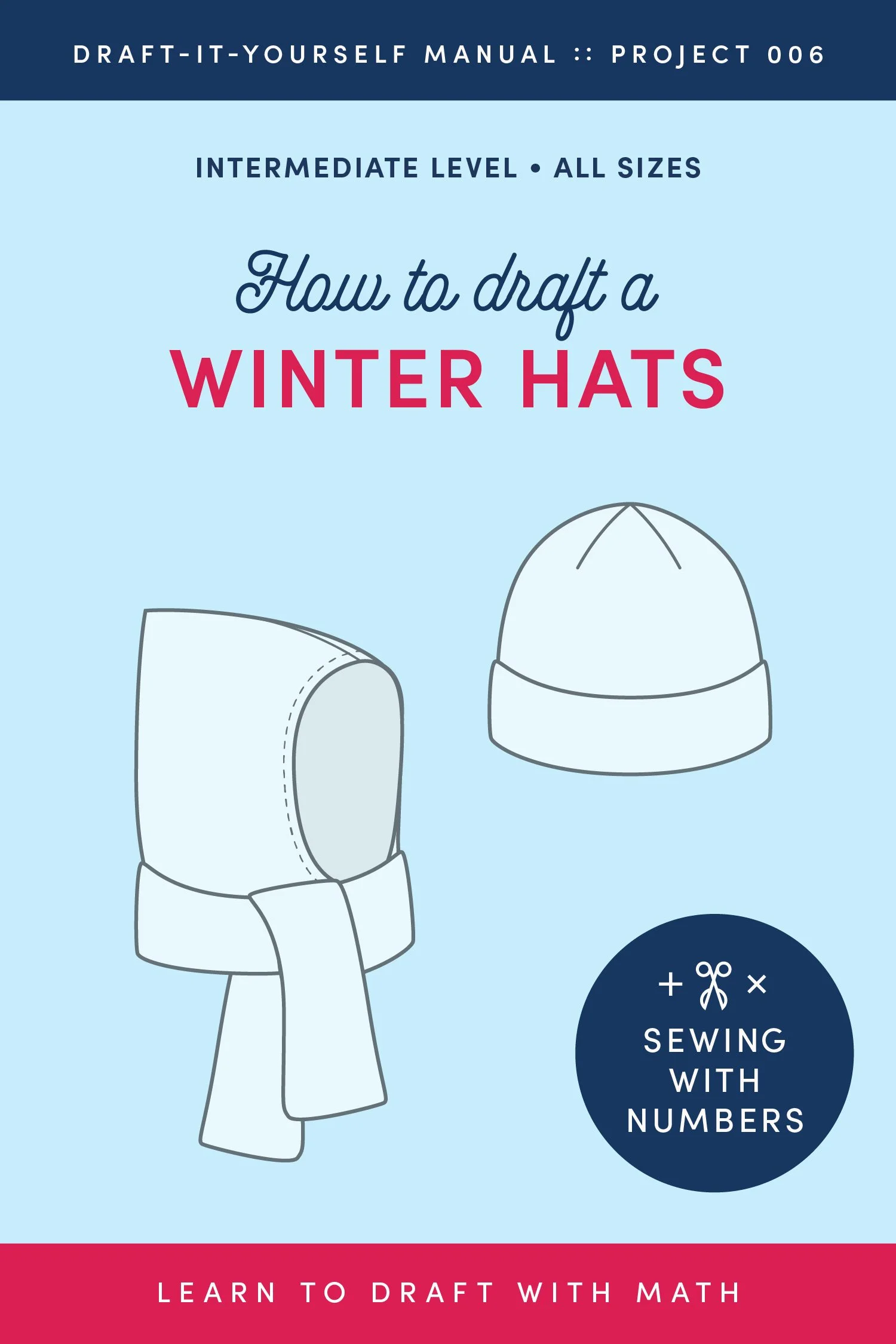
How to Draft Winter Hats — Sewing With Numbers Project 006 Draft-It-Yourself Manual
Design and draft your own cozy winter hats with this digital drafting manual. Learn how to create a custom-fit knit beanie and hooded scarf (lined or unlined).
Inside the 28-page PDF, you’ll learn to draft:
Knit Beanie
Woven Hooded Scarf
How to design with stretch fabric + negative ease
Four Design variations:
Knit Hood with Drawstring
Hood with Front Closure
Three-Piece Hood with Visor
Loose Kerchief-Style Hood
Plus: How to true corners + draft slit facings
Perfect for intermediate sewists or beginner-to-intermediate pattern drafters, this guide helps you expand your skills beyond sewing and construction into designing your own garments.
Please note: This is a drafting manual, not a sewing pattern. Pattern pieces and construction instructions are not included. Basic sewing notes are available on the Sewing With Numbers Project Journal.
PDF Includes:
Instruction Booklet (28 pages)
Digital download only — no refunds.
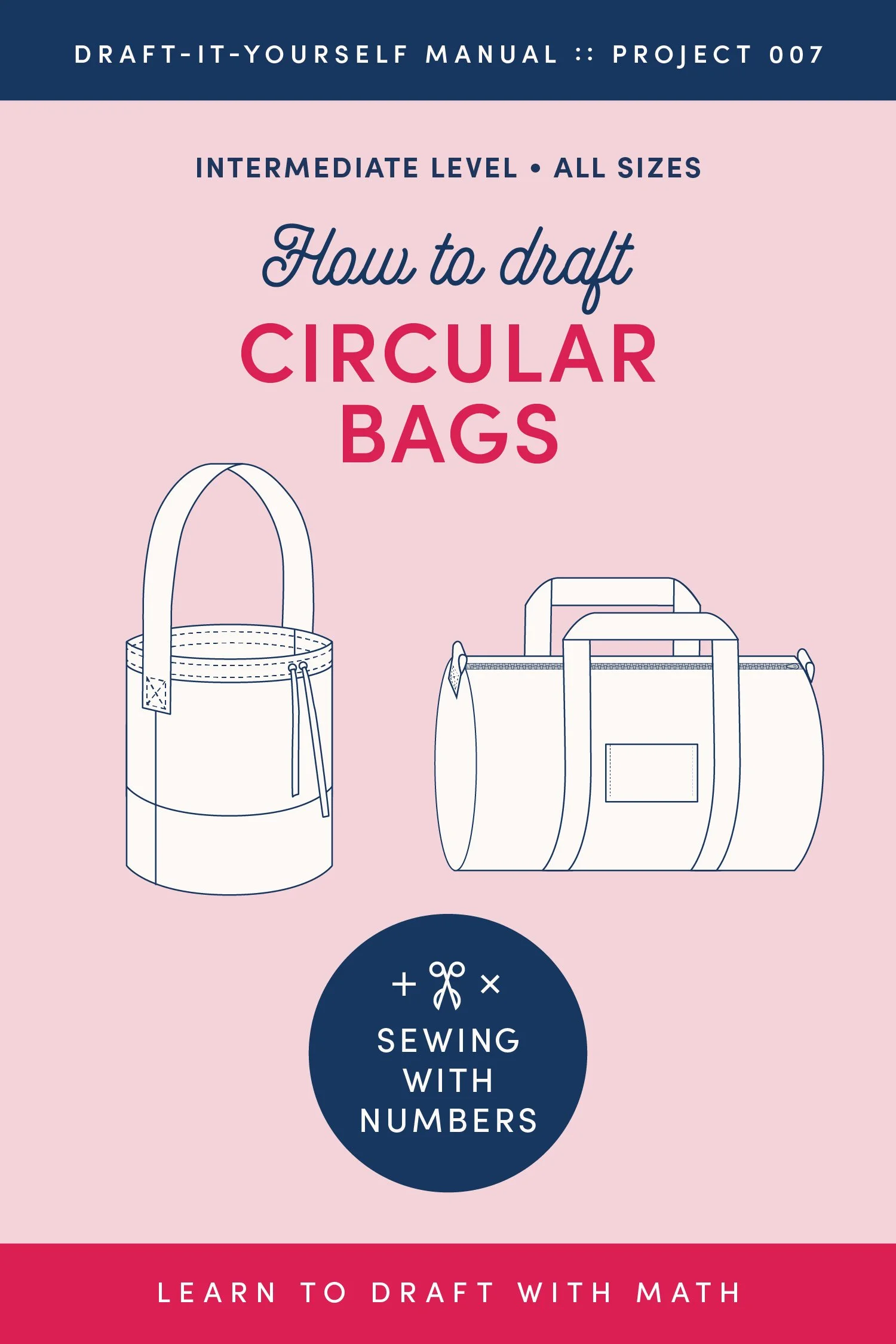
How to Draft Circular Bags — Sewing With Numbers Project 007 Draft-It-Yourself Manual
This manual is an adaptation of a newsletter series that I created for my Substack, Sewing With Numbers. When you purchase this interactive pdf, you will receive all of the tutorials and information needed to draft two styles of bag to your custom size and preferences. (NOTE: This pdf does NOT include instructions for sewing the bags.)
This pdf manual will teach you how to draft two circular bag designs: a duffel bag and a bucket tote with a drawstring top. The pdf includes two printable worksheets, a section drafting with circles and curves and a bonus section on drafting drawstring casings.. Additionally, there are diagrams for drafting three bag variations: a Yoga Mat bag, a Water Bottle Bag and a Circle Handbag.
LESSONS INCLUDED:
Drafting With Circles And Curves
How To Draft A Duffel Bag
How To Draft A Bucket Tote
Design Variations
Bonus: Drafting an Elastic Waistband
SKILL LEVEL: I recommend this manual for people with an intermediate sewing skill level and beginner or intermediate pattern drafting. If you don't feel confident doing the sewing construction on your own, then this booklet is not for you.
IMPORTANT PLEASE READ: PATTERN PIECES ARE NOT INCLUDED. THIS IS NOT A PHYSICAL PRODUCT. This is an instruction booklet for how to draft a tiered skirt to your custom measurements. This booklet DOES NOT include instructions on how to sew and construct the garment. (See the project journal for some basic notes on construction.) Due to the nature of digital products, there are no refunds. Please read the description carefully. THIS IS NOT A PATTERN NOR IS IT A FINISHED GARMENT.
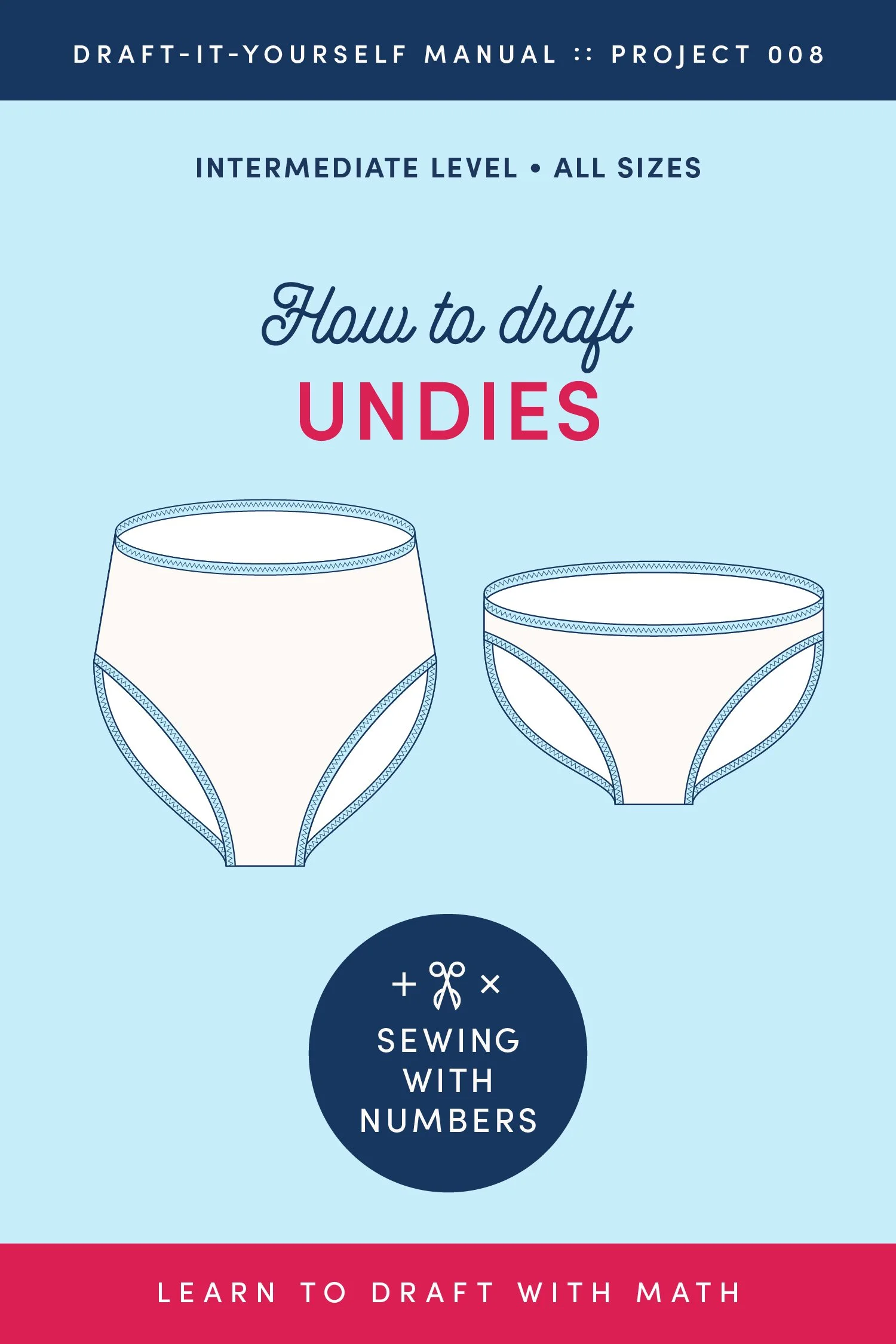
How to Draft Undies — Sewing With Numbers Project 008 Draft-It-Yourself Manual
Design your own perfectly fitting undies. In this step-by-step guide, you’ll learn how to draft two styles — bikini briefs and high-cut briefs — to your unique measurements and preferences.
Inside the 28-page PDF, you’ll find:
Tutorials on negative ease + stretch fabric
Drafting instructions for bikini and high-cut briefs
Printable worksheets for both styles
Tips for cleaning up seam allowances + truing corners
Please note: This is a drafting manual, not a sewing pattern. It does not include pattern pieces or construction instructions (a free video tutorial is available for sewing guidance). Recommended for intermediate sewists and beginner-to-intermediate pattern drafters.
PDF Includes:
Instruction Booklet (28 pages)
2 Printable Worksheets
Digital download only — no refunds.
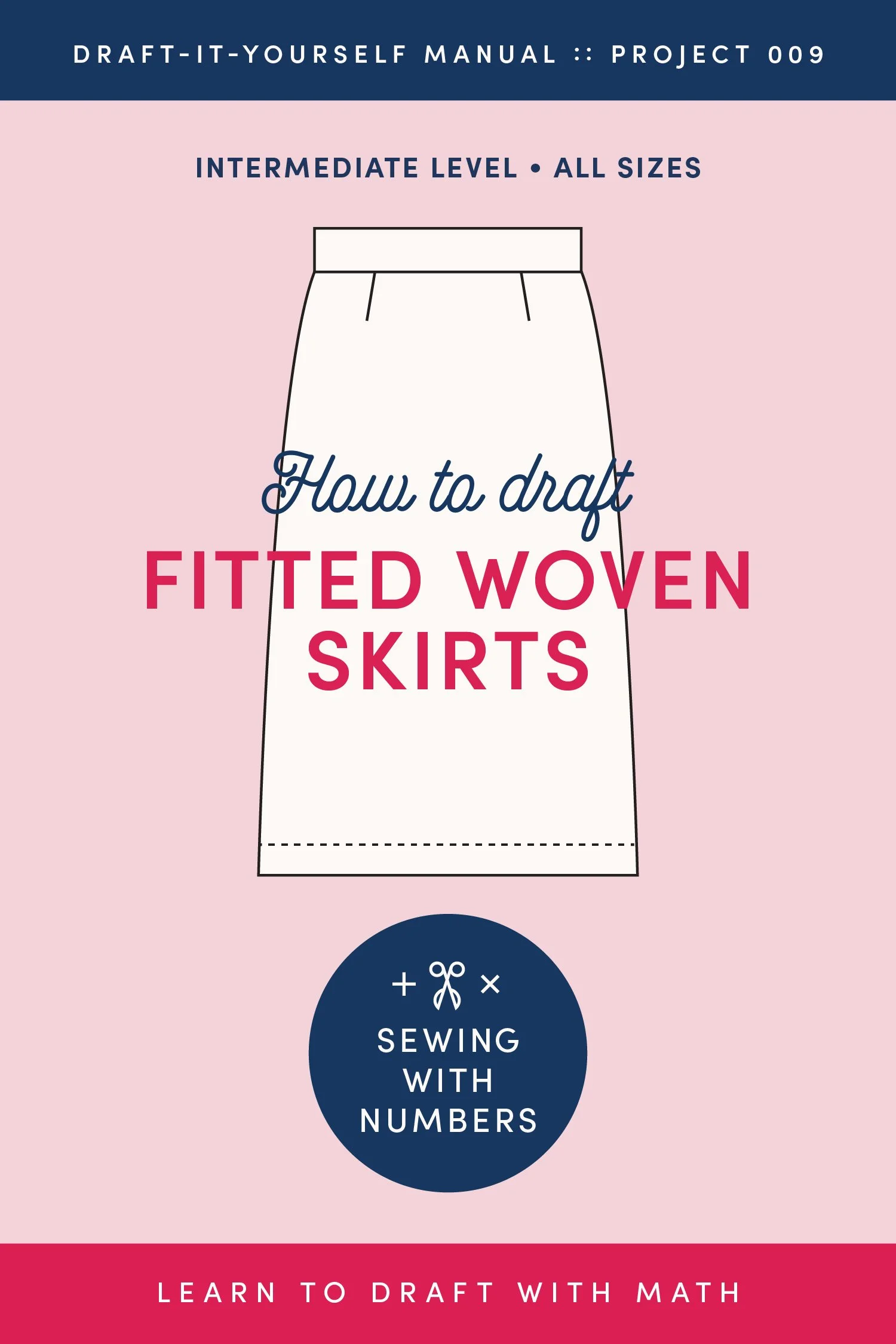
Learn how to draft your own custom-fit woven skirts with this step-by-step digital manual. Perfect for sewists who ready to move beyond following patterns into creating their own designs, this guide shows you how to create a skirt block using your measurements and adapt it into multiple designs.
Inside the 47-page PDF, you’ll find:
Two skirt block drafting methods: beginner-friendly + advanced
Instructions for drafting three skirt styles: pencil, A-line with scooped pockets, and wrap
Diagrams for four skirt design variations
Bonus lessons: how to draft gathers + a mitered corner hem slit
Please note: This is a drafting manual, not a sewing pattern. It does not include pattern pieces or construction instructions (a free video tutorial is available for sewing guidance). Recommended for intermediate sewists and beginner-to-intermediate pattern drafters.
Digital Download Includes:
47 page Instruction Booklet — more details below
Digital download only — no refunds.
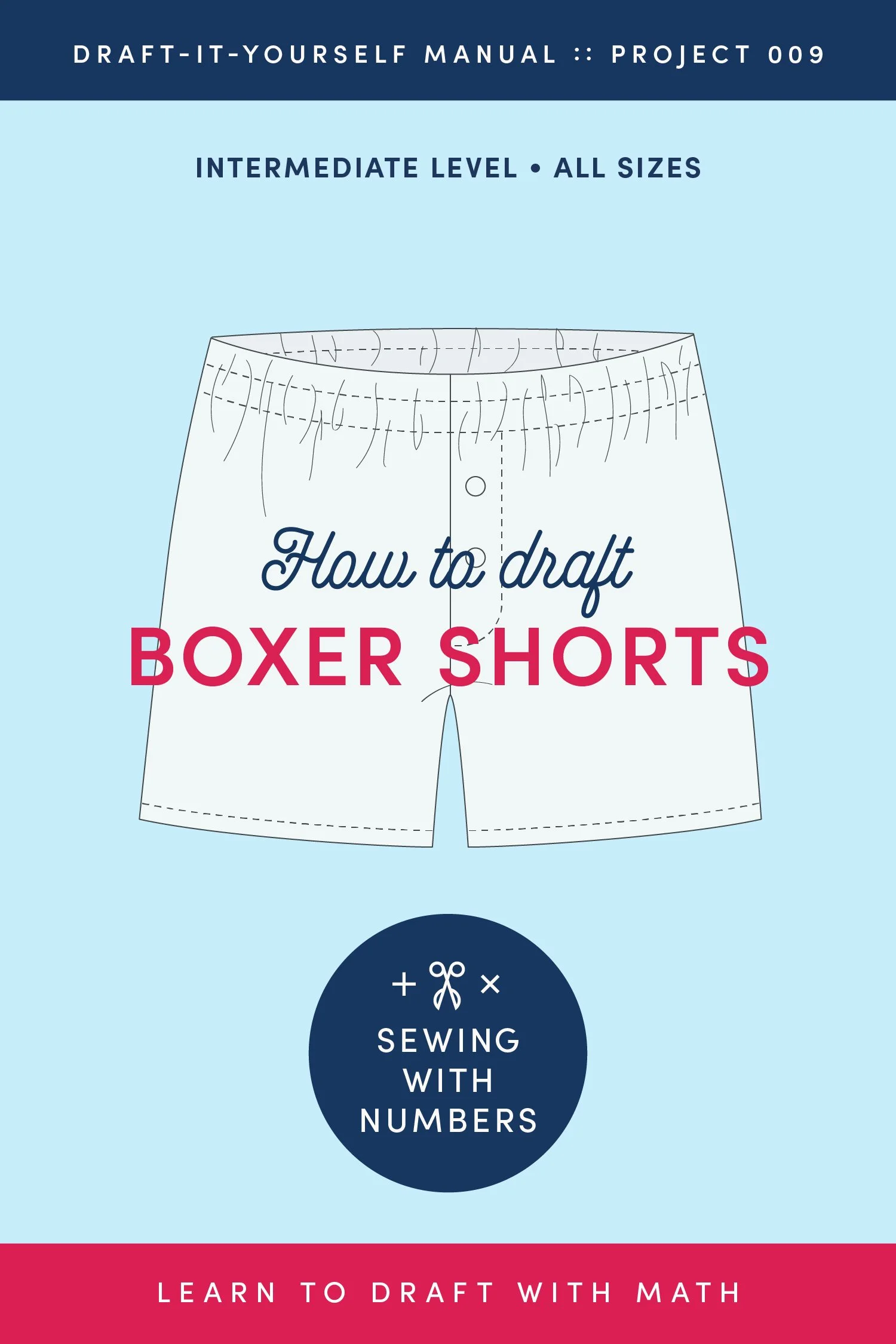
How to Draft Boxer Shorts — Sewing With Numbers Project 011 Draft-It-Yourself Manual
Design your own custom fitted boxer shorts. In this step-by-step guide, you’ll learn how to draft a pajama pants block and adapt it into boxer shorts with a functional fly front.
Inside the 30-page PDF, you’ll find:
How to Draft a Pajama Pant Block
Drafting instructions for Visible and Concealed Fly Fronts
Bonus tutorial: How to Draft Elastic Waistbands
Bonus tutorial: How to Draft Scooped Pockets
Please note: This is a drafting manual, not a sewing pattern. It does not include pattern pieces or construction instructions. Recommended for intermediate sewists and beginner-to-intermediate pattern drafters.
PDF Includes:
Instruction Booklet (30 pages)
Digital download only — no refunds.
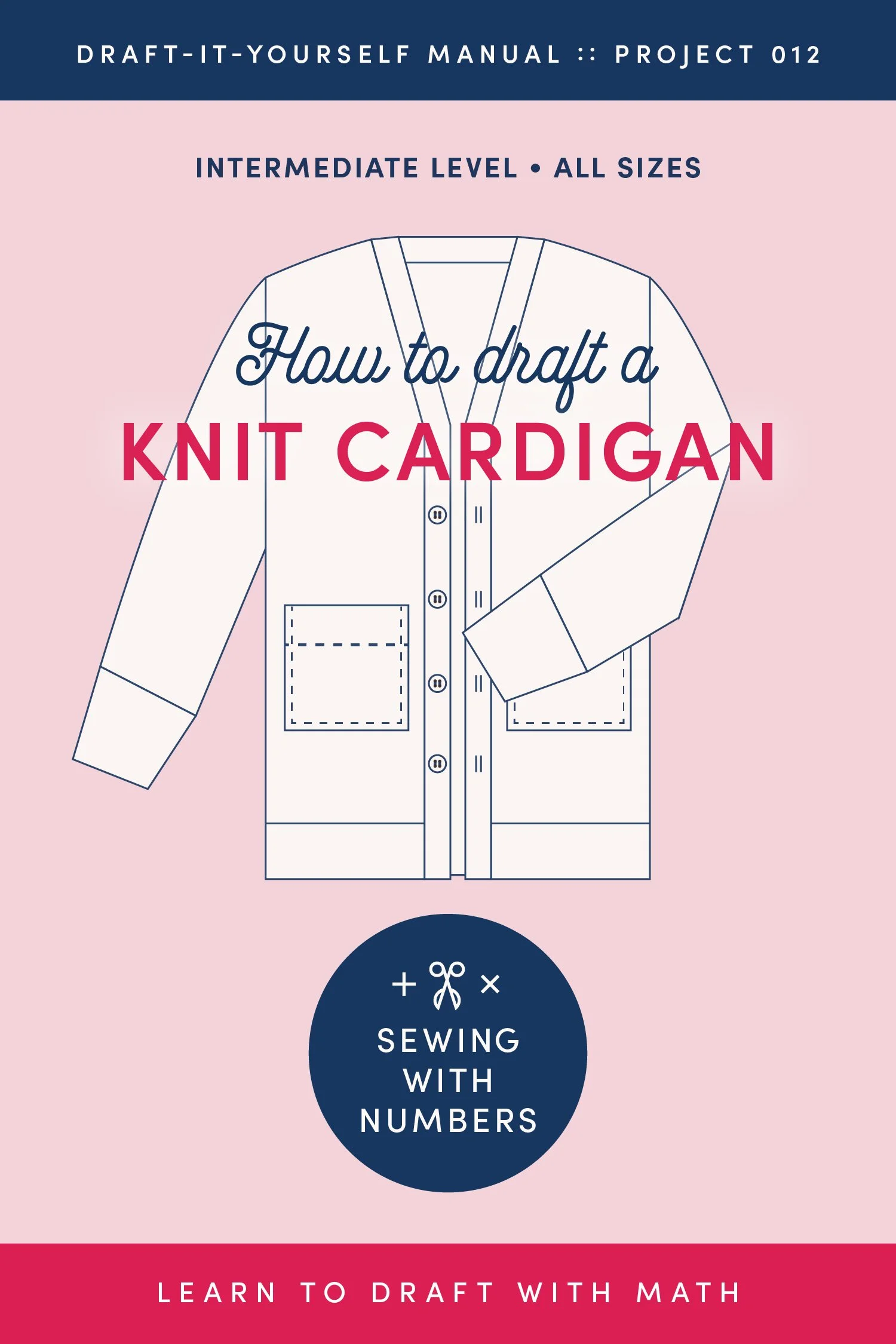
How to Draft a Knit Cardigan — Sewing With Numbers Project 012 Draft-It-Yourself Manual
Learn how to make your own knit cardigan sewing pattern for your own fit and size preferences. This manual is created for sewists who want to expand their skills beyond construction and into garment design. This step-by-step guide walks you through the design and drafting process, starting with selecting a silhouette through drafting every pattern piece.
Inside the 30-page PDF, you’ll find:
How to Draft a Knit Cardigan
4 Design Variations
Bonus tutorial: Understanding Negative Ease and Drafting with Stretch Fabric
Bonus tutorial: How to Draft a Mitered Corner Hem
Please note: This is a drafting manual, not a sewing pattern. It does not include pattern pieces or construction instructions. Recommended for intermediate sewists and beginner-to-intermediate pattern drafters.
PDF Includes:
Instruction Booklet (30 pages)
Digital download only — no refunds.
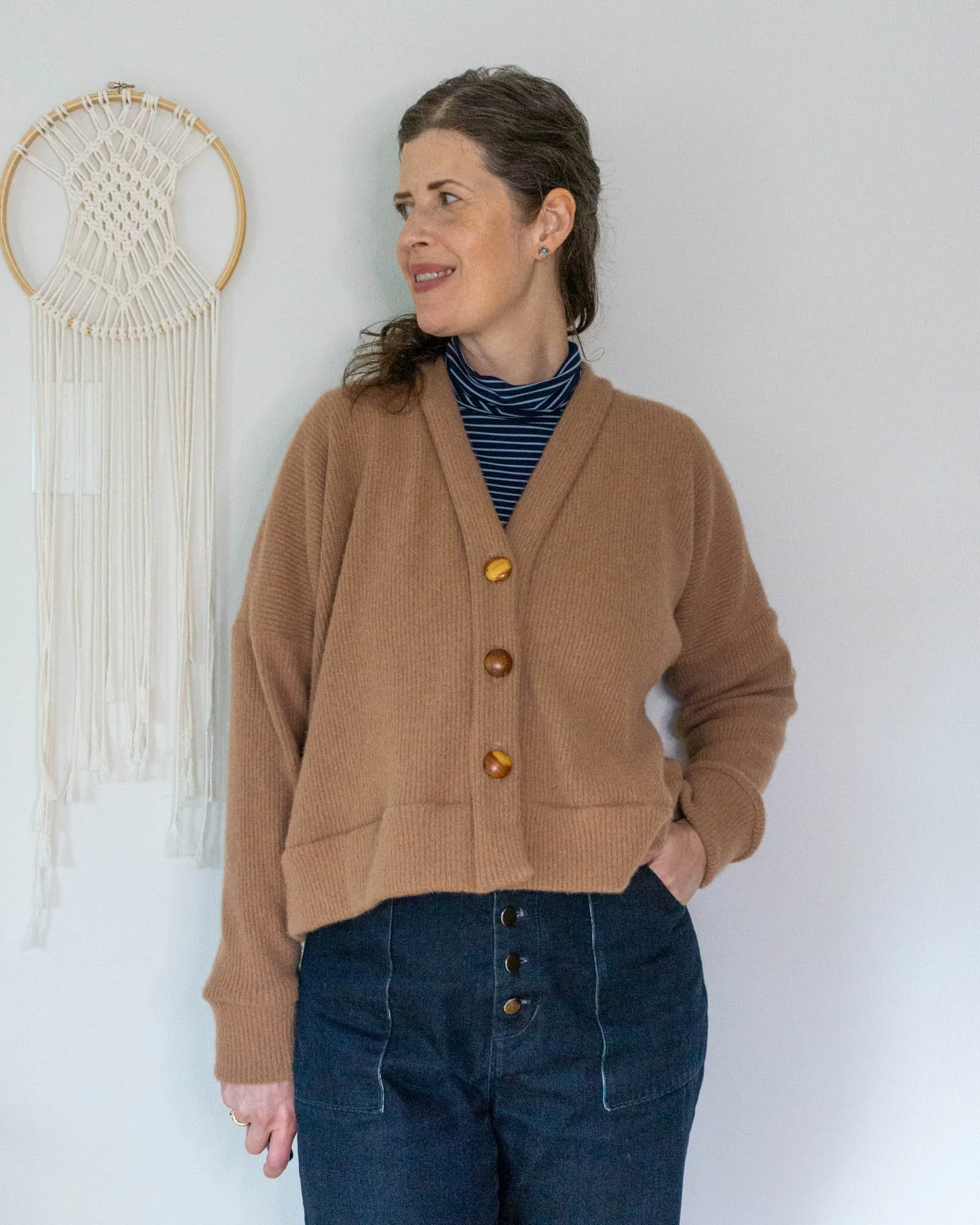
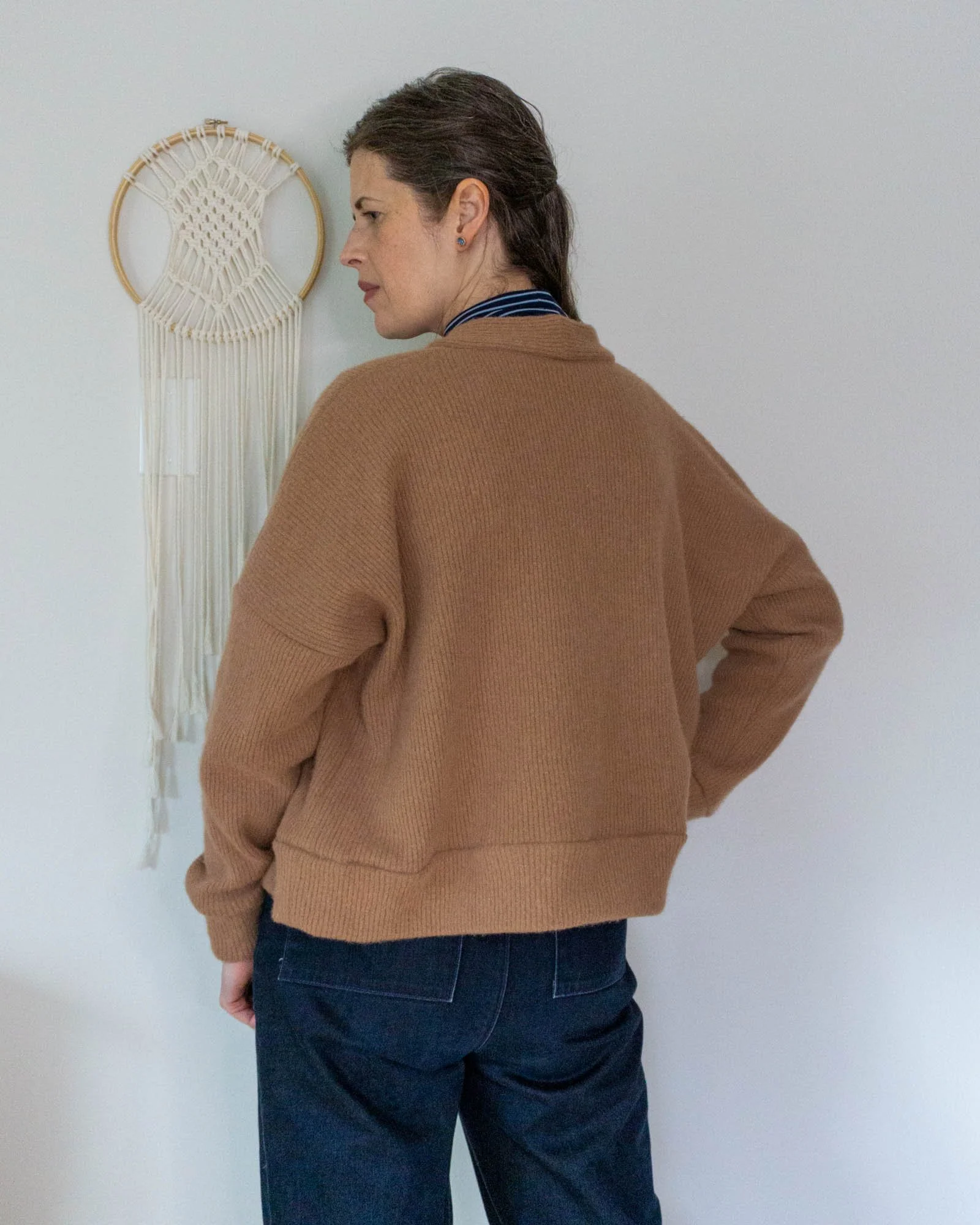
I wanted to make a boxy cropped cardigan with a dropped shoulder so I used about 9 inches of ease in the body and just a slight slope to the shoulder. You can read more about the drafting dimensions in this post on Substack.
FABRIC
This fabric is a very thick, slightly fuzzy rib knit that I think I bought at the FIDM Scholarship store in Los Angeles about 5?? years ago. (Sadly, the store has now closed but I loved shopping there.) I don’t have any details on the fabric and haven’t done a burn test. I suspect that it is a wool blend because it’s not itchy to my hands but is slightly itchy against my arms. It also doesn’t smell like wool when wet. So, it’s a mystery!
The fabric is a full 1/8” thick and it was a beast to work with. I will talk about this more in the video but I had to adapt some of my normal sewing techniques to make it work. I also struggled a bit with the rib stretching while sewing. To compensate, I adjusted the differential on my serger and lessened the pressure on my regular machine. There’s still some stretching that happened though, especially in the hem band. :/
I have a very large stash of buttons (humble brag?) and found these three gorgeous wooden buttons. They are about 1” wide. I would have preferred to have four but I just loved the buttons too much. So, I lowered the neckline a bit and stopped the buttons before the hem band. I think it looks like a design feature now.
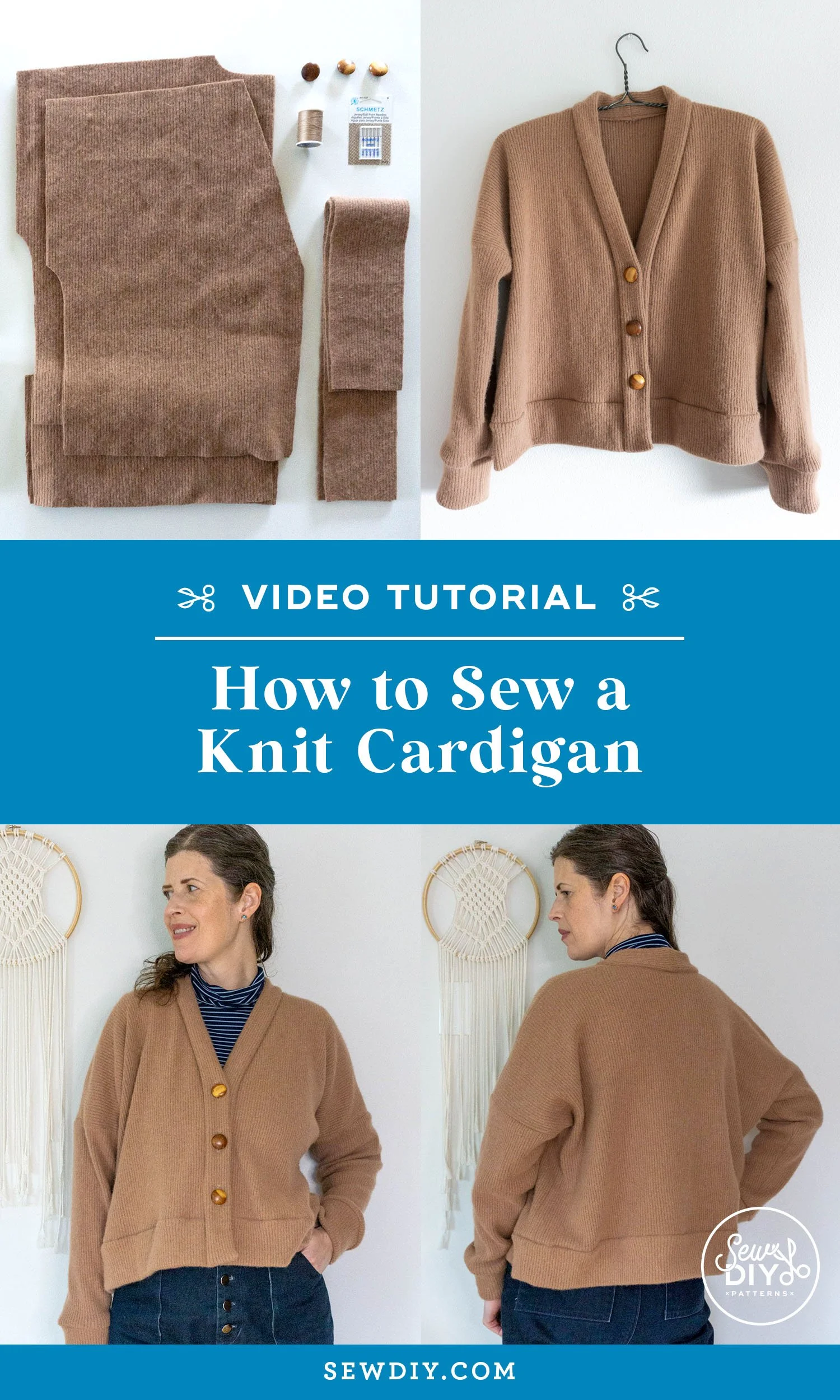
This video is about 28 minutes long !!! My fabric was challenging to work with, so the process was a little bit longer than for a more cooperative fabric. (And trust me, this is edited down to just the meat, i.e. the explanations, not every single stitch.) The entire process of sewing probably took about 8 hours, although tbh I never really time myself.
If you want to skip to a certain step, time stamps are below:
00:05 Intro
2:00 Part 1: Pattern Piece Overview
4:10 Part 2: Serger Setup & Finish raw edges
5:25 Part 3: Stitch the shoulder seams
7:43 Part 4: Stitch the sleeves
9:33 Part 5: Stitch the underarm seam
10:34 Part 6: Attach the cuffs
13:54 Part 7: Attach the hem band
17:00 Part 8: Attach the neck band
22:38 Part 9: Sew the buttonholes and buttons
25:55 Outro
Links mentioned in the video:
🧵 How to sew a cardigan with a serger (this is a video of sewing a cardigan with a thin sweater knit fabric)
🧵 How to clean up seam allowances
TIPS FOR SEWING THICK RIB KNIT FABRIC
Increase the differential on the serger
Try decreasing the pressure of the presser foot
Sew clear elastic into the seam to prevent stretching
Sew bands in two steps to avoid stitching through more layers
When sewing buttons, try a buttonhole specifically for knits

These semi-fitted tops and sundress feature a square neckline, side bust darts and are fitted at the back with a combination of narrow elastic and criss-crossed lacing. View A is a crop top that ends at the waistline. View B has a ruffled peplum and ends at the high hip. View C is a dress with a calf-length skirt and ruffle at the hem.
The pattern is a hybrid of a traditional pattern that you need to print and a zero-waste style pattern. You will need to print (or project) the front bodice and front facing pattern pieces. The remaining pattern pieces are rectangles that you can draw directly on your fabric (or paper) and then cut out, saving you paper and fabric.
This digital pattern includes an illustrated, step-by-step instruction booklet, a print-at-home layered pattern for letter or A4 size paper, a US copy shop pattern, an A0 size pattern and a projector pattern. All pattern files have layers. Pattern files are separated by cup size so that you can easily print only the pattern pieces that you need.
Visit the sewalong for more information, tips and tutorials.
Model is 5’11” and is wearing a size 12 C/D cup.
THIS IS NOT A PHYSICAL PRODUCT. After checkout, you will receive a link to the pattern that will be active for 24 hours after you click it. Prices are in USD.

The vintage-inspired Summer Sweatsuit is equally suited to warm weather play or lounge activities. The sweatsuit consists of a racerback tank with a curved hem and mid-rise short shorts. The Summer tank top has a full coverage racerback style with a medium-scoop neck and curved hem. It's designed to be fitted at the bust and skim over the waist and hips in a swing style.
The Summer shorts feature an elastic waistband and a high cut curved leg opening. There are no side seams in the shorts, making them extra comfortable on sensitive skin. If short-shorts aren’t your thing, the pattern shows you how to lengthen the legs of the shorts.
These garments are quick-to-sew so that you can get back to summer activities in no time. This pattern has a close fit and requires knit fabric with stretch.
This digital pattern includes an illustrated, step-by-step instruction booklet, a print-at-home layered pattern for letter or A4 size paper, a US copy shop pattern and an A0 size pattern.
Model is 5’11” and is wearing a size D tank top and size E shorts.
THIS IS NOT A PHYSICAL PRODUCT. After checkout, you will receive a link to the pattern that will be active for 24 hours after you click it. Prices are in USD.

The Miri Tank is a wardrobe building basic that will quickly become the shirt you reach for most often. This simple-to-sew top can be worn with skirts, pants or shorts for a variety of everyday outfits, throughout the year.
This A-line shaped tank top is fitted with a bust dart and cropped to end at the high hip. View A features a classic rounded neckline and armholes, while View B sports a V-neck in the front and gently angled armholes and back neck shaping. Both views are finished with an all-in-one facing. When made in a linen or cotton, the tank will maintain its A-line shape while worn. When made in a drapey rayon or Tencel, the shape will hang closer to the body.
This beginner-friendly pattern is drafted for sizes 0-32 and includes three cup size options for all sizes. Choose from A/B cup, C/D cup or E/F cup for a customized fit through the bust.
This digital pattern includes an illustrated, step-by-step instruction booklet, a print-at-home layered pattern for letter or A4 size paper, a US copy shop pattern and an A0 size pattern. Pattern files are separated by cup size and view to reduce so that you can easily print only the pattern pieces that you need.
Model is 5’11” and is wearing a size 12 C/D cup.
THIS IS NOT A PHYSICAL PRODUCT. After checkout, you will receive a link to the pattern that will be active for 24 hours after you click it. Prices are in USD.
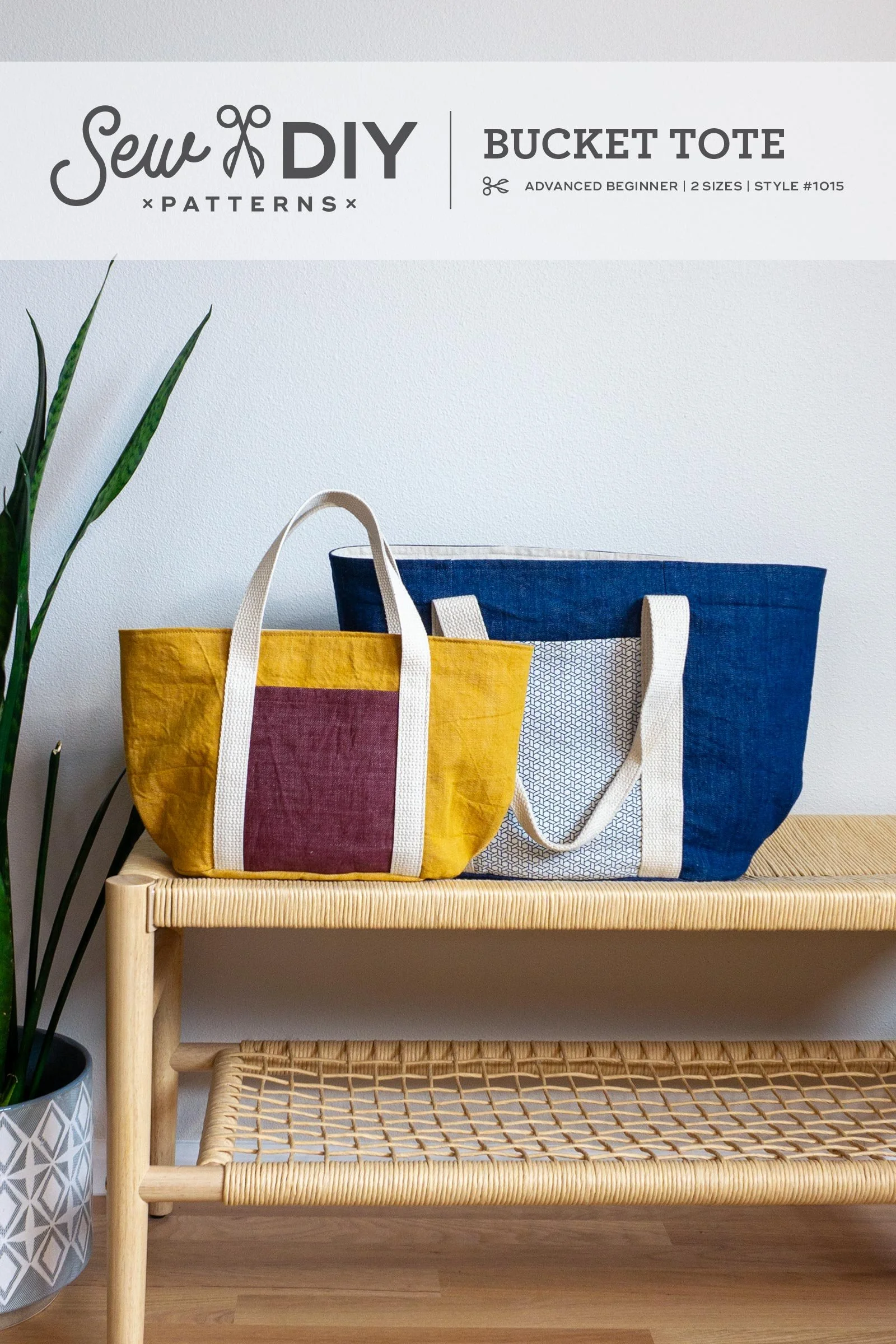
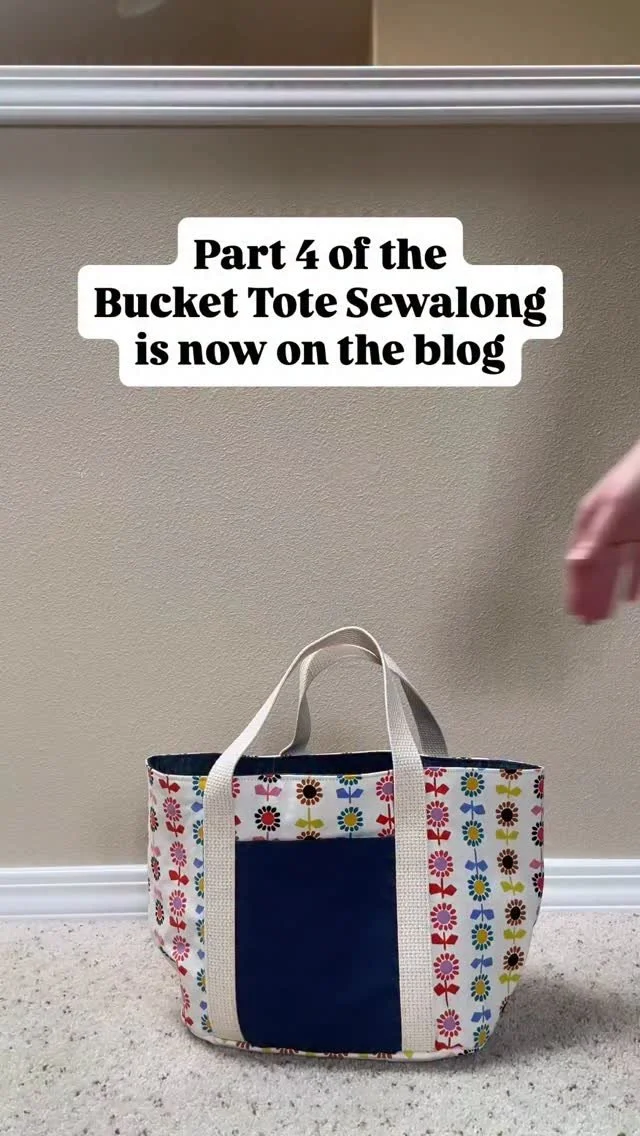
The Sew DIY Bucket Tote is the perfect "throw & go" bag with a wide top opening so you can easily see and access everything inside. This fully-lined tote is thoughtfully designed with an oval base, pleats at each end and exterior and interior pockets.
The pattern includes both regular and small sizes, giving you options for wherever life takes you. The regular size is perfect for a day at the pool or a short road trip while the small size can be used to carry your lunch or a small craft project.
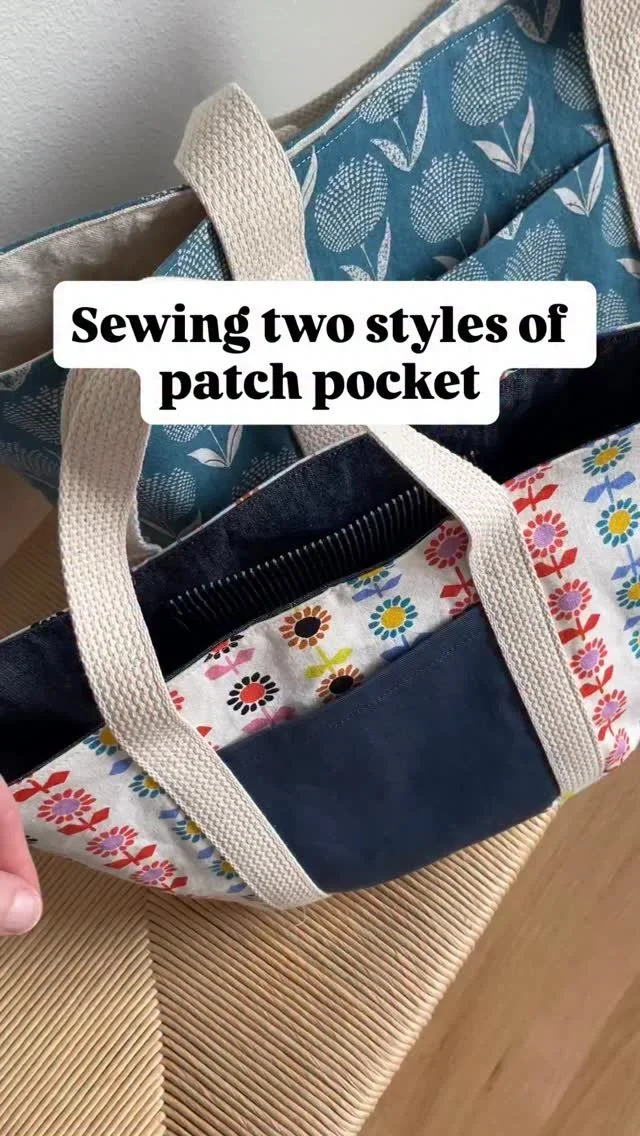
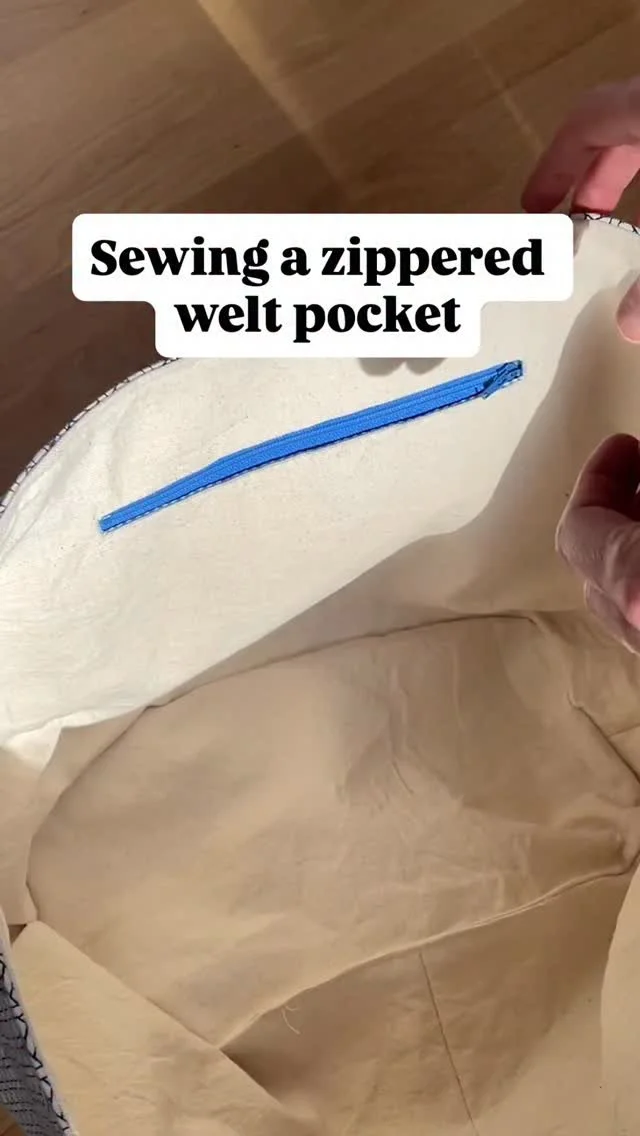
Both sizes have two exterior patch pockets and one interior pocket. The regular size has a welt zippered pocket inside and the small size has an interior patch pocket. The handles are made from cotton webbing that are topstitched to the sides of the bag and secured in the bottom seam.
This digital pattern includes:
• Illustrated instruction booklet
• Print-at-home layered pattern (Letter/A4)
• US copy shop and A0 patterns
• Projector pattern
Scroll down for more details.
THIS IS NOT A PHYSICAL PRODUCT. After checkout, you will receive a link to the pattern that will be active for 24 hours after you click it. Prices are in USD.

The Lela Skirt is a casual skirt featuring an elastic waist, straight silhouette and a split hem in either knee or mid-calf length. This is a beginner friendly pattern that is equally easy-to-sew as it is to wear. This pattern is designed to be mix-and-match for a total of 18 different designs. Select from a gently curved hem, an exaggerated curved hem or a straight hem. You can also choose between in-seam pockets, angled pockets or scoop pockets.
This digital pattern includes an illustrated, step-by-step instruction booklet, a print-at-home layered pattern for letter or A4 size paper, a US copy shop pattern and an A0 size pattern.
Model is 5’11” and is wearing a size 12.
THIS IS NOT A PHYSICAL PRODUCT. After checkout, you will receive a link to the pattern that will be active for 24 hours after you click it. Prices are in USD.
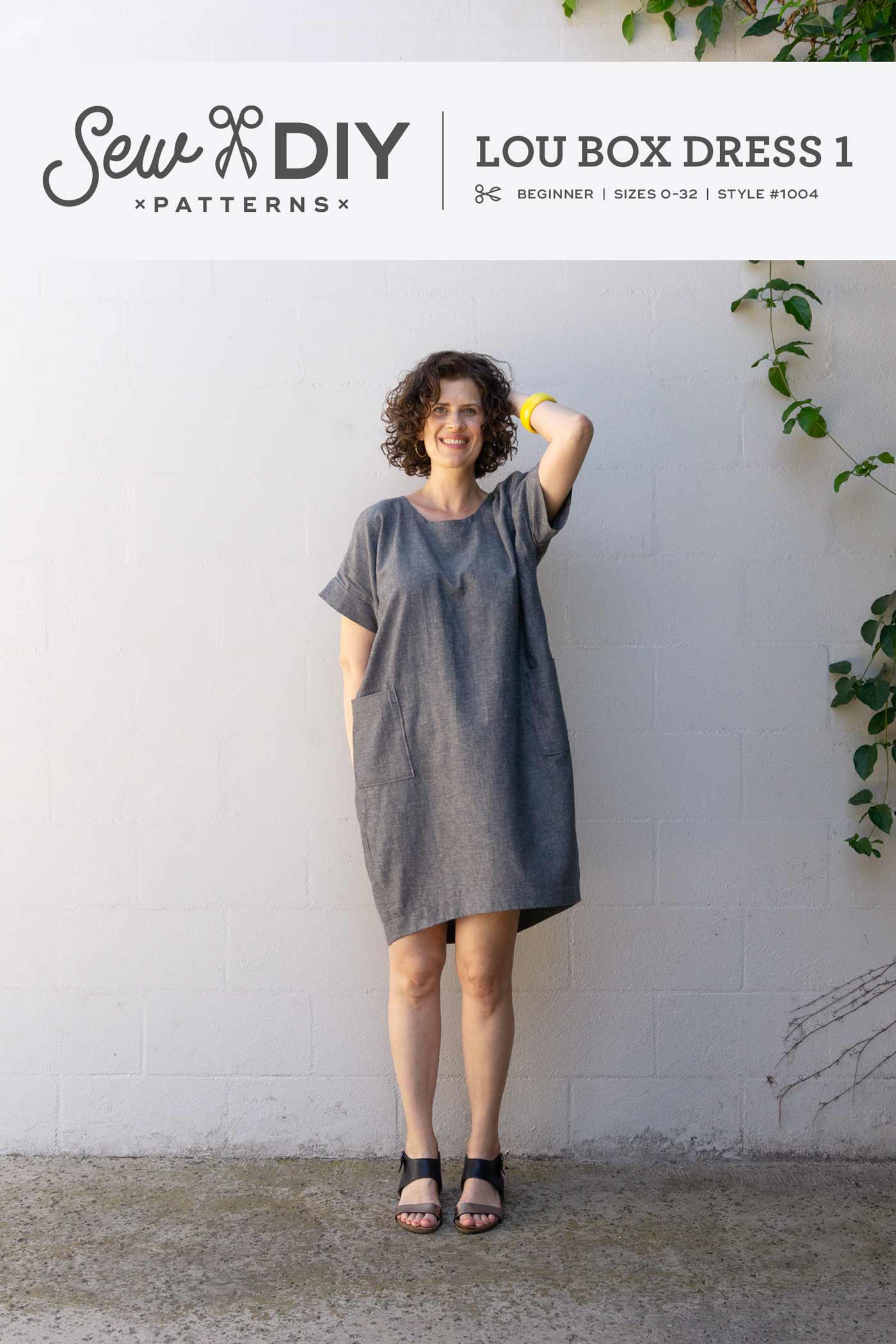
The Lou Box Dress 1 is a loose-fitting cocoon style dress. Worn alone, it’s perfect for warm summer days. Paired with a sweater, tights and boots, it will take you through the colder months. Make it in linen for a casual look or printed silk for a luxurious night out. View A features a medium scoop neck, 3/4 length sleeves with cuffs, in-seam pockets and a knee-length skirt. View B features short cuff sleeves and patch pockets. Instructions are included for sewing the dress in both woven and knit fabrics.
This digital pattern includes an illustrated, step-by-step instruction booklet, a print-at-home layered pattern for letter or A4 size paper, a US copy shop pattern and an A0 size pattern.
Model is 5’11” and is wearing a size 12.
THIS IS NOT A PHYSICAL PRODUCT. After checkout, you will receive a link to the pattern that will be active for 24 hours after you click it. Prices are in USD.

The Jodi Wide Leg Knit pants are the perfect mix of style and comfort. These ankle length pants feature angled side seam pockets, a medium rise and a lightly gathered elastic waistband. These pants are easy to sew, comfortable to wear and have a stylish wide leg.
This pattern is rated as Advanced Beginner. It’s helpful to have experience sewing with knit fabric but this is easy enough to sew as your first knit fabric sewing project. There are blog posts in the sewalong to help you.
Theses pants are designed to have a “skim” fit with just a little bit of negative ease. You’ll have all the comfort of stretch knit fabric but none of the tightness of a garment like leggings. See the size chart for more details.
This digital pattern includes an illustrated, step-by-step instruction booklet, a print-at-home layered pattern for letter or A4 size paper, a US copy shop pattern, an A0 size pattern and a projector pattern. All pattern files have layers.
Model is 5’11” and is wearing a size E.
THIS IS NOT A PHYSICAL PRODUCT. After checkout, you will receive a link to the pattern that will be active for 24 hours after you click it. Prices are in USD.

The Lou Box Top is a versatile, loose fitting top with two neckline options and three hem options, for a total of six different silhouettes. Designed with beginners in mind, the steps are very easy to follow, using the most basic techniques and the loose fit of the design requires minimal fitting. It's a great project for beginners looking to get their feet wet and for more experienced sewists who want to add some quick-to-make basics to their wardrobe.
This is a digital pdf pattern that includes a print-at-home pattern, copy shop pattern and illustrated instructions for both woven and knit fabrics. THIS IS NOT A PHYSICAL PRODUCT.
After checkout, you will receive a link to the pattern that will be active for 24 hours after you click it. Prices are in USD.
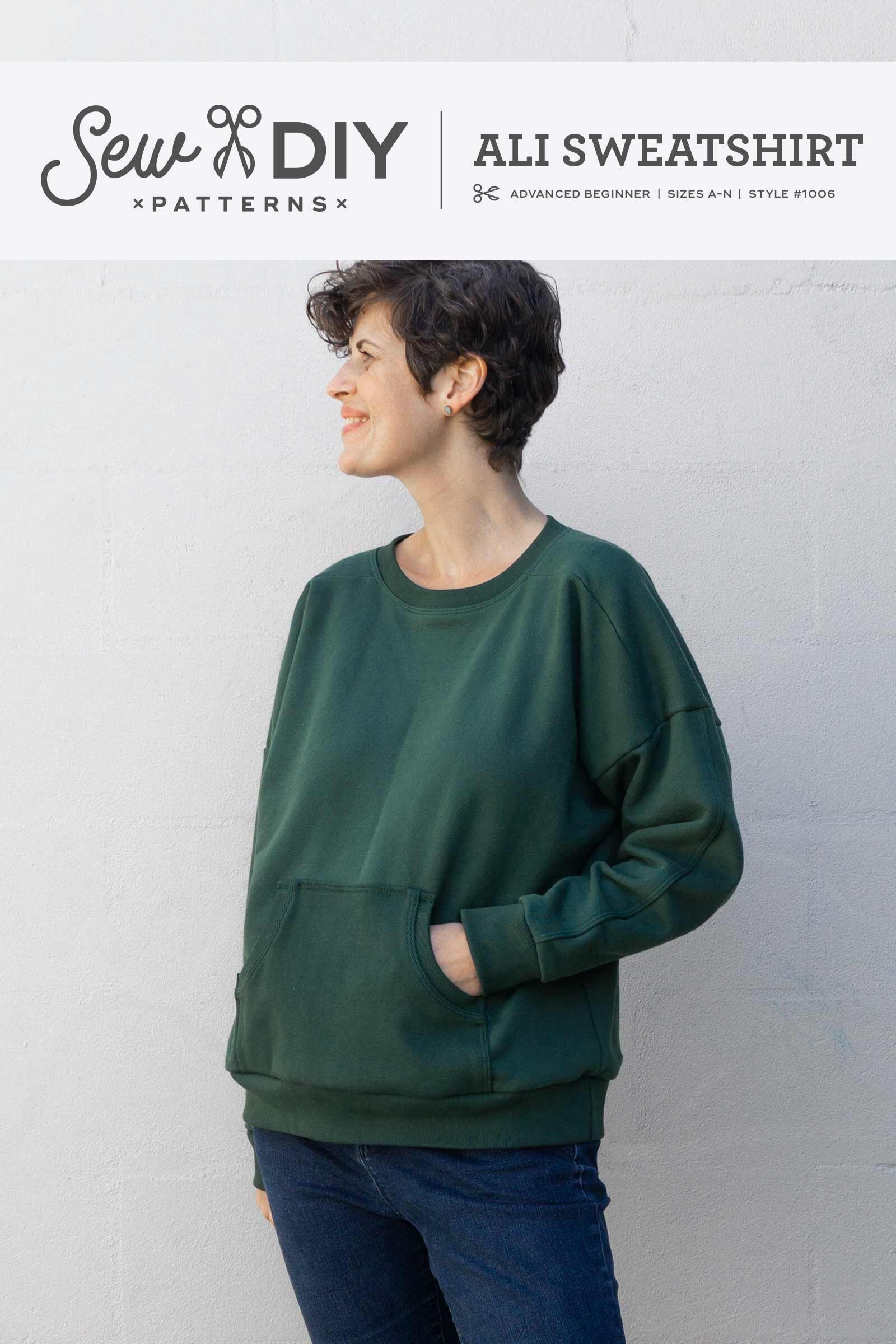
An oversized sweatshirt with drop-shoulders, dolman sleeves, a shoulder yoke and two-piece sleeves with optional topstitching. View A features a crew neck, a straight body for a gender neutral silhouette and an optional kangaroo pocket. View B is cropped with a scoop neck that narrows to the high hip for a more feminine style. The kangaroo pocket can also be used with View B.
This casual and sporty style is easy to sew and fun to wear. Wear it to the gym, to the beach or anywhere you need an extra layer of warmth. The roomy fit pairs well with jeans and leggings for everyday stylish comfort.
This digital pattern includes an illustrated, step-by-step instruction booklet, a print-at-home layered pattern for letter or A4 size paper, a US copy shop pattern and an A0 size pattern. Additionally, there is a printable color blocking worksheet to test out color arrangements before cutting your fabric.
Model is 5’11” and is wearing a size D.
THIS IS NOT A PHYSICAL PRODUCT. After checkout, you will receive a link to the pattern that will be active for 24 hours after you click it. Prices are in USD.
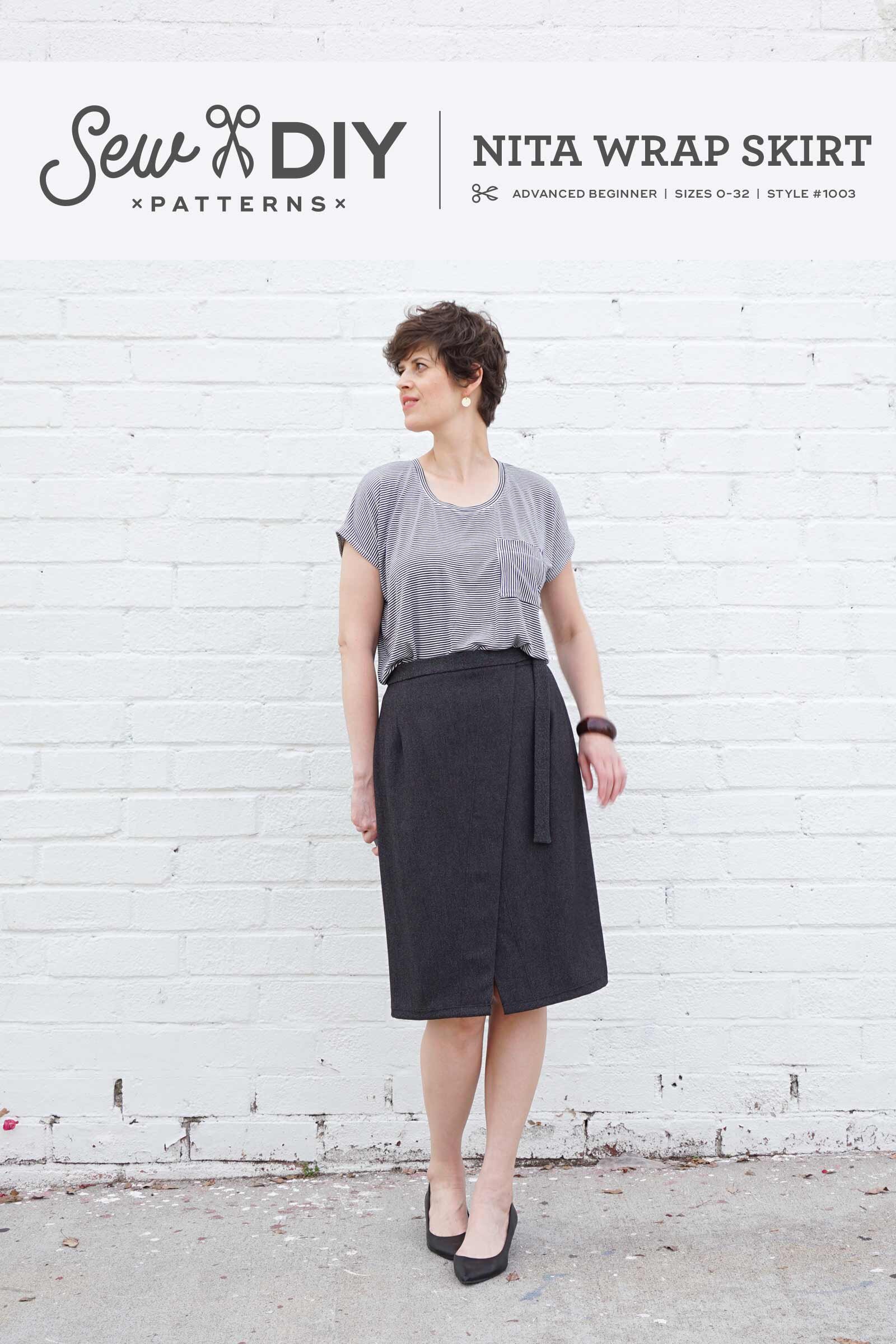
The Nita Wrap Skirt is a stylish wrap skirt with a fitted silhouette and dramatic angled front. There are three length options and three waistband closure options that can easily be mixed and matched. The pattern features waist darts, a built in front facing and an optional lining.
Make the mini length in denim or corduroy for a fun, casual look. Or, pair a neutral twill fabric with the midi-length for a sophisticated look that will take you from the office to happy hour in style.
This skirt can be a bit revealing so there is also a full coverage option. The skirt also works well when worn with tights or leggings.
This digital pattern includes an illustrated, step-by-step instruction booklet, a print-at-home layered pattern for letter or A4 size paper, a US copy shop pattern and an A0 size pattern. The instruction booklet also includes tips for common pattern adjustments.
For additional help, there is a photo sewalong here.
Model is 5’11” and is wearing a size 12 skirt.
THIS IS NOT A PHYSICAL PRODUCT. After checkout, you will receive a link to the pattern that will be active for 24 hours after you click it. Prices are in USD.

The Lou Box series of patterns is designed to be mixed and matched easily for a treasure trove of options and hacking opportunities. This expansion pack includes the four sleeve options from the Lou Box Dress patterns and can be used with the Lou Box Top or Lou Box Dress patterns. Adding sleeves to the Lou Box Top opens up a wealth of possibilities for your everyday wardrobe. Playing around with these design options is a great way to have fun and explore your creativity and personal style.
Sleeve styles included:
Short sleeves with cuffs
Short cuff sleeves
Three quarter tapered sleeves
Full length tapered sleeves
Please note: The Lou Box Top or one of the Lou Box Dress patterns is needed to complete this pattern. (If you already own both Lou Box Dress patterns, you do not need this expansion pack.)
This is a digital pdf pattern that includes a print-at-home pattern, copy shop pattern, A0 pattern and illustrated instructions. THIS IS NOT A PHYSICAL PRODUCT.
After checkout, you will receive a link to the pattern that will be active for 24 hours after you click it. Prices are in USD.

The Dana Jumpsuit is the perfect mix of sophistication and sport. Make the pants version in velvet or silk for sophisticated nighttime look or sew up the shorts length in a rayon crepe or cotton chambray for a carefree, summer romper. The front waist tie creates subtle shaping while maintaining total comfort.
This all-season jumpsuit features a dramatic front waist tie, a scoop neck, set-in elbow-length sleeves, an invisible back zipper and optional center front top stitching. Choose between a high curved or a deeper V-shaped back neckline.
This digital pattern includes an illustrated, step-by-step instruction booklet, a print-at-home layered pattern for letter or A4 size paper, a US copy shop pattern and an A0 size pattern.
Model is 5’11” and is wearing a size 12.
THIS IS NOT A PHYSICAL PRODUCT. After checkout, you will receive a link to the pattern that will be active for 24 hours after you click it. Prices are in USD.

The Tasi Robe/Jacket is a Draft-It-Yourself pattern for any size human and perfect for dipping your toes into basic pattern making and design. You decide your finished measurements and the detailed instructions will take you step-by-step through creating your own pattern pieces.
This pattern is a fantastically flexible basic that can be used to make a robe, simple jacket or even a cardigan. It’s suitable for almost any fabric from rayon, silk or linen for warmer months to a fleece or sweater knit for cooler months. You can even use up leftover fabrics for a scrappy, color blocked garment.
View A is a classic robe style with patch pockets, a tie belt and carriers. View B is a casual jacket with turned back cuffs, oversized pockets and a hem band. It’s easy to adjust the design of this pattern to suit your personal preferences.
This is a digital pdf pattern that includes illustrated step-by-step instructions and a spreadsheet calculator to create your own custom pattern pieces. PATTERN PIECES ARE NOT INCLUDED.
THIS IS NOT A PHYSICAL PRODUCT. After checkout, you will receive a link to the pattern that will be active for 24 hours after you click it. Prices are in USD.
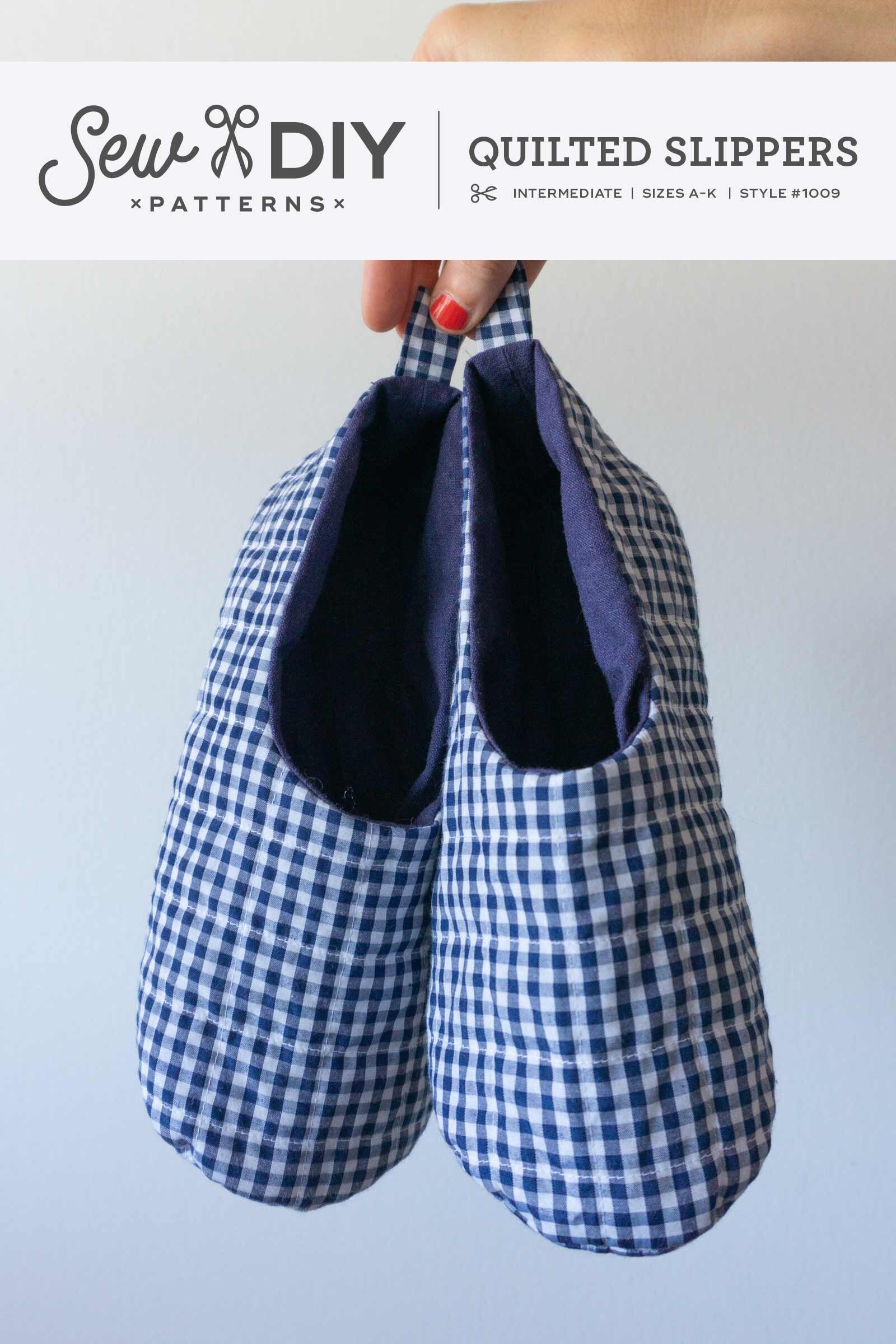
The Sew DIY Quilted Slippers are the perfect way to keep toes warm and use up small cuts of fabric. Plus, it’s a great way to introduce yourself to quilting. The quilted exterior is constructed by quilting a layer of fabric and batting together. You can also use pre-quilted fabric for a quicker project.
The slippers are sized for foot lengths 8.25-12 inches (21-30.5 cm) which approximately fits US women’s shoe sizes 4-14 and US men’s shoe sizes 6-14.5. The pattern is gender neutral making it a great gift for all your friends and family.
View A is a bootie style slipper that can be worn with the top turned down to reveal the lining or with the top up to keep the ankles warm. View B is an open top skimmer style, perfect for the summer months.
This is a digital pdf pattern that includes a print-at-home pattern, copy shop pattern, A0 pattern and illustrated instructions.
THIS IS NOT A PHYSICAL PRODUCT. After checkout, you will receive a link to the pattern that will be active for 24 hours after you click it. Prices are in USD.

The Sew DIY Stocking is a beginner-friendly holiday stocking, perfect for personalizing your holiday decor. The stocking is available in four sizes—mini, small, medium and large—that can be used in a variety of ways. The small, medium and large sizes work well for the classic stocking usage. Use a mix of sizes and fabrics on your mantel, or pick one for a more uniform look. The mini size can be used for Christmas tree ornaments, an advent calendar, a fun garland, in place of a bow on gifts or even as a gift card holder.
The stockings feature a classic design with a rounded toe and heel, a hanging loop and a fold-over cuff. The stockings are quick to sew and, if desired, the small, medium and large sizes can be sewn with a lining. Make it in velvet for a classic, luxurious feel or sew up a set in plaid cotton flannel for a cozy, homespun vibe.
This is a digital pdf pattern that includes a print-at-home pattern, copy shop pattern, A0 pattern, projector-ready file and illustrated instructions.
THIS IS NOT A PHYSICAL PRODUCT. After checkout, you will receive a link to the pattern that will be active for 24 hours after you click it. Prices are in USD.

The Beginner's Bundle includes the Lou Box Top and Lela Skirt pdf patterns bundled together for a discounted price. These two patterns are a great way to practice your sewing skills and build your handmade wardrobe. Both patterns are designed for beginners, with easy to follow steps. And as a bonus, they each use only about a yard of fabric.
The Lou Box Top is a loose fitting top with two necklines and three hem options. The Lela Skirt is a casual elastic waist with three pocket styles and three hem options.
The bundle includes two digital PDF patterns each with a print-at-home pattern, copy shop pattern and illustrated instructions. THIS IS NOT A PHYSICAL PRODUCT.
After checkout, you will receive a link to the pattern that will be active for 24 hours after you click it. Prices are in USD.

This course is priced in a “pay what you can afford” structure. While I believe this is a very high value course, I understand that we all have different economic situations. I also believe that sustainable living should be something that’s available to everyone and sustainability is at the heart of this course. For those reasons, I’m offering the course in a “pay what you can afford” structure. Click here to see all price options here.
Are your scraps taking over your sewing room and causing you stress? For those of us who sew and want to live a sustainable lifestyle, finding new ways to use our fabric scraps can become overwhelming.
After years of sewing and saving scraps, I created a method of improvisational quilting that uses my scraps to make something useful and is fun and relaxing. This process of sewing is a great way to take a break from the technical aspects of garment sewing, and get in the flow of making. With this course, you'll learn all the basics of making a quilt and gain a fresh perspective on your scrap bin.
How does it work?
This is a blog style course that uses a combination of video, image and text to teach you everything you need to know to sew your own improvisational quilt. While the course is detailed and comprehensive, the lessons are broken into bite sized chunks so that you can learn as quickly (or slowly) as you want.
You will receive lifetime access to the course. After you purchase the e-course, you’ll receive an email with a download link. The pdf download will then give you instructions for accessing the private site with the video lessons.
Learn more and read testimonials here.

The Work-From-Home Pattern Bundle has all the patterns you need to sew your won functional, versatile and comfortable mini capsule wardrobe. With these patterns, you can make a variety of tops, bottoms and layering pieces perfect customized to your everyday style.
The Work-From-Home Pattern Bundle includes 4 unique patterns plus the LBT sleeve expansion pack discussed above.
1. Lou Box Top PDF Pattern (value $14)
2. Lou Box Top Sleeve Expansion PDF Pattern (value $6)
3. Draft-It-Yourself Tasi Robe/Jacket PDF Pattern (value $14)
4. Summer Sweatsuit PDF Pattern (value $14)
5. (Bonus!) Quilted Slippers PDF Pattern (value $12)
6. Wardrobe planning workbook PDF Printable (value $4)
TOTAL VALUE = $64
(Scroll down for pattern details.)
THIS IS NOT A PHYSICAL PRODUCT. After checkout, you will receive a link to the pattern that will be active for 24 hours after you click it. Prices are in USD.

The Lou Box Dress 2 is a loose-fitting gathered waist dress with a ballet neckline, scoop pockets, a knee length skirt and dolman sleeves. View A features three-quarter length sleeves. View B features full-length tapered sleeves and a low scoop back. Instructions are included for sewing the dress in both woven and knit fabrics.
This digital pattern includes an illustrated, step-by-step instruction booklet, a print-at-home layered pattern for letter or A4 size paper, a US copy shop pattern and an A0 size pattern.
Model is 5’11” and is wearing a size 12.
THIS IS NOT A PHYSICAL PRODUCT. After checkout, you will receive a link to the pattern that will be active for 24 hours after you click it. Prices are in USD.
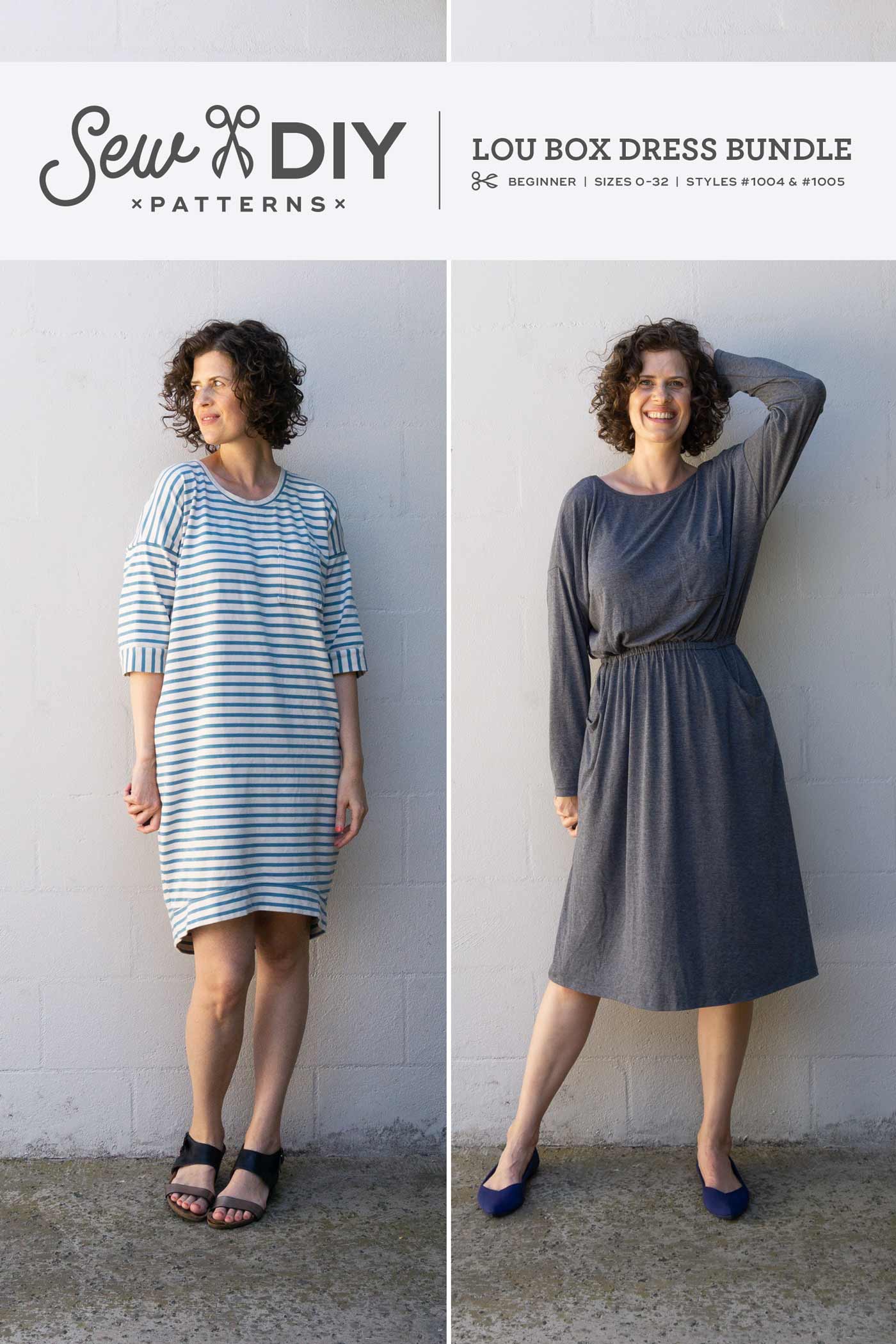
This item includes the Lou Box Dress 1 and the Lou Box Dress 2 pdf sewing patterns for a discounted price.
Lou Box Dress 1
The Lou Box Dress 1 is a loose-fitting cocoon style dress. Worn alone, it’s perfect for warm summer days. Paired with a sweater, tights and boots, it will take you through the colder months. Make it in linen for a casual look or printed silk for a luxurious night out. View A features a medium scoop neck, 3/4 length sleeves with cuffs, in-seam pockets and a knee-length skirt. View B features short cuff sleeves and patch pockets. Instructions are included for sewing the dress in both woven and knit fabrics.
Lou Box Dress 2
The Lou Box Dress 2 is a loose-fitting gathered waist dress with a ballet neckline, scoop pockets, a knee length skirt and dolman sleeves. View A features three-quarter length sleeves. View B features full-length tapered sleeves and a low scoop back. Instructions are included for sewing the dress in both woven and knit fabrics.
The bundle includes two digital PDF patterns each with a print-at-home pattern, copy shop pattern, A0 pattern and illustrated instructions. THIS IS NOT A PHYSICAL PRODUCT.
After checkout, you will receive a link to the pattern that will be active for 24 hours after you click it. Prices are in USD.

The Sew DIY Printable Sewing Planner is a set of pdfs that you can print at home to build your own project planner and sewing journal. The planner includes all the pages you’ll need to track, organize and document your sewing projects. As a bonus, I’ve also included undated monthly and weekly calendars so that you can continue to use this planner system for years to come.
The planner can be printed in the following sizes/formats:
Letter
A4
Half-Letter (plus 2-up or crop marks)
A5 (plus 2-up or crop marks)
This is a digital pdf product that includes 12 planner page designs, undated weekly and monthly calendars in four page sizes. THIS IS NOT A PHYSICAL PRODUCT. This product is for personal use only. Prices are in USD.

The Sew DIY Printable Sewing Planner is a set of pdfs that you can print at home to build your own project planner and sewing journal. The planner includes all the pages you’ll need to track, organize and document your sewing projects. As a bonus, I’ve also included undated monthly and weekly calendars so that you can continue to use this planner system for years to come.
The planner can be printed in the following sizes/formats:
Letter
A4
Half-Letter (plus 2-up or crop marks)
A5 (plus 2-up or crop marks)
This is a digital pdf product that includes 12 planner page designs, undated weekly and monthly calendars in four page sizes. THIS IS NOT A PHYSICAL PRODUCT. This product is for personal use only. Prices are in USD.

Decorate your sewing space with these light-hearted and inspirational sewing themed printable posters. This pdf download includes five designs in 3 color ways (solid color background, color type on white background and black type on white). The artwork can be scaled up or down without loss of quality. Plus, the download includes a variety of sizes so that you can print just the size you need for your frame.
Sizes
2x3 ratio file for printing 4"x6", 6"x9", 8"x12", 10"x15", 12"x18", 16"x24", 20"x30", 24"x36", 60x90cm
3x4 ratio file for printing 6"x8", 9"x12", 12"x16", 18”x24"
4x5 ratio file for printing 4"x5", 8"x10", 16"x20", 40x50cm
5x7 ratio file for printing 5"x7", A5, A4, A3, A2, A1, 50x70cm
file for printing 11"x14"
This is a digital pdf product that includes 15 poster designs in five sizes. THIS IS NOT A PHYSICAL PRODUCT. This product is for personal use only. Prices are in USD.

This course is priced in a “pay what you can afford” structure. While I believe this is a very high value course, I understand that we all have different economic situations. I also believe that sustainable living should be something that’s available to everyone and sustainability is at the heart of this course. For those reasons, I’m offering the course in a “pay what you can afford” structure. Click here to see all price options here.
Are your scraps taking over your sewing room and causing you stress? For those of us who sew and want to live a sustainable lifestyle, finding new ways to use our fabric scraps can become overwhelming.
After years of sewing and saving scraps, I created a method of improvisational quilting that uses my scraps to make something useful and is fun and relaxing. This process of sewing is a great way to take a break from the technical aspects of garment sewing, and get in the flow of making. With this course, you'll learn all the basics of making a quilt and gain a fresh perspective on your scrap bin.
How does it work?
This is a blog style course that uses a combination of video, image and text to teach you everything you need to know to sew your own improvisational quilt. While the course is detailed and comprehensive, the lessons are broken into bite sized chunks so that you can learn as quickly (or slowly) as you want.
You will receive lifetime access to the course. After you purchase the e-course, you’ll receive an email with a download link. The pdf download will then give you instructions for accessing the private site with the video lessons.
Learn more and read testimonials here.

This course is priced in a “pay what you can afford” structure. While I believe this is a very high value course, I understand that we all have different economic situations. I also believe that sustainable living should be something that’s available to everyone and sustainability is at the heart of this course. For those reasons, I’m offering the course in a “pay what you can afford” structure. Click here to see all price options here.
Are your scraps taking over your sewing room and causing you stress? For those of us who sew and want to live a sustainable lifestyle, finding new ways to use our fabric scraps can become overwhelming.
After years of sewing and saving scraps, I created a method of improvisational quilting that uses my scraps to make something useful and is fun and relaxing. This process of sewing is a great way to take a break from the technical aspects of garment sewing, and get in the flow of making. With this course, you'll learn all the basics of making a quilt and gain a fresh perspective on your scrap bin.
How does it work?
This is a blog style course that uses a combination of video, image and text to teach you everything you need to know to sew your own improvisational quilt. While the course is detailed and comprehensive, the lessons are broken into bite sized chunks so that you can learn as quickly (or slowly) as you want.
You will receive lifetime access to the course. After you purchase the e-course, you’ll receive an email with a download link. The pdf download will then give you instructions for accessing the private site with the video lessons.
Learn more and read testimonials here.

This course is priced in a “pay what you can afford” structure. While I believe this is a very high value course, I understand that we all have different economic situations. I also believe that sustainable living should be something that’s available to everyone and sustainability is at the heart of this course. For those reasons, I’m offering the course in a “pay what you can afford” structure. Click here to see all price options here.
Are your scraps taking over your sewing room and causing you stress? For those of us who sew and want to live a sustainable lifestyle, finding new ways to use our fabric scraps can become overwhelming.
After years of sewing and saving scraps, I created a method of improvisational quilting that uses my scraps to make something useful and is fun and relaxing. This process of sewing is a great way to take a break from the technical aspects of garment sewing, and get in the flow of making. With this course, you'll learn all the basics of making a quilt and gain a fresh perspective on your scrap bin.
How does it work?
This is a blog style course that uses a combination of video, image and text to teach you everything you need to know to sew your own improvisational quilt. While the course is detailed and comprehensive, the lessons are broken into bite sized chunks so that you can learn as quickly (or slowly) as you want.
You will receive lifetime access to the course. After you purchase the e-course, you’ll receive an email with a download link. The pdf download will then give you instructions for accessing the private site with the video lessons.
Learn more and read testimonials here.

This video sewalong will take you through all the steps of making the Dana Jumpsuit, from selecting your size and making fit adjustments to adhering interfacing, sewing an invisible zipper and attaching a neckline facing. Along the way, you’ll get all my tips and tricks for getting great sewing results, as well as additional insights into the design and how to make it work for you.
NOTE: The Dana Jumpsuit pattern must be purchased separately. You can find it here.
Who this is for?
This video sewalong is perfect for someone who wants to uplevel their sewing skills and learns well from a video format. This is an intermediate level pattern so it’s perfect for you if you’ve sewn a few beginner patterns before and would like someone to guide you through one that is a little more complicated.
How does it work?
You will receive lifetime access to 17 video sewing lessons, plus additional written and illustrated content to support the videos. This course is self-paced, so you can go as quickly or slowly as you’d like. After you purchase the e-course, you’ll receive an email with a download link. The pdf download will then give you instructions for accessing the private site with the video lessons.
LESSONS
1. Introduction to the pattern
2. How to select your size
3. How to print and assemble your pattern
4. Pattern piece review
5. Make a muslin + common pattern adjustments
6. How to adhere interfacing & assemble facings
7. How to sew the darts
8. Staystitch and finish seams
9. Stitch bodice front
10. Pockets and jumpsuit front
11. Sew the waist ties
12. Sew jumpsuit back
13. Stitch shoulder seams & attach sleeves
14. Sew the side seams
15. Attach the invisible zipper
16. Sew the neck facing
17. Sew the inseam and hems

If you use Illustrator to create sewing related illustrations, these brushes are a quick way to show different types of stitches. Just draw a line, apply the brush and you have a fancy stitch line that would normally take much, much longer to draw. Learn more here.
All proceeds from these brushes are donated to UNICEF.
Please note, these brushes are for personal and commercial use. Resale and/or distribution is prohibited. I hope you find these brushes useful and fun. Happy sewing and thank you in advance for supporting!
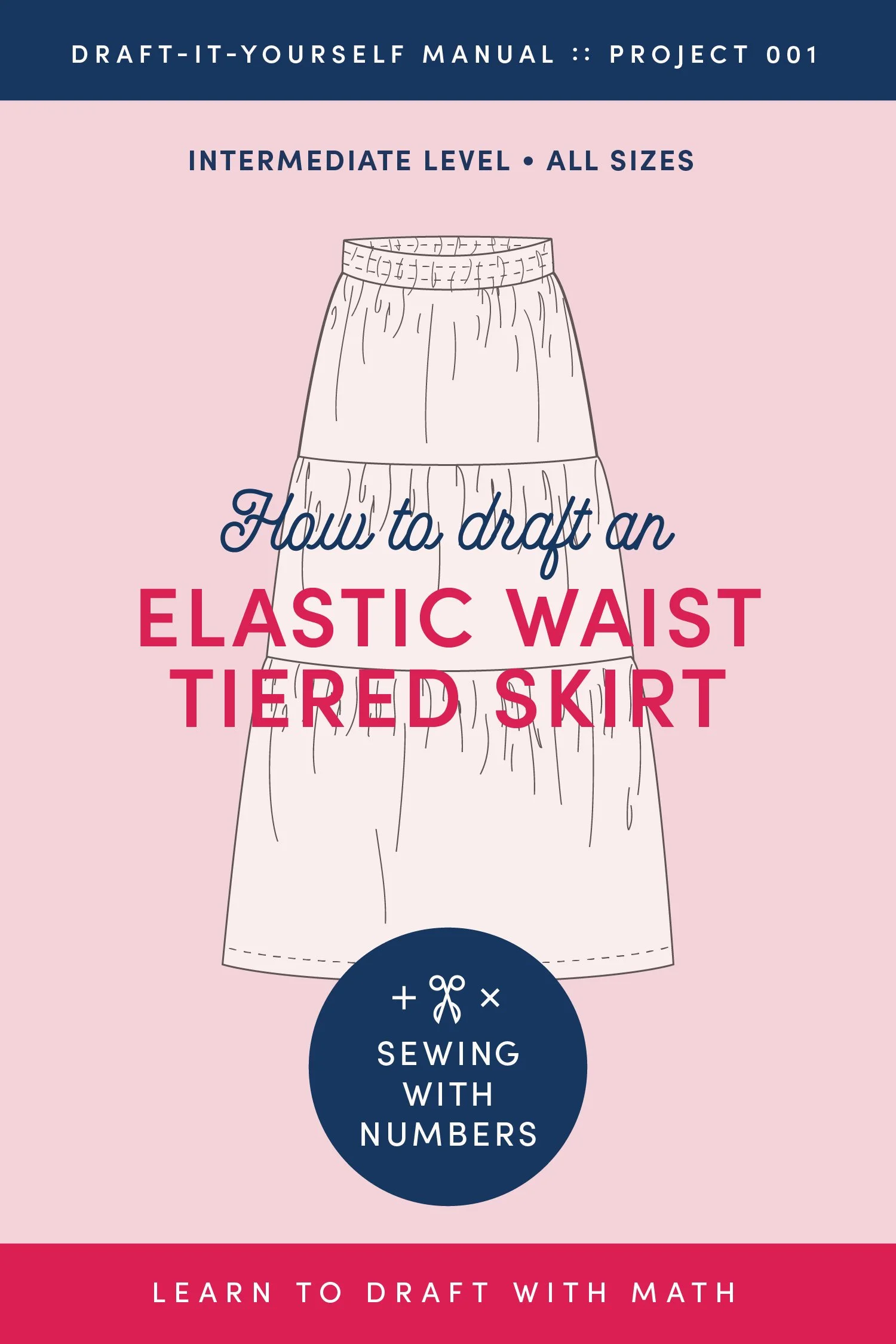
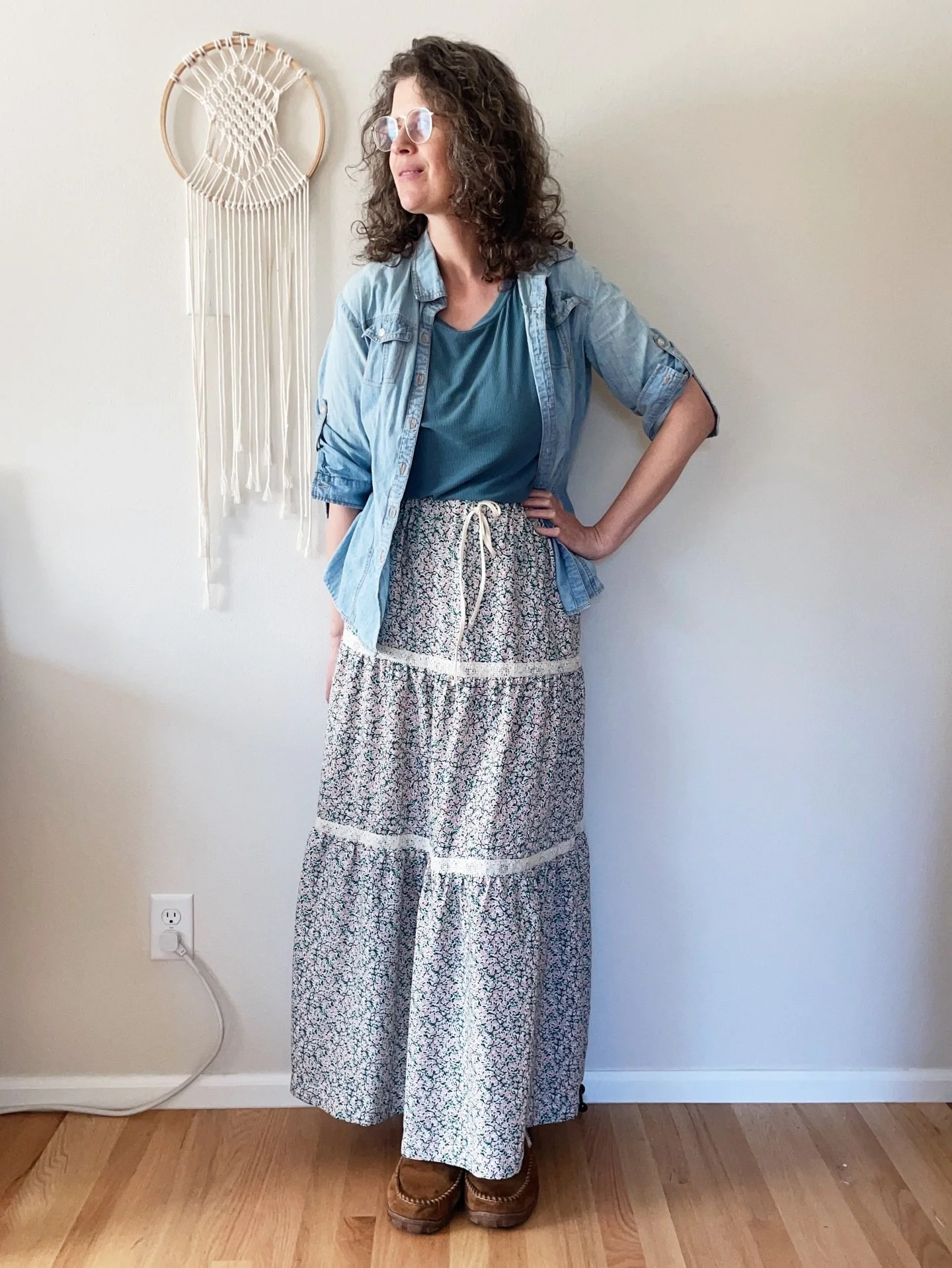
How to Draft an Elastic Waist Tiered Skirt — Sewing With Numbers Project 001 Draft-It-Yourself Manual
This manual is an adaptation of a newsletter series that I created for my Substack Sewing With Numbers. When you purchase this interactive pdf, you will receive all of the tutorials and information needed to draft your own custom fit elastic waist tiered skirt combined into one resource. (NOTE: This pdf does NOT include instructions for sewing the skirt.)
This pdf manual will teach you how to draft an elastic waist three-tiered skirt for any length or body size. This skirt has an elastic waistband and three tiers of gathered fabric that gradually increase in length from top to bottom. The pdf includes tutorials for how to draft an elastic waistband to your style preferences, how to calculate fabric width when designing gathers and how to draft a skirt that is proportional at any length. Additionally, there are instructions for drafting three variations on the tiers: a two tier skirt, a reverse two tier skirt and a five tier skirt.
LESSONS INCLUDED:
How To Draft An Elastic Waistband
How To Draft Gathers
How To Draft An Elastic Waist Tiered Skirt
Design Variations
Printable Worksheet & Calculator
SKILL LEVEL: I recommend this manual for people with an intermediate sewing skill level and beginner or intermediate pattern drafting. If you don't feel confident doing the sewing construction on your own, then this booklet is not for you.
IMPORTANT PLEASE READ: PATTERN PIECES ARE NOT INCLUDED. THIS IS NOT A PHYSICAL PRODUCT. This is an instruction booklet for how to draft a tiered skirt to your custom measurements. This booklet DOES NOT include instructions on how to sew and construct the garment. (See the project journal for some basic notes on construction.) Due to the nature of digital products, there are no refunds. Please read the description carefully. THIS IS NOT A PATTERN NOR IS IT A FINISHED GARMENT.
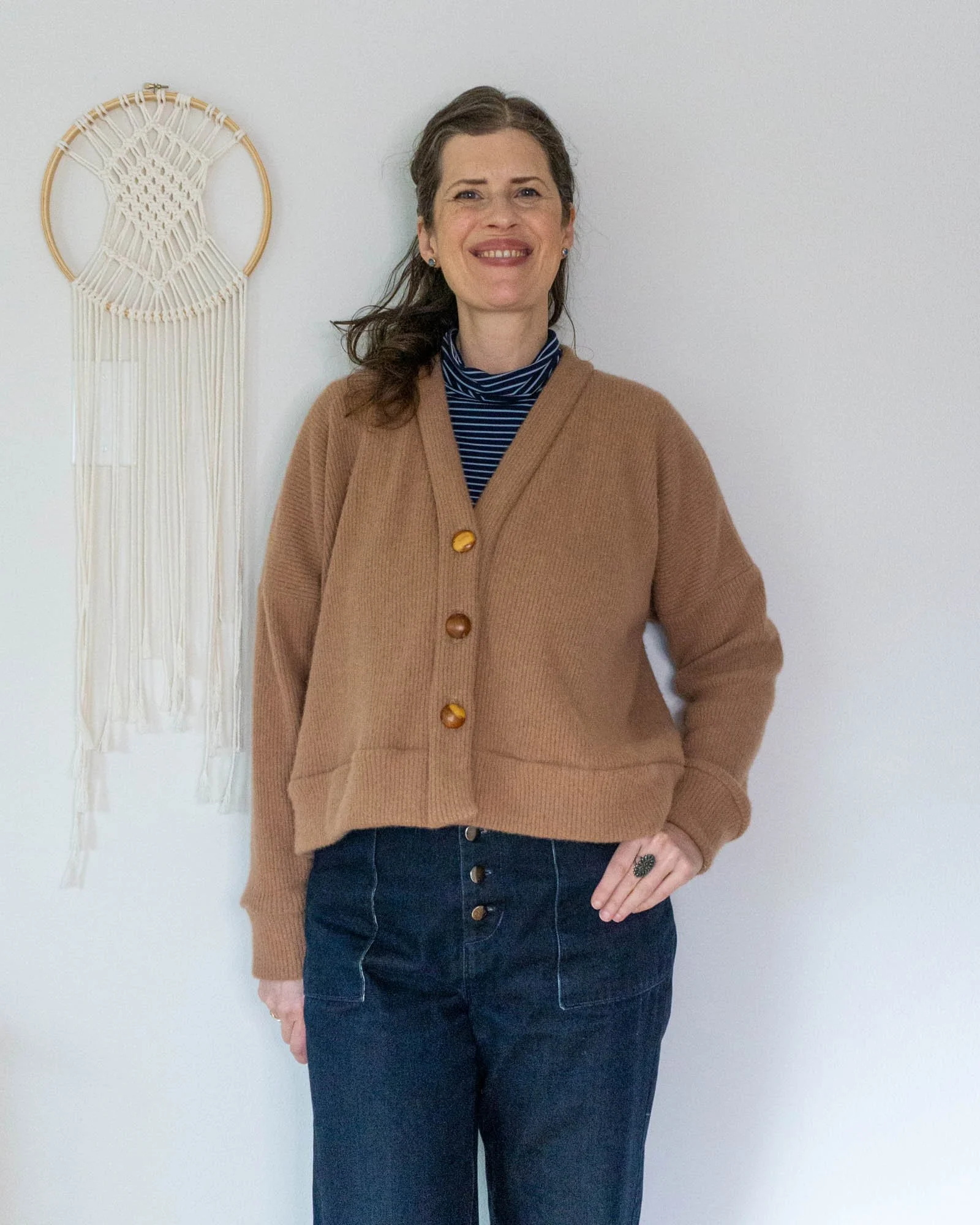
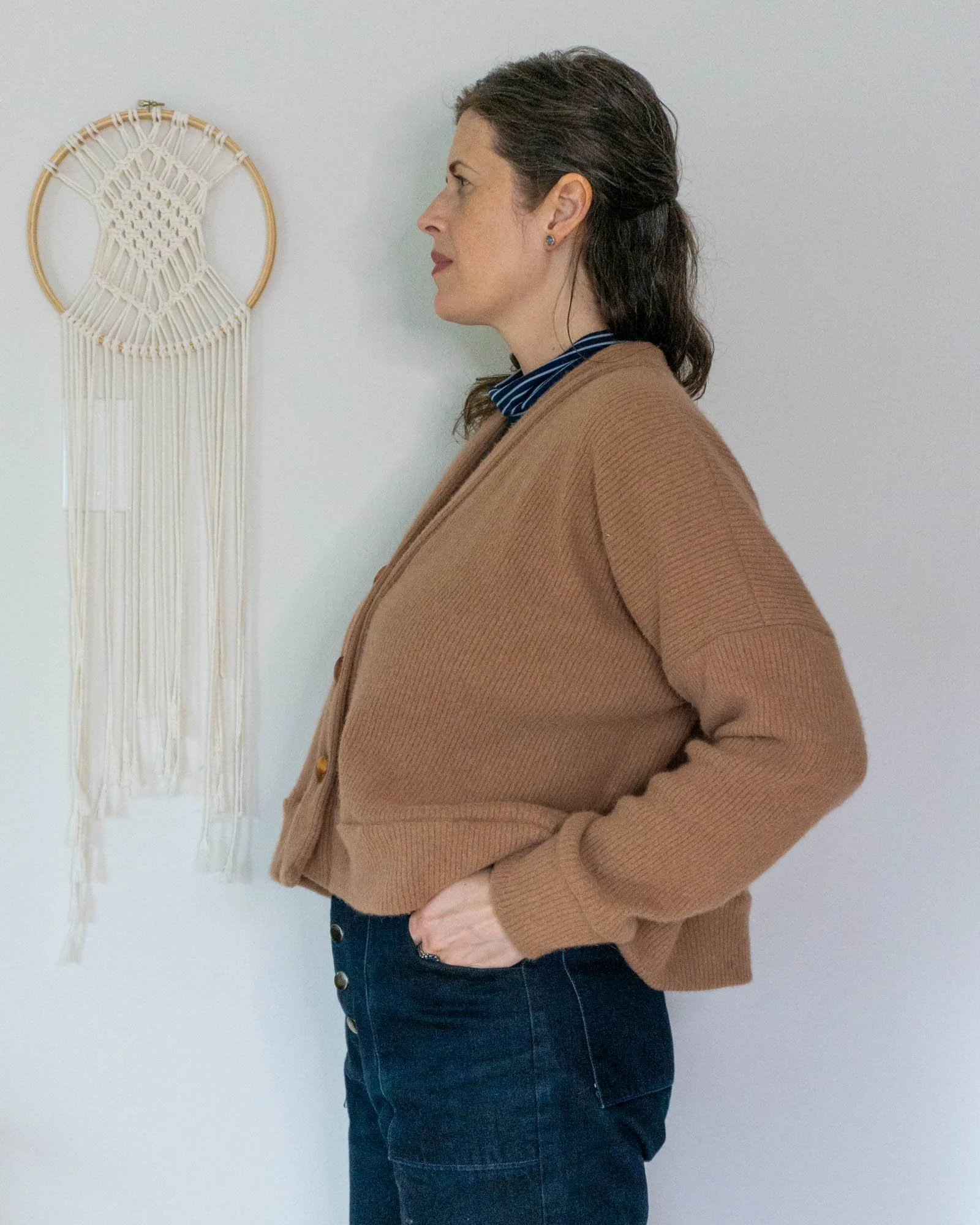
I think the fit is pretty good and is what I was intending. It’s hard to go wrong with an oversized cardigan, tbh. I love the shape of the back that you can see in the above right photo. If I were to make changes, I might try tapering the arms more and tapering the body towards the waist. It feels a little too bulky around the torso.
Overall, I’m happy with it and I’ve been enjoying wearing it! It was kind of frustrating to sew because the fabric was so uncooperative but I’m glad that I like the final result. I actually have another very large piece of sweater knit that I got at a fabric swap a few years ago and I’m tempted to try another version of this cardigan. I just have a few other projects in the queue first. :)
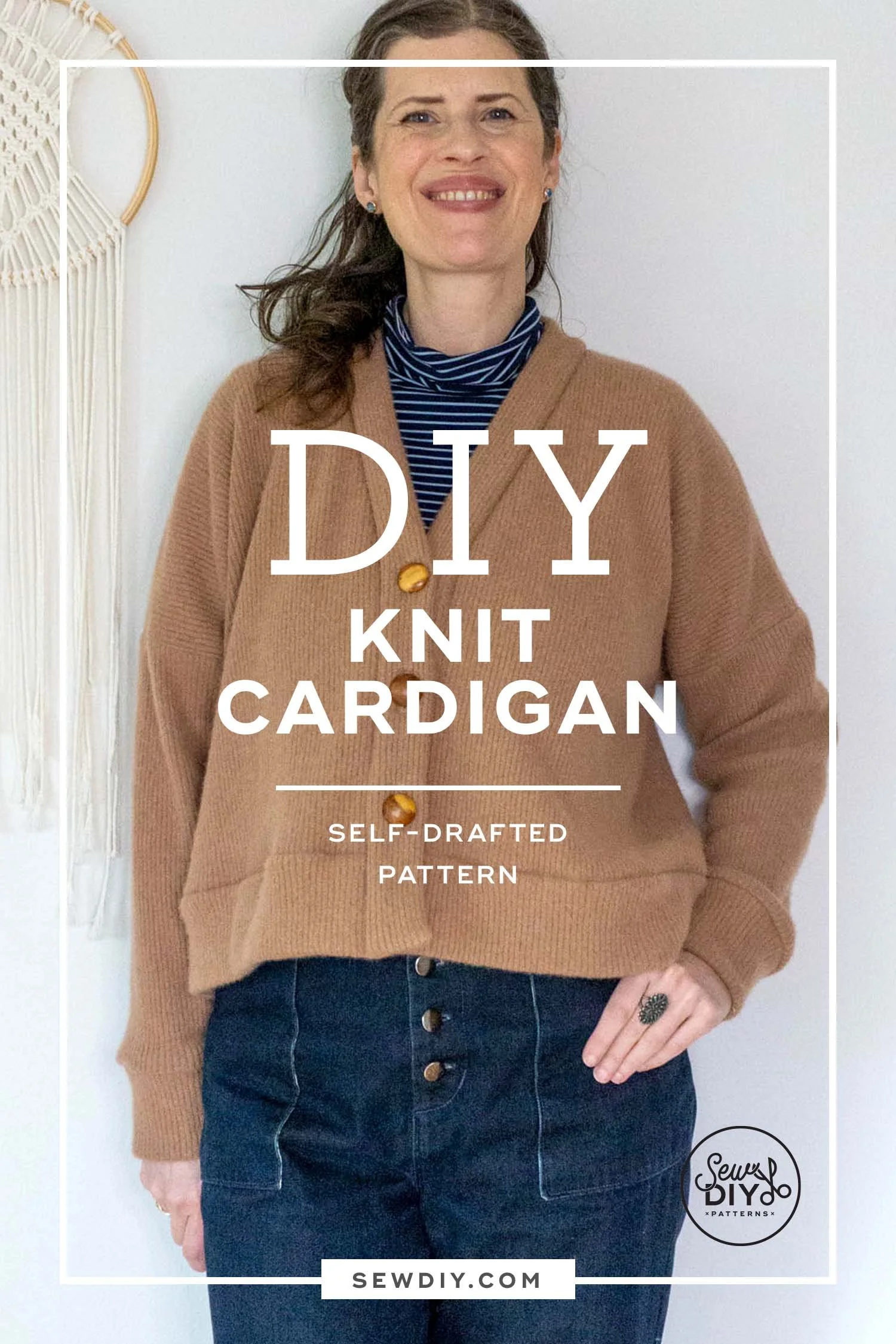
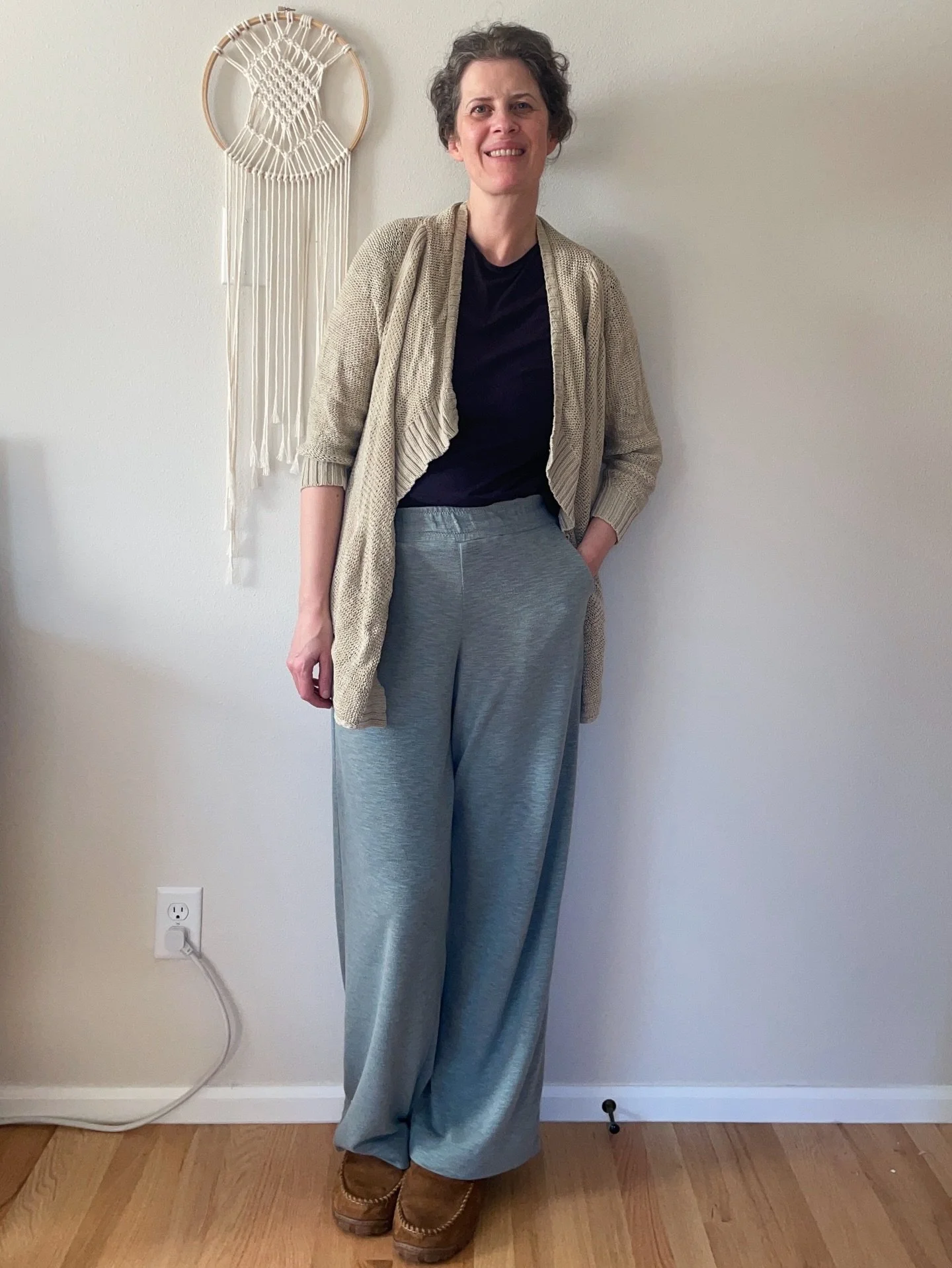
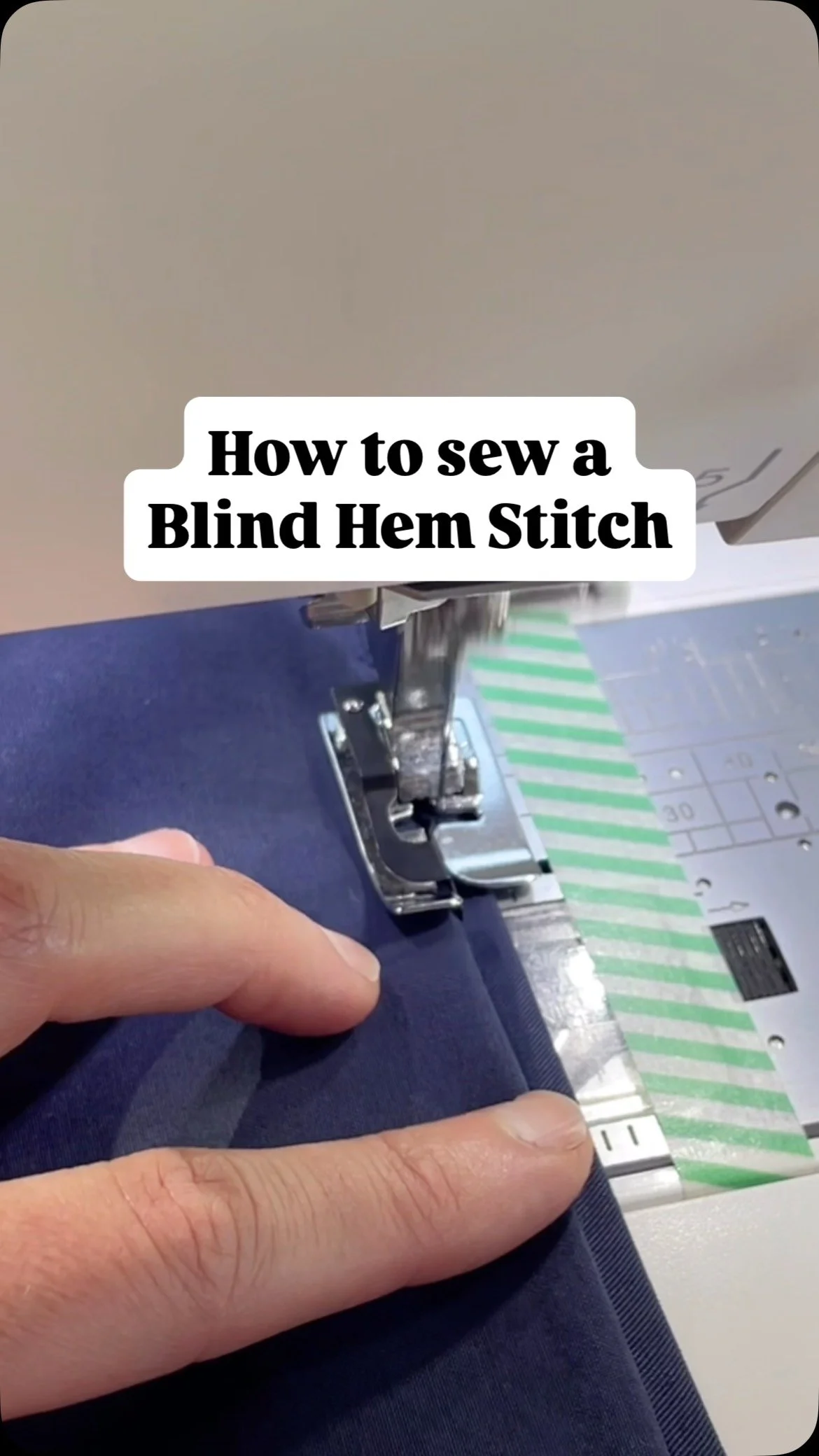
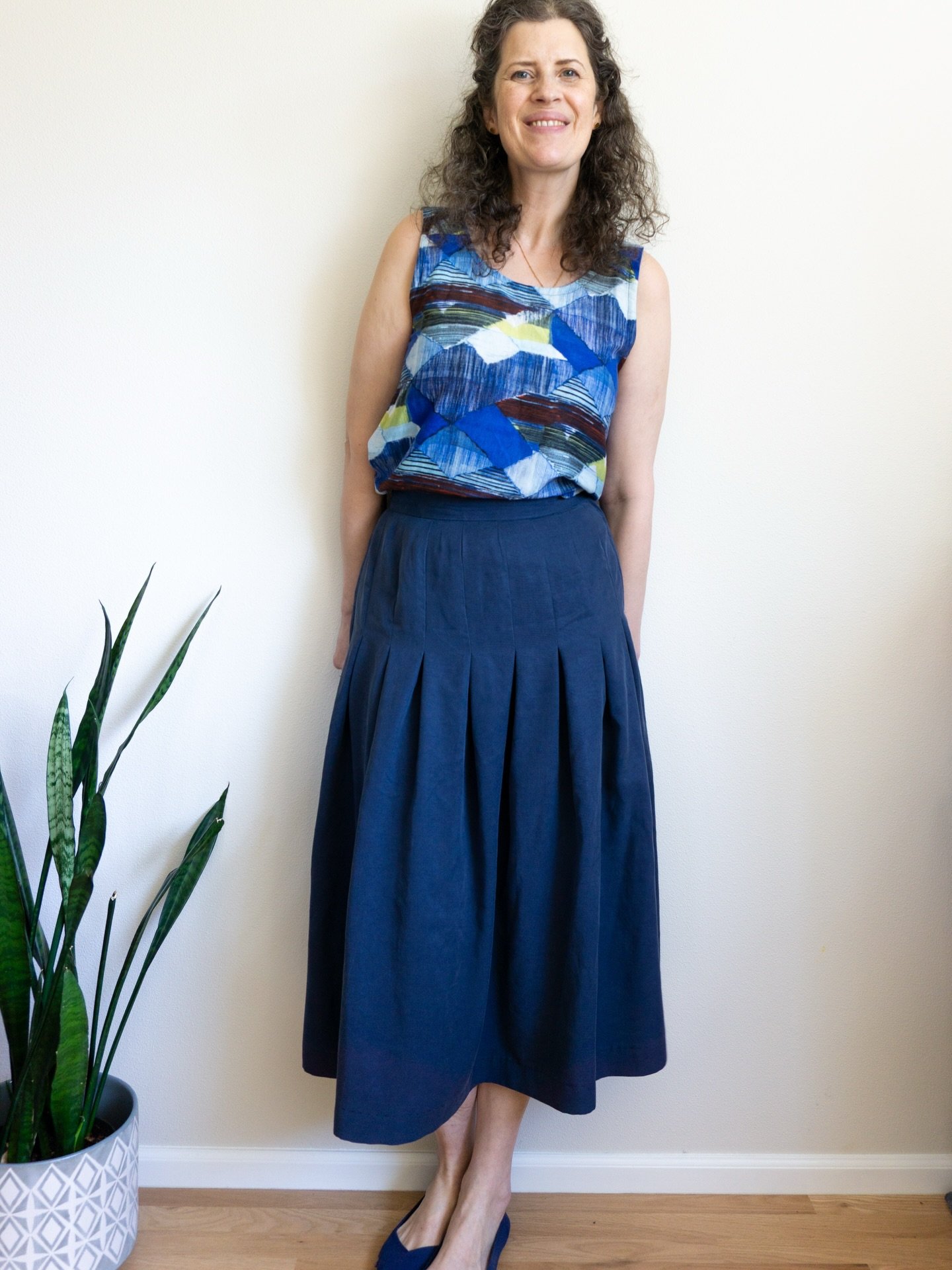
I hope that you found the video helpful. Please let me know in the comments if you have any questions and I’ll do my best to answer. If you’d like to save this post for later, you can pin one of the images below.

How to Draft an Elastic Waist Tiered Skirt — Sewing With Numbers Project 001 Draft-It-Yourself Manual
This manual is an adaptation of a newsletter series that I created for my Substack Sewing With Numbers. When you purchase this interactive pdf, you will receive all of the tutorials and information needed to draft your own custom fit elastic waist tiered skirt combined into one resource. (NOTE: This pdf does NOT include instructions for sewing the skirt.)
This pdf manual will teach you how to draft an elastic waist three-tiered skirt for any length or body size. This skirt has an elastic waistband and three tiers of gathered fabric that gradually increase in length from top to bottom. The pdf includes tutorials for how to draft an elastic waistband to your style preferences, how to calculate fabric width when designing gathers and how to draft a skirt that is proportional at any length. Additionally, there are instructions for drafting three variations on the tiers: a two tier skirt, a reverse two tier skirt and a five tier skirt.
LESSONS INCLUDED:
How To Draft An Elastic Waistband
How To Draft Gathers
How To Draft An Elastic Waist Tiered Skirt
Design Variations
Printable Worksheet & Calculator
SKILL LEVEL: I recommend this manual for people with an intermediate sewing skill level and beginner or intermediate pattern drafting. If you don't feel confident doing the sewing construction on your own, then this booklet is not for you.
IMPORTANT PLEASE READ: PATTERN PIECES ARE NOT INCLUDED. THIS IS NOT A PHYSICAL PRODUCT. This is an instruction booklet for how to draft a tiered skirt to your custom measurements. This booklet DOES NOT include instructions on how to sew and construct the garment. (See the project journal for some basic notes on construction.) Due to the nature of digital products, there are no refunds. Please read the description carefully. THIS IS NOT A PATTERN NOR IS IT A FINISHED GARMENT.