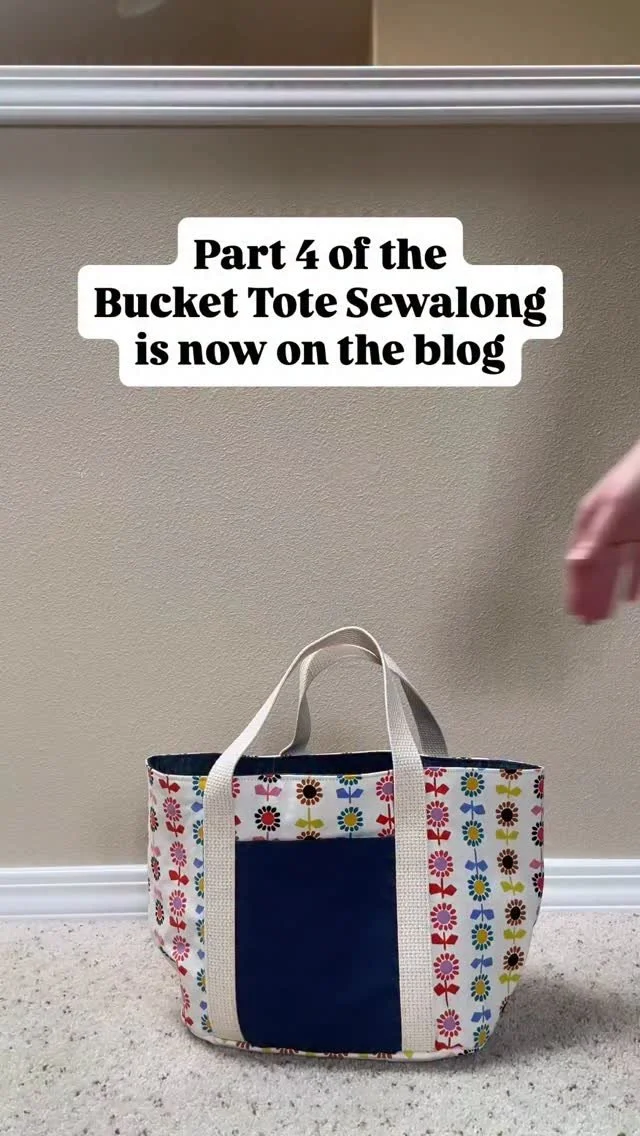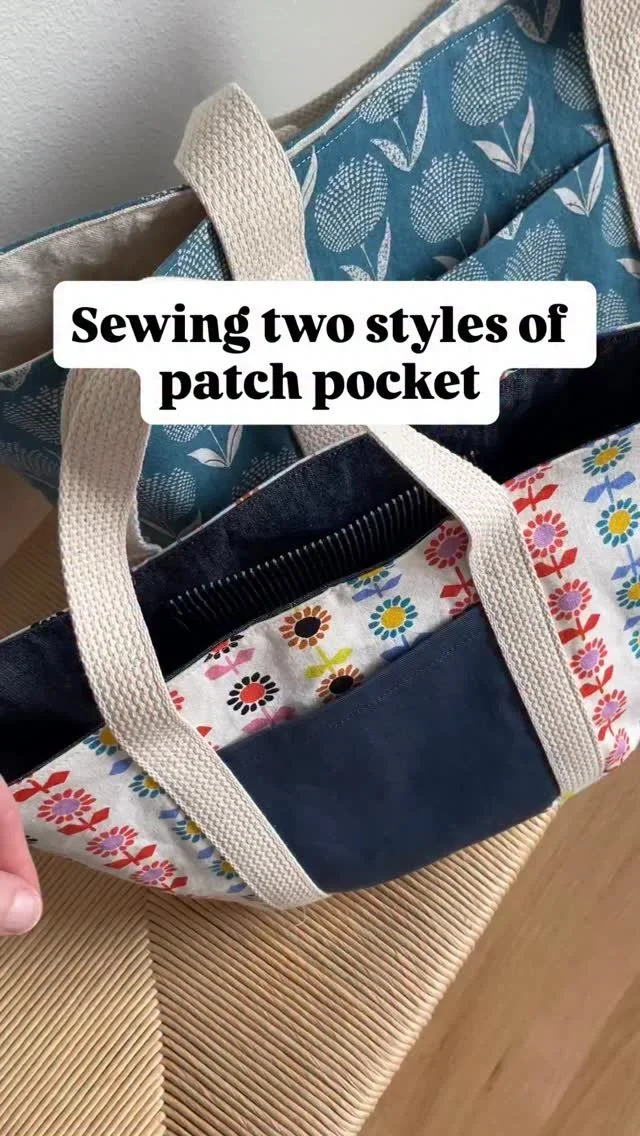
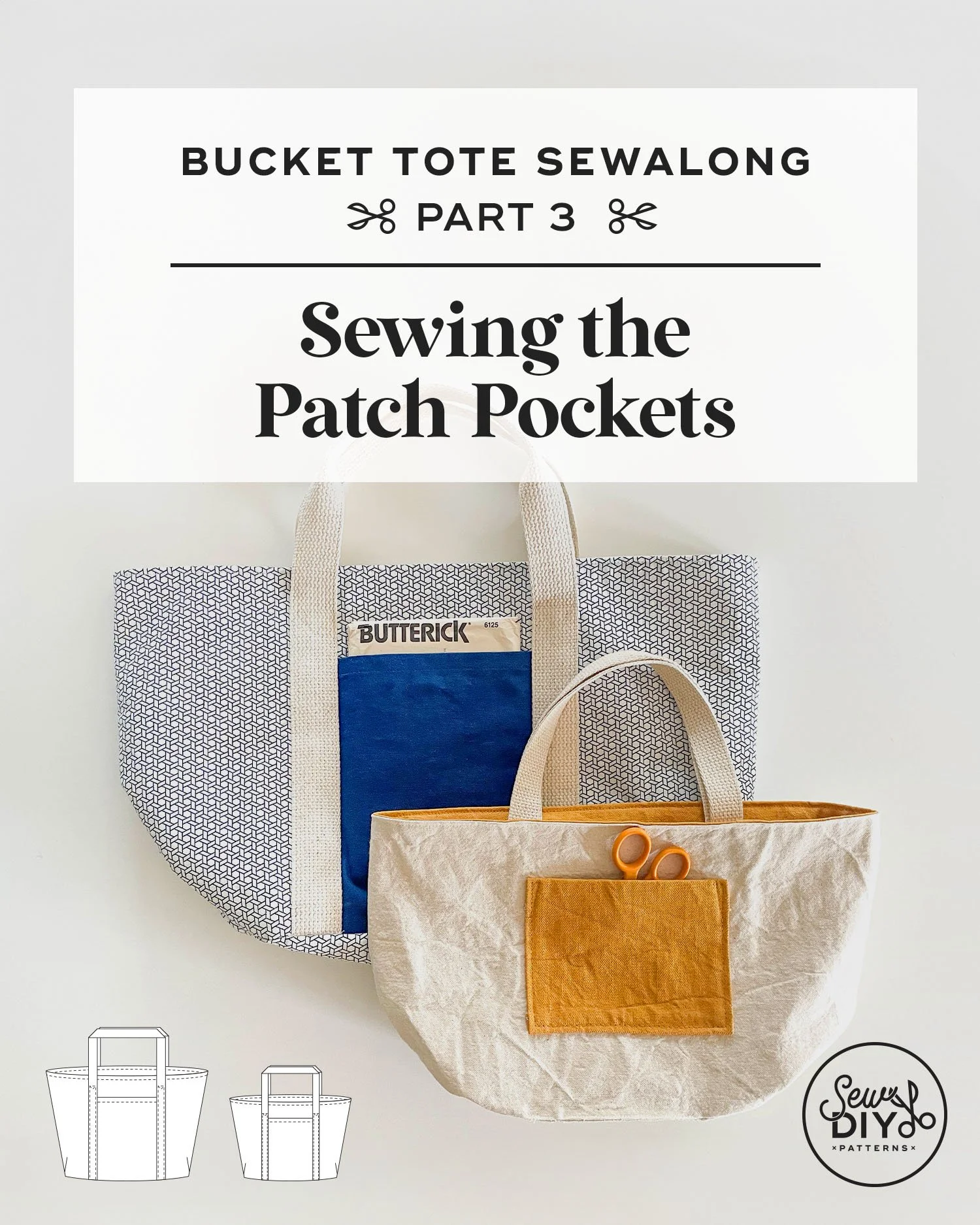
Today, is the third installment of the Bucket Tote Sewalong. Last week, we sewed the zippered welt pocket for the regular size tote and today we’ll sewing the patch pockets. There are two styles of patch pocket in this pattern. First, we’ll sew the traditional patch pocket, which is on the inside of the small tote. This pocket is folded in all sides and then stitched in place. The second style of patch pocket we’re making is the exterior pocket, which is anchored into the seams on the sides and bottom. In the video, I share all of my tips and techniques for sewing these pockets with accuracy and ease.
How to Sew a Welt Zippered Pocket — Bucket Tote Sewalong Part 2
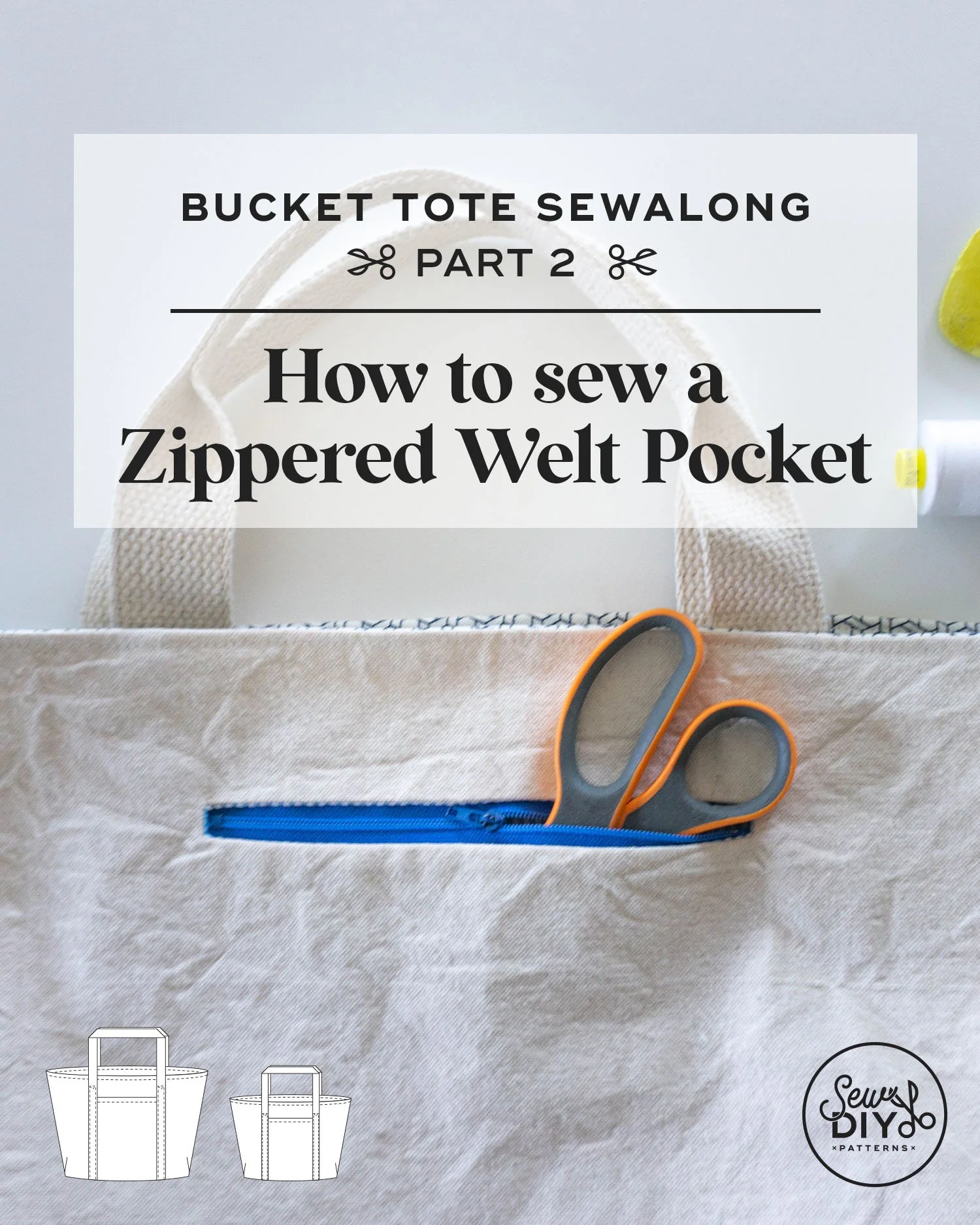
Today, I’m excited to share the second installment of the Bucket Tote Sewalong. Last week, we selected fabric and prepared for sewing and today we can start stitching. The instruction booklet that comes with the pattern uses line drawing illustrations and written instructions so for the sewalong, I like to share a video of the process. In the video, I talk through all the steps and provide extra tips and info that would be too cumbersome to include in the instructions.
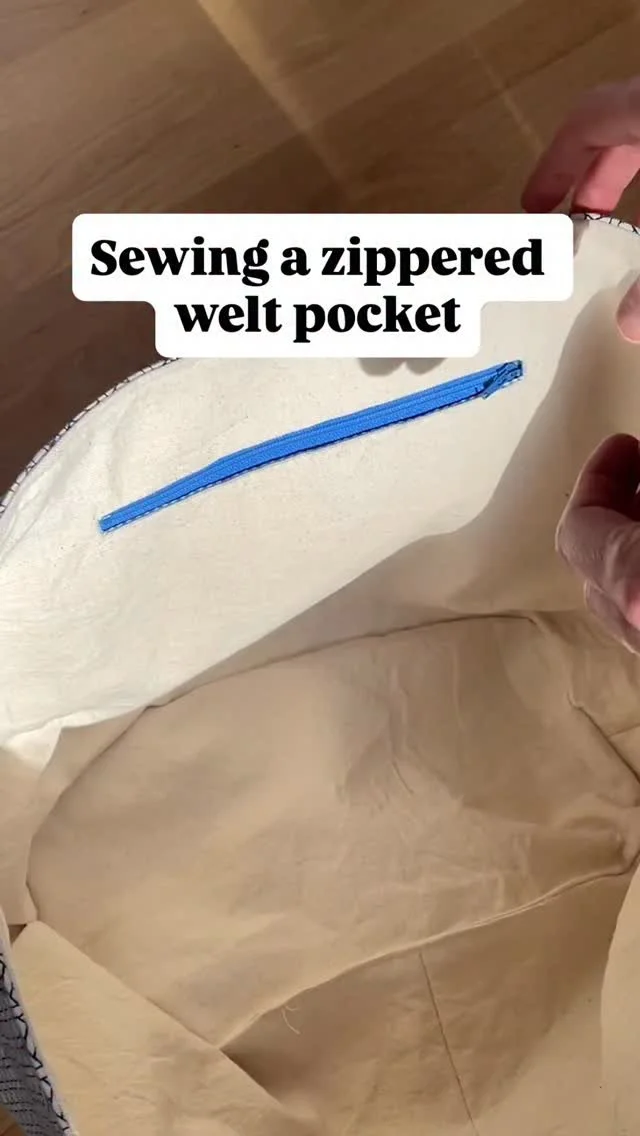
In this part, we’ll be sewing the welt zippered pocket for the Regular Size tote. You can use this same technique to sew a welt zippered pocket anywhere you want one. The cool and scary thing about sewing this style of pocket is that you have to cut a hole in the middle of your fabric. The pocket fabric acts as both a facing for the opening and the pocket bag and when completed, the pocket bag is hidden inside the bag and only the zipper will be visible. It can feel very daunting to sew but if you take it one step at a time, it’s not too hard.
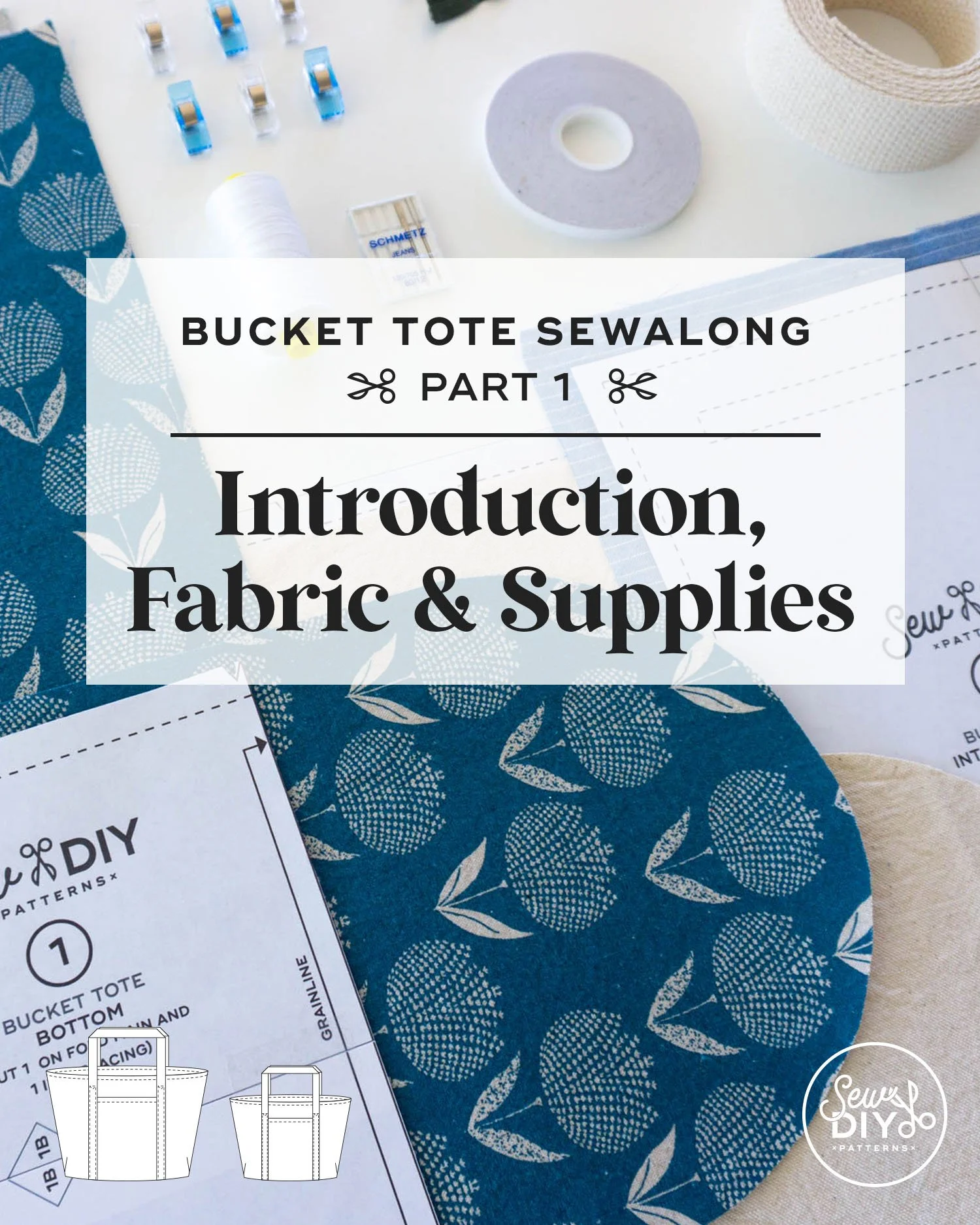
Introduction, fabric and supplies for the Sew DIY Bucket Tote
Welcome to the first installment of the Sew DIY Bucket Tote Sewalong. Today’s installment includes everything you need to know to get ready to sew the Bucket Tote. I’m sharing a video where I give an overview of the pattern features and a show-and-tell of different samples that I’ve made and the materials I used. The video also includes an overview of the pattern pieces and a quick interfacing demo. In addition, I’m sharing links to fabric recommendations and a list of supplies and tools that I recommend. Let’s get started!