
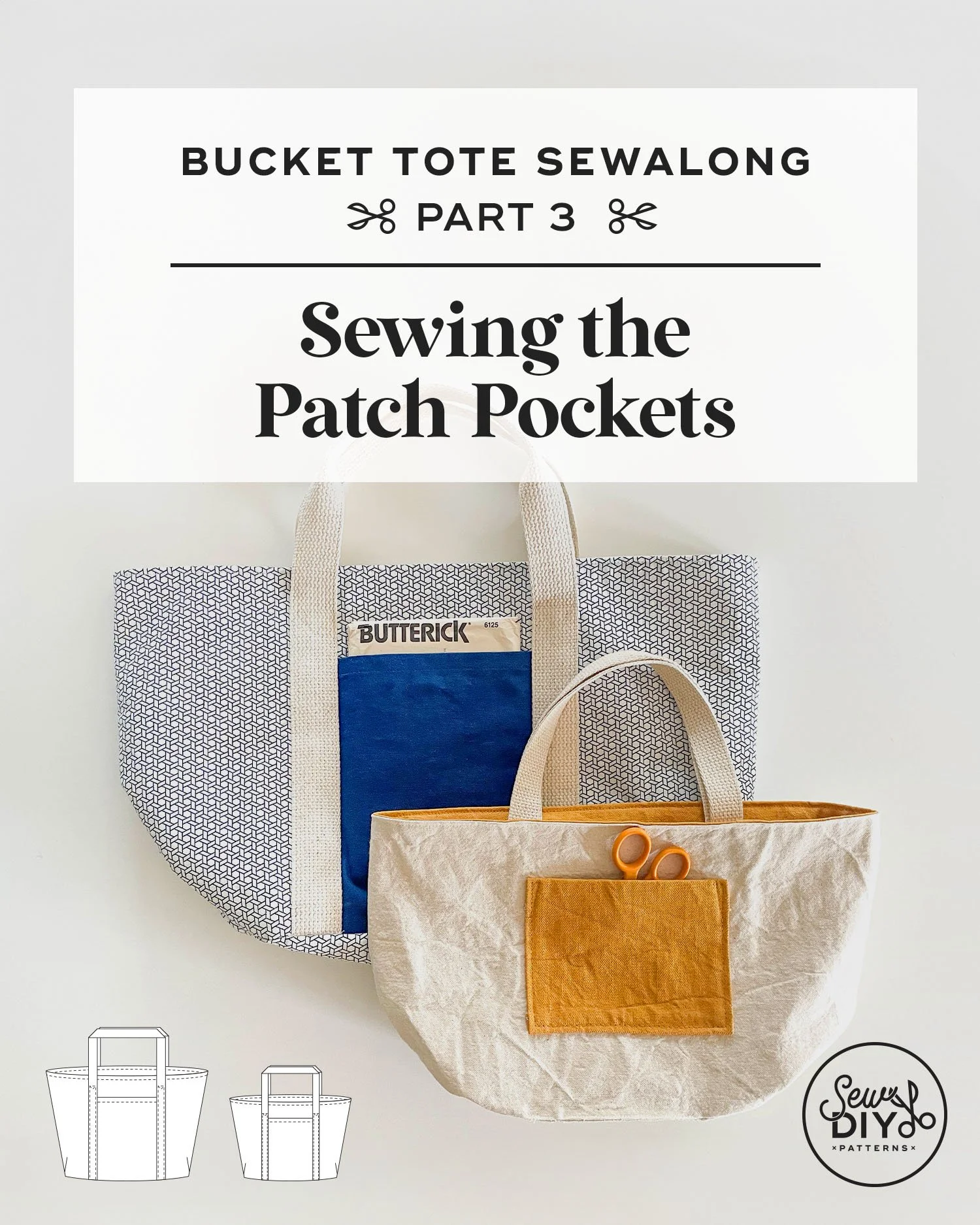
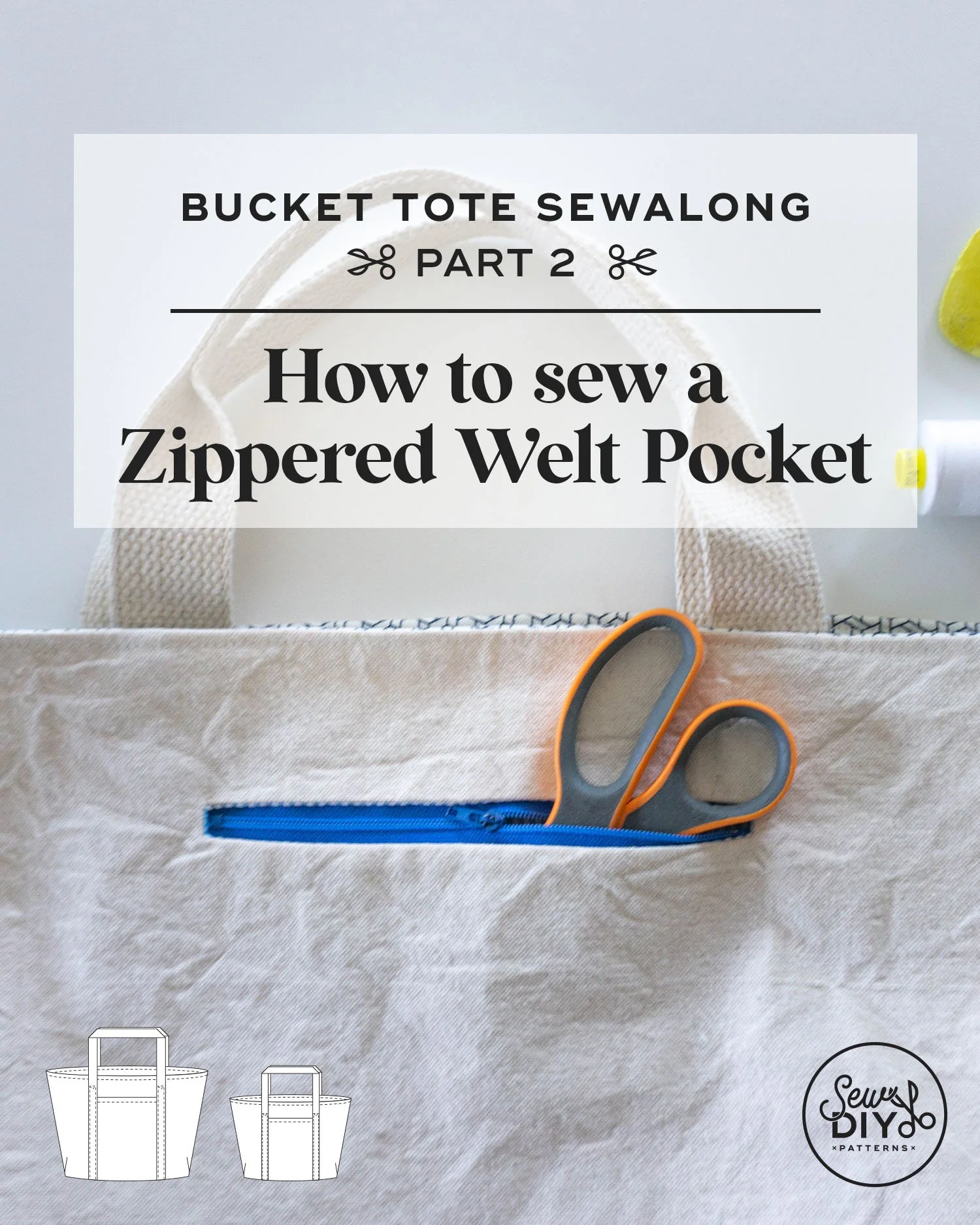
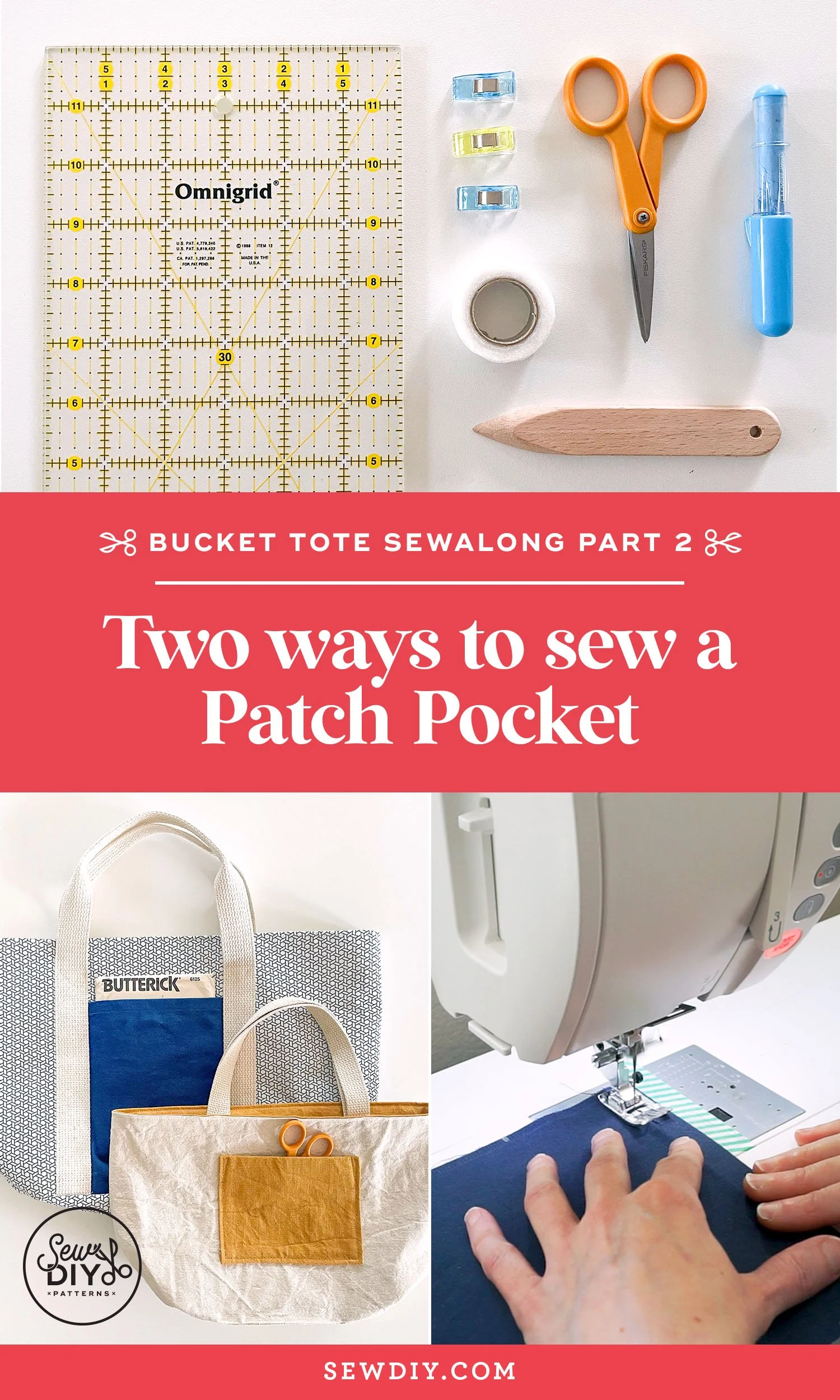
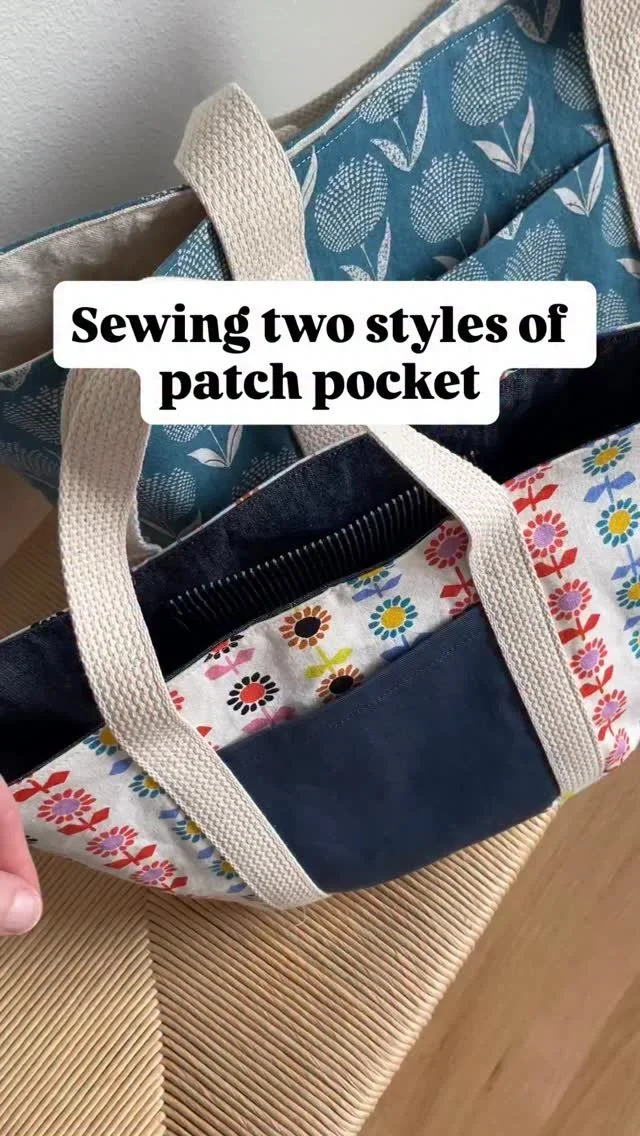
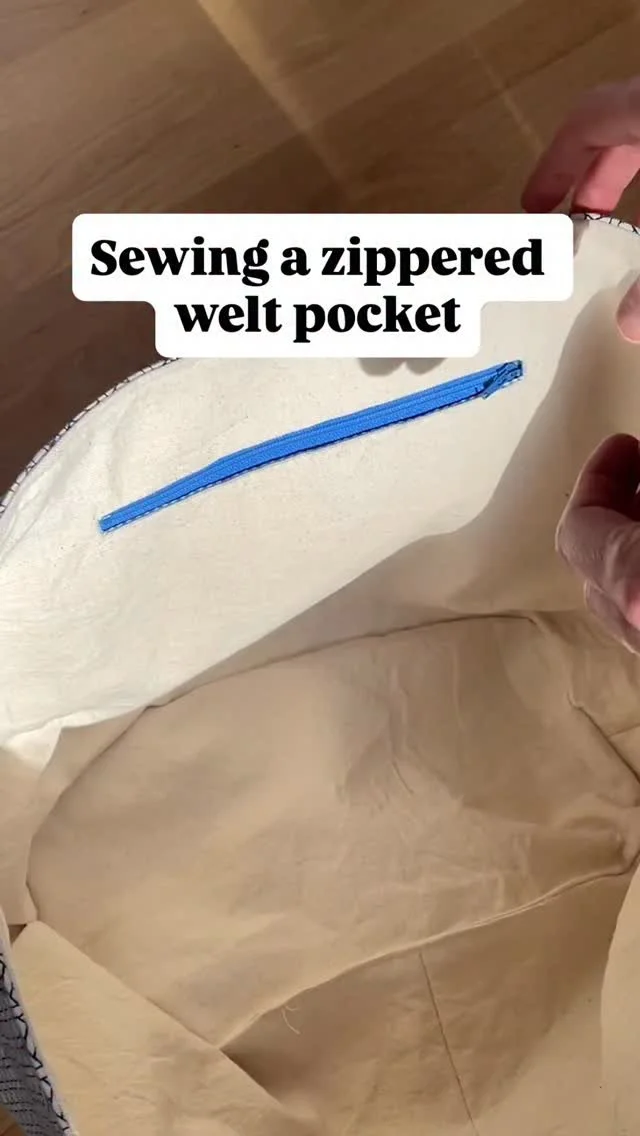
Today, is the third installment of the Bucket Tote Sewalong. Last week, we sewed the zippered welt pocket for the regular size tote and today we’ll sewing the patch pockets. There are two styles of patch pocket in this pattern. First, we’ll sew the traditional patch pocket, which is on the inside of the small tote. This pocket is folded in all sides and then stitched in place. The second style of patch pocket we’re making is the exterior pocket, which is anchored into the seams on the sides and bottom. In the video, I share all of my tips and techniques for sewing these pockets with accuracy and ease.
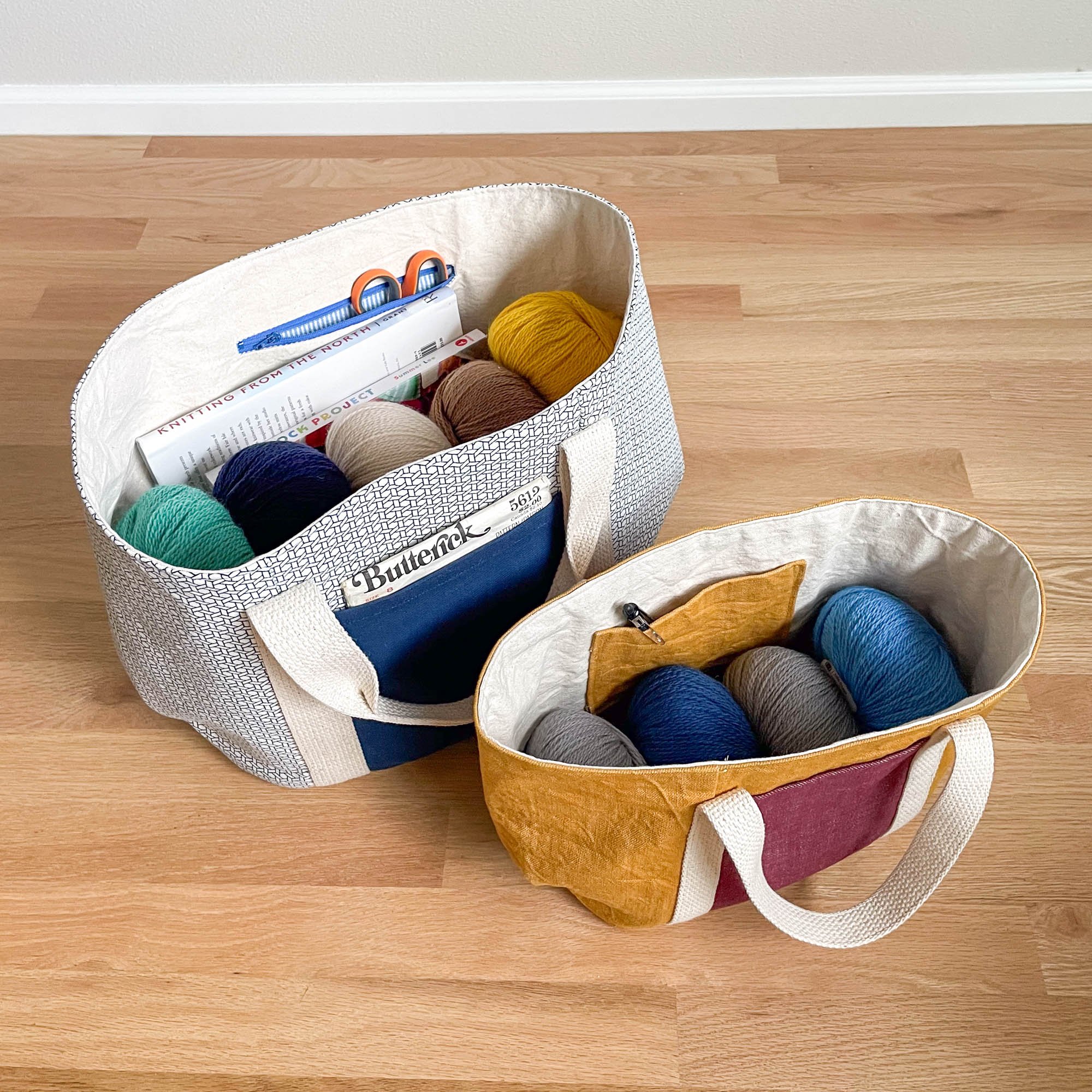
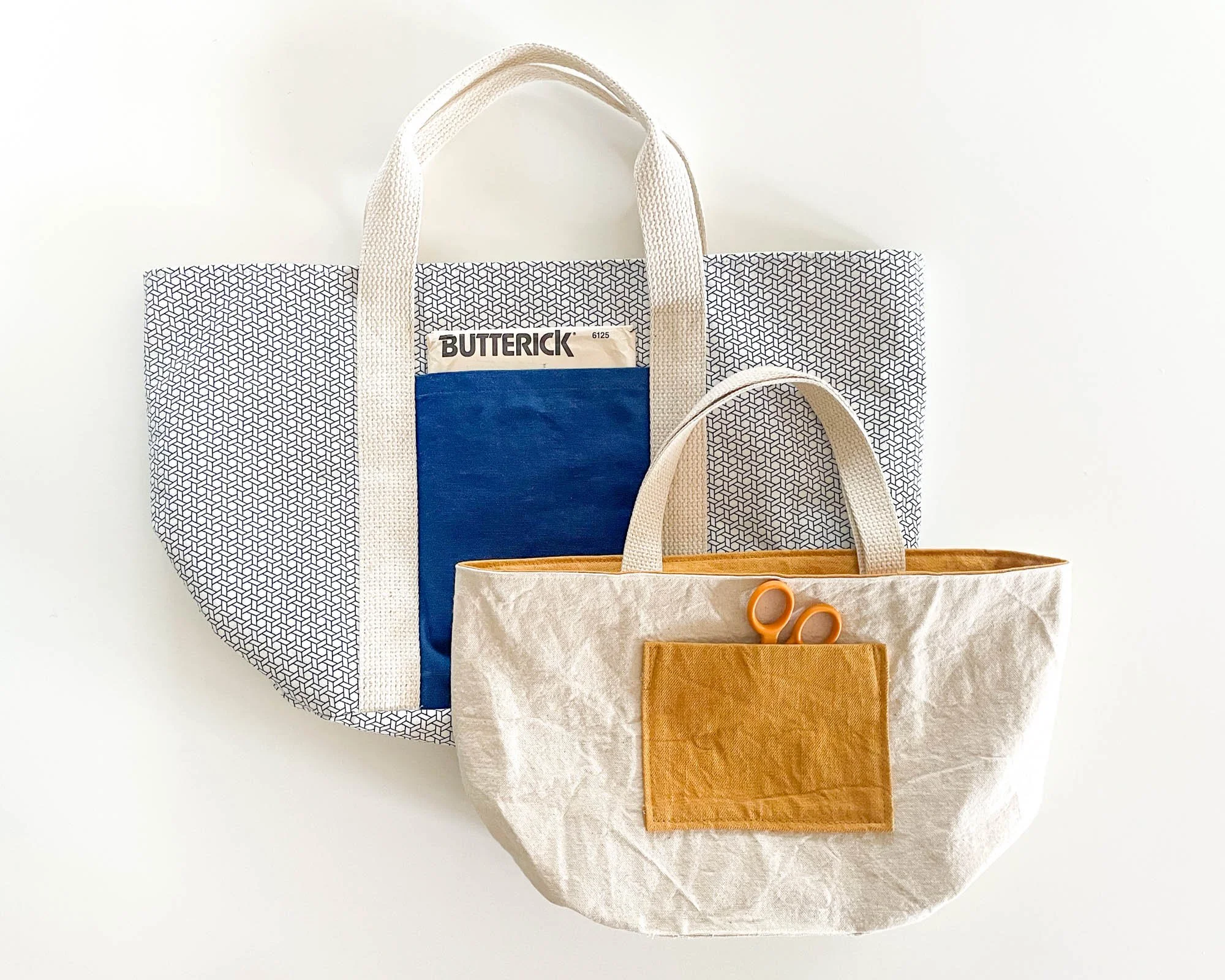
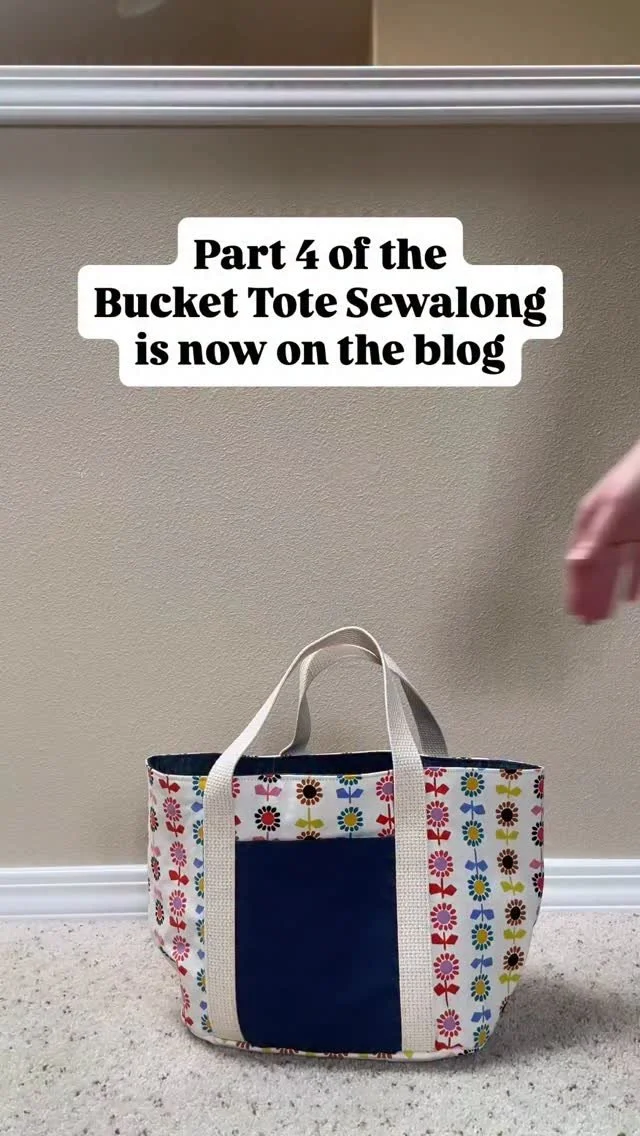
Above you can both the regular and small size totes packed with crafting supplies. The exterior pockets sit between the handles on both sides of the totes. The exterior pocket on the regular size tote is the perfect size for holding a Big-4 pattern. The interior patch pocket on the small tote is great for smaller items, like pens or small tools.
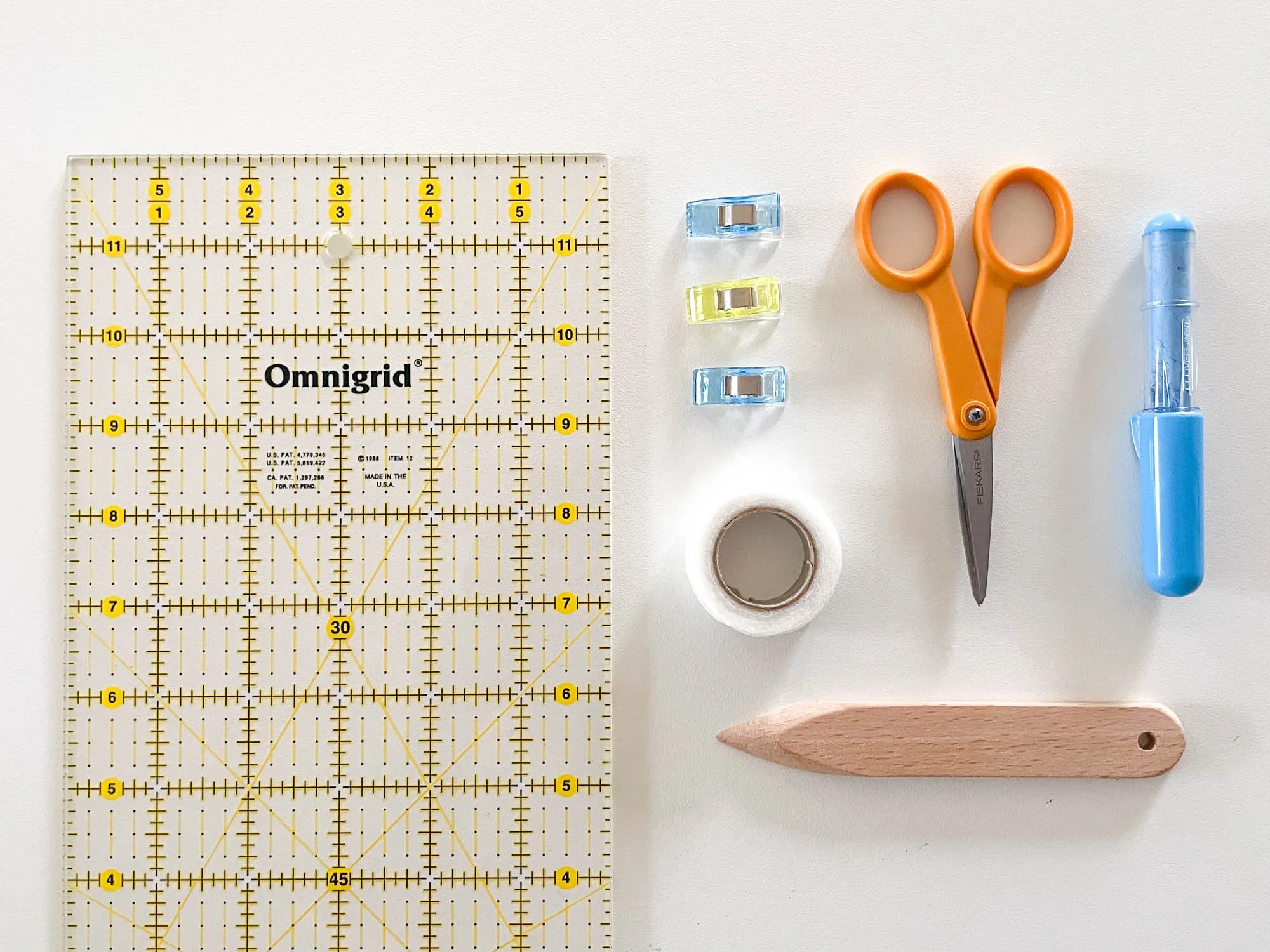
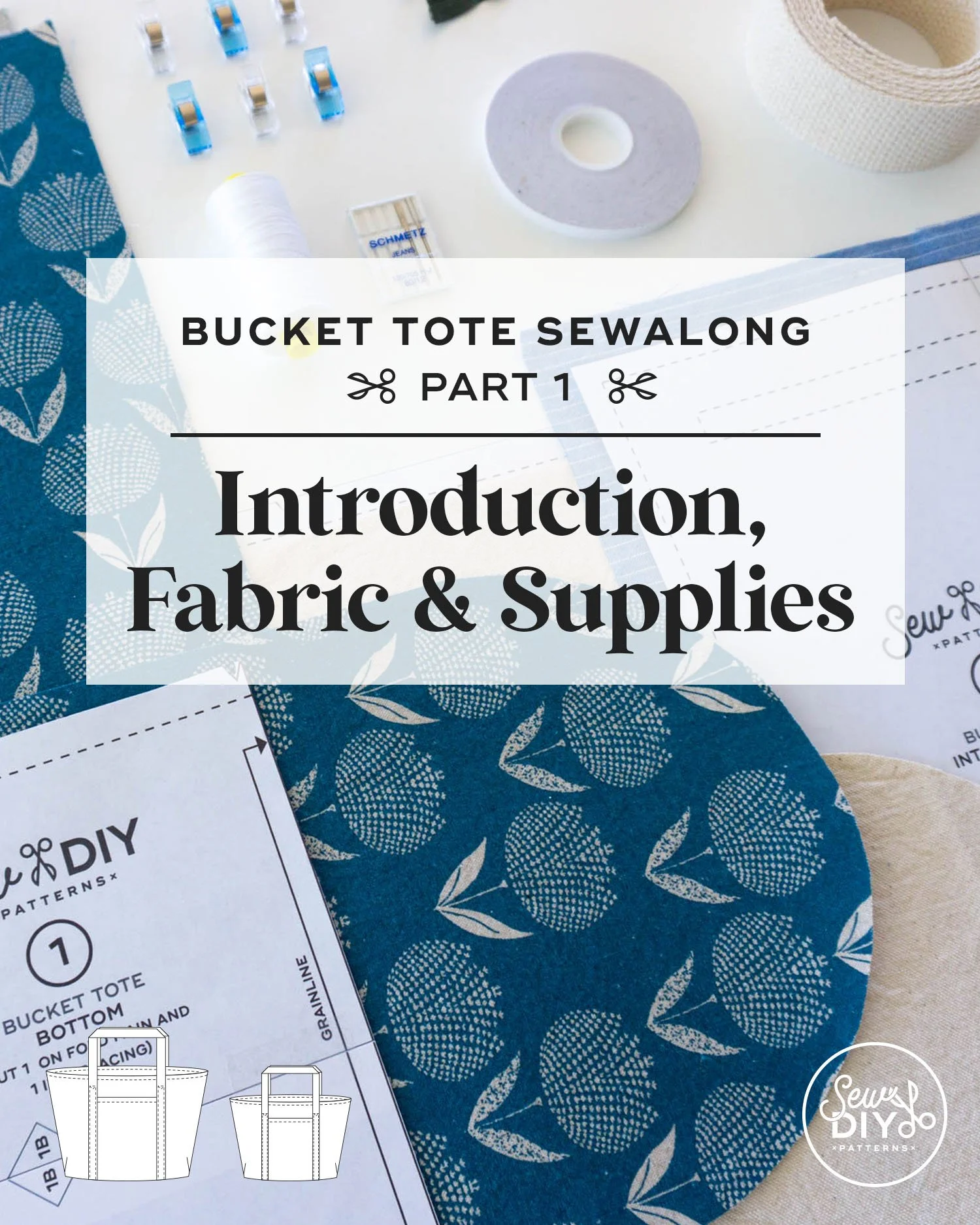
For sewing the patch pockets, you don’t need a lot of special supplies. You’ll want thread for topstitching in your desired color, a ruler, pins or clips and a fabric marking tool. You may want some sort of fabric adhesive to hold the pocket in place for topstitching. Plus, when we turn the top corners of the patch pocket right side out, it can be helpful to have a tool that can push the corners into shape.
Below is the step-by-step video for how to sew the patch pockets for the Bucket Tote. I share all of my tips and techniques along the way. Happy sewing!
Watch the video above or on YouTube by clicking here.. Use the time stamps below to jump to different sections in the video.
TIME STAMPS
:05 Intro
1:00 Sewing the patch pocket
2:37 Prepare patch pocket for topstitching
6:44 Topstitching the patch pocket
8:05 Sewing the exterior pockets (patch pocket attached in the seams)
9:45 Preparing the exterior pocket for stitching
11:17 Baste the pocket to the center body
13:00 Thank you!
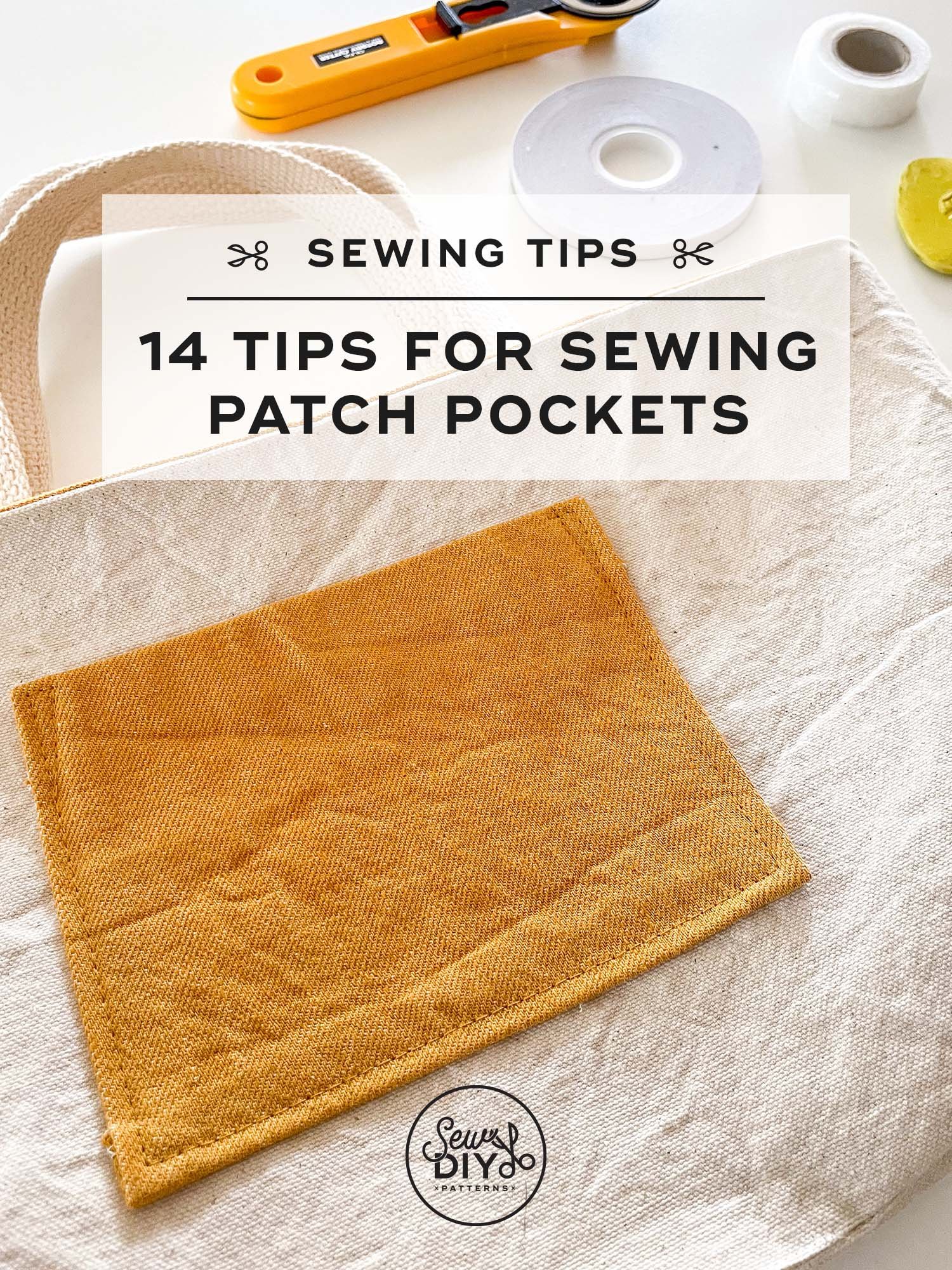
Btw, if you are looking for pocket sewing tips in a non-video format check out this post with 14 Tips for sewing patch pockets.
I hope that you found this tutorial helpful. Click here to see all of the posts in Bucket Tote Sewalong. Or, scroll through them below.


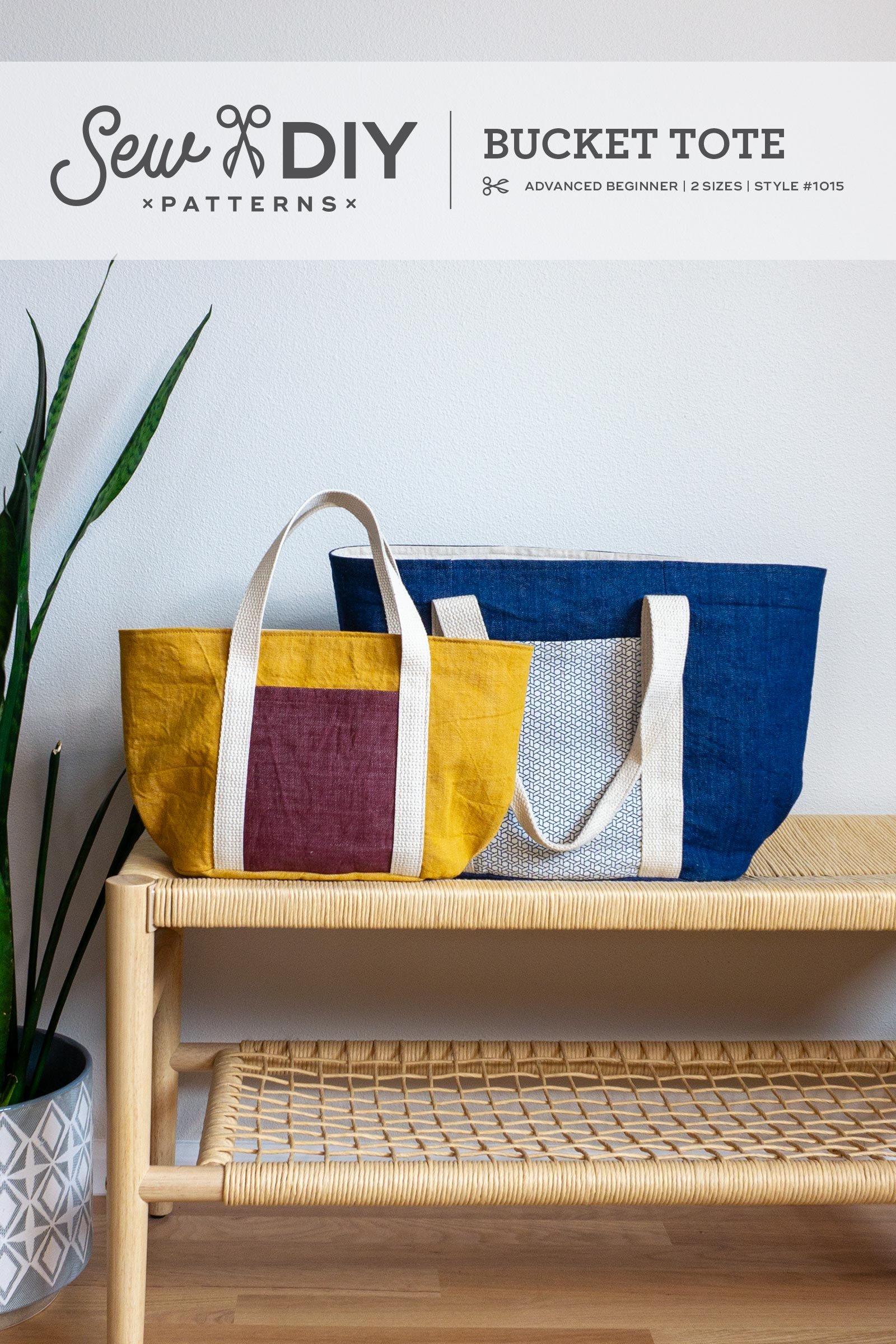


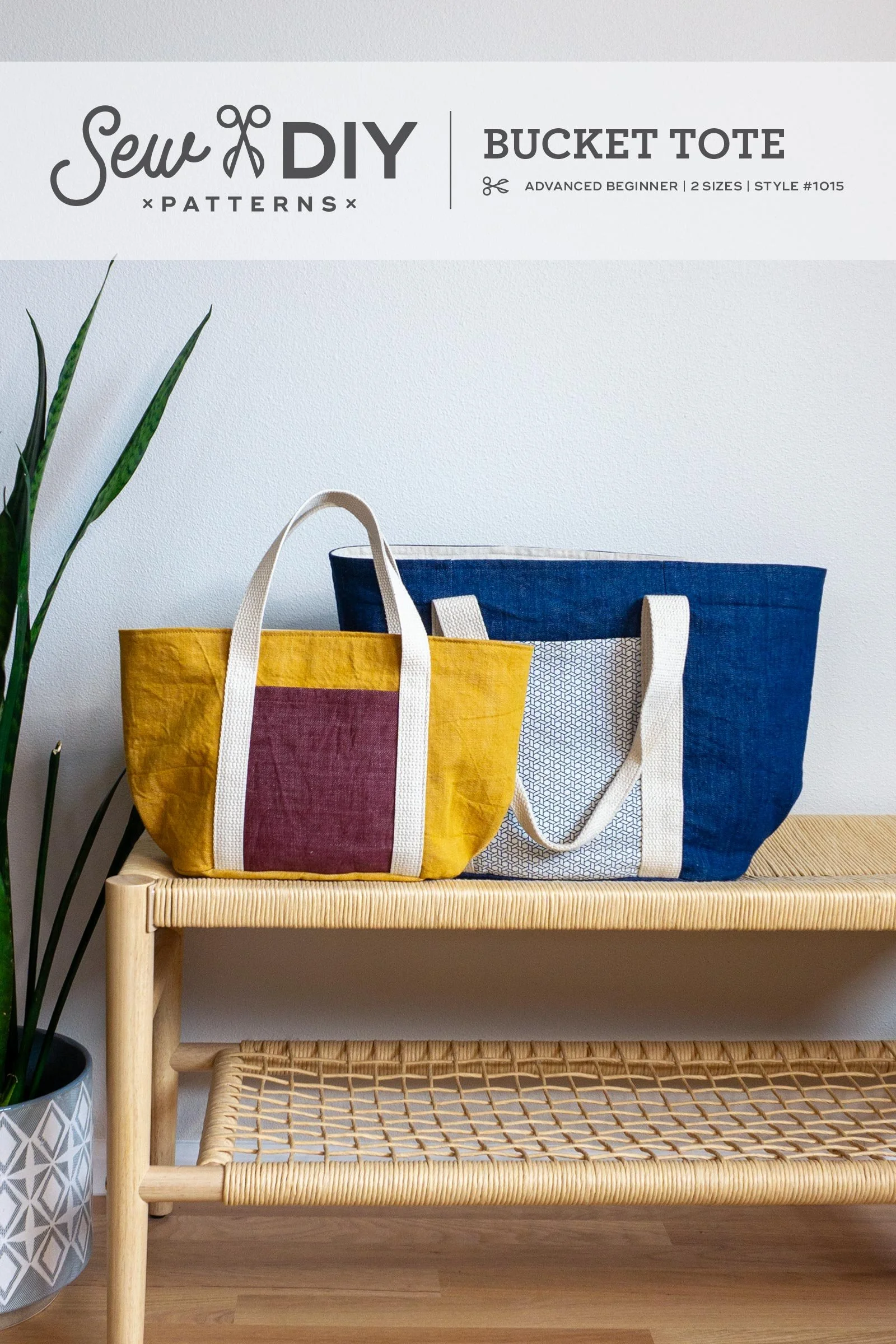
The Sew DIY Bucket Tote is the perfect "throw & go" bag with a wide top opening so you can easily see and access everything inside. This fully-lined tote is thoughtfully designed with an oval base, pleats at each end and exterior and interior pockets.
The pattern includes both regular and small sizes, giving you options for wherever life takes you. The regular size is perfect for a day at the pool or a short road trip while the small size can be used to carry your lunch or a small craft project.
Both sizes have two exterior patch pockets and one interior pocket. The regular size has a welt zippered pocket inside and the small size has an interior patch pocket. The handles are made from cotton webbing that are topstitched to the sides of the bag and secured in the bottom seam.
This digital pattern includes:
• Illustrated instruction booklet
• Print-at-home layered pattern (Letter/A4)
• US copy shop and A0 patterns
• Projector pattern
Scroll down for more details.
THIS IS NOT A PHYSICAL PRODUCT. After checkout, you will receive a link to the pattern that will be active for 24 hours after you click it. Prices are in USD.
About the Sew DIY Bucket Tote pattern:
This fully-lined tote is thoughtfully designed with an oval base, pleats at each end and exterior and interior pockets.
The pattern includes both regular and small sizes, giving you options for wherever life takes you. The regular size is perfect for a day at the pool or a short road trip while the small size can be used to carry your lunch or a small craft project.
Both sizes have two exterior patch pockets and one interior pocket. The regular size has a welt zippered pocket inside and the small size has an interior patch pocket. The handles are made from cotton webbing and are topstitched to the sides of the bag and secured in the bottom seam.
If you’d like to save this post for later, you can save the image below to Pinterest. Happy sewing!


Hello sew-friends! Today, I have another two part hack for my Bucket Tote sewing pattern. For this version of the tote, I've taken the small size and added a recessed drawstring closure to the lining and decorative trim to the handles. You can use both hacks in one bag, or either one individually.
This drawstring hack is similar to the recessed zipper hack that I shared a few weeks ago. The construction is the same as usual for the exterior and the hack is only applied to the lining. Just like with the recessed zipper, the lining is divided to have a narrow facing at the top, a new closure layer and then the lining below. The drawstring casing is made from a separate piece of fabric that is the same circumference as the bag. When not in use, the casing can be pushed flat against the lining of the bag. When the drawstring is tightened, the casing covers the top of the bag.